HOA Fall Maintenance Checklist: Getting Ready For Fall Season

Fall brings cooler days, busy calendars, and steady wear on shared spaces. A clear fall maintenance checklist helps your Southern California community stay safe, tidy, and budget-smart as the season shifts.


Fall Maintenance Checklist: Your Seasonal Starting Point

Begin with a quick pulse check. The goal is to identify and address small issues before they become costly. Use this fall maintenance checklist to set priorities, assign vendors, and plan resident notices.

  • Roofs, gutters, and drains
  • Trees, slopes, and common-area landscaping
  • Irrigation settings and leak repairs
  • Walkways, lighting, and safety equipment
  • Pools, spas, and recreation areas
  • Clubhouse and indoor systems
  • Pest prevention and trash enclosures
  • Budget, reserves, and vendor scheduling
  • Resident communications and holiday planning

Treat this list as a living document. Update it as inspections reveal new tasks. Keep copies with dates, photos, and invoices for easy reference.


Inspection of Buildings and Common Areas

hoa fall maintenance

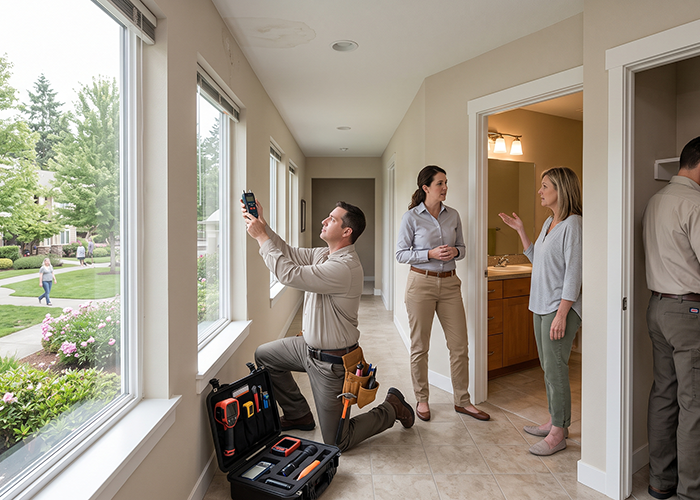
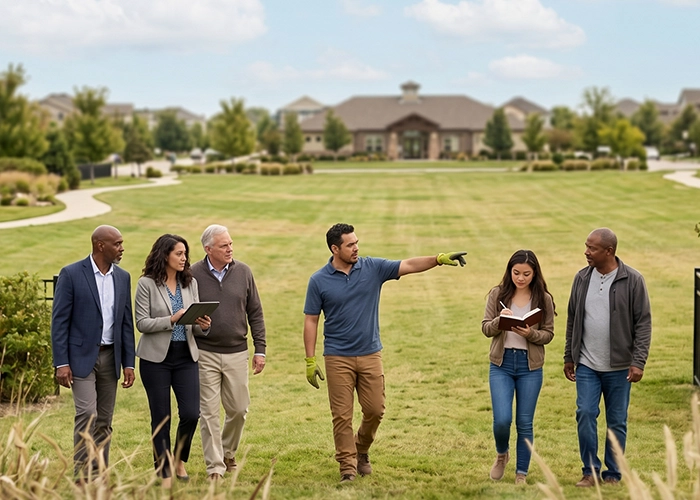
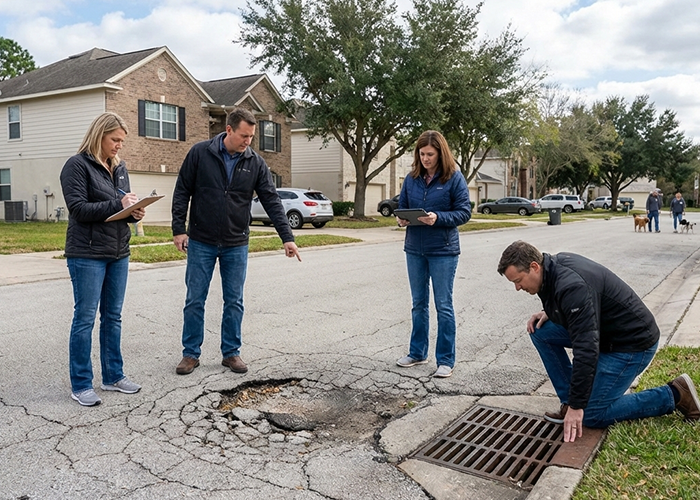
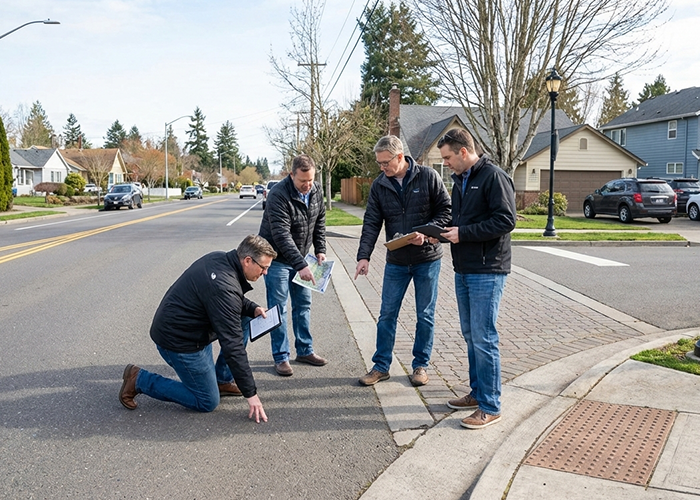
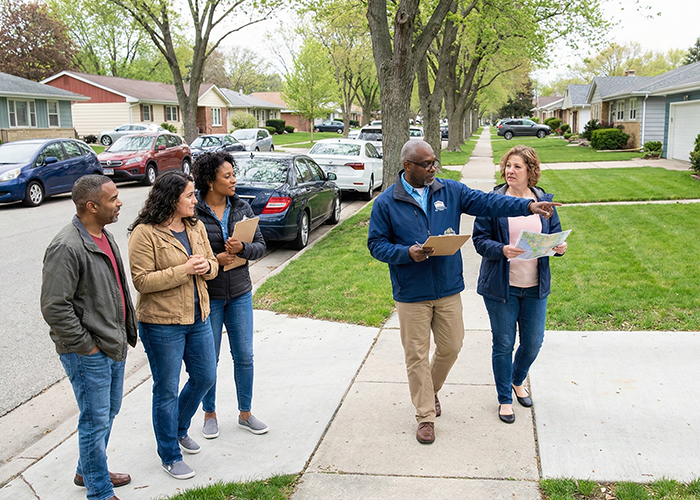
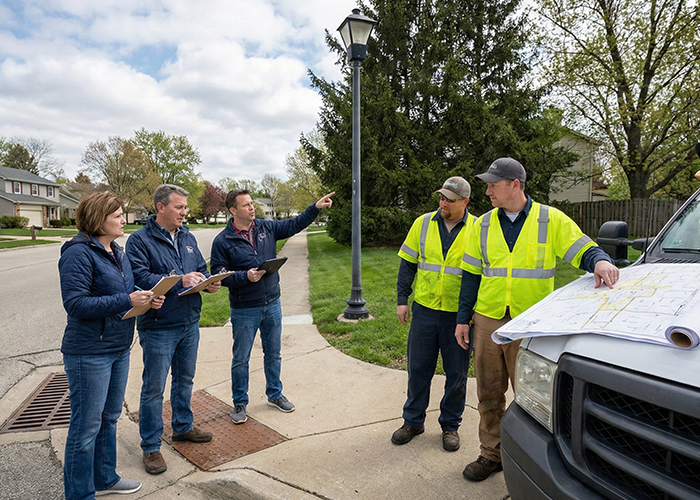
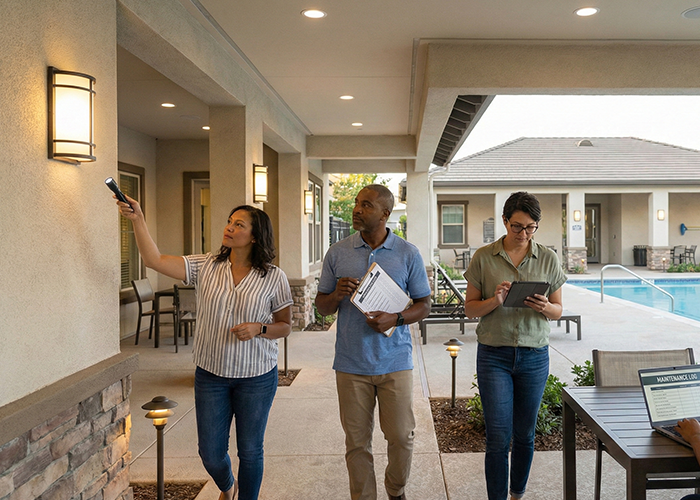
Start your inspection by walking through each building and amenity area with a simple route map. Make sure to take photos and short notes. As you review the place, ensure to mark items as urgent, preventive, or cosmetic so boards can approve work in a logical order.


Roofs and Gutters

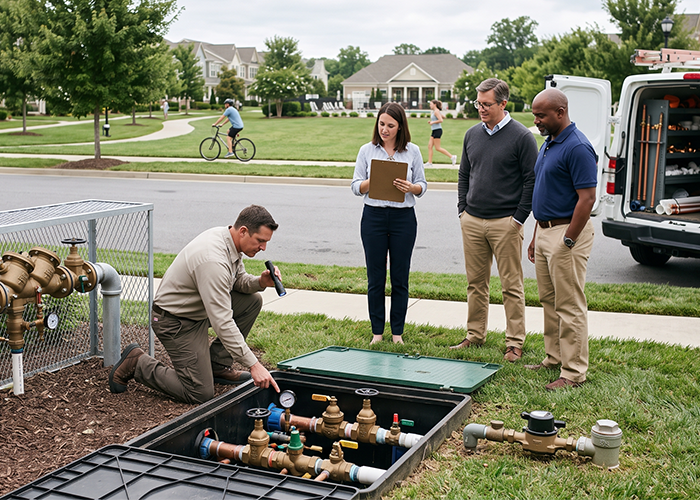
Check shingles, tiles, flashing, and roof penetrations with care. Look for cracked tiles, lifted edges, rust near fasteners, and soft spots around skylights. Clear gutters and downspouts so the first rains do not push water into eaves, fascia, or walls, and confirm splash blocks and extensions carry water away.


Siding, Paint, and Stucco

Look for bubbling paint, hairline cracks, stains, and chalking that hint at leaks. Touch up early so moisture does not creep in and worsen. Schedule small stucco patches and sealant work before winter storms arrive, and color-match now while the surrounding areas are still unaffected by the sun’s fading.


Walkways, Stairs, and Railings

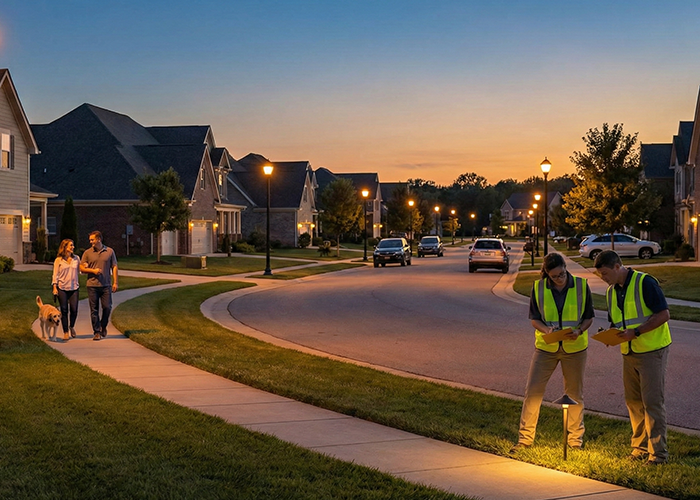
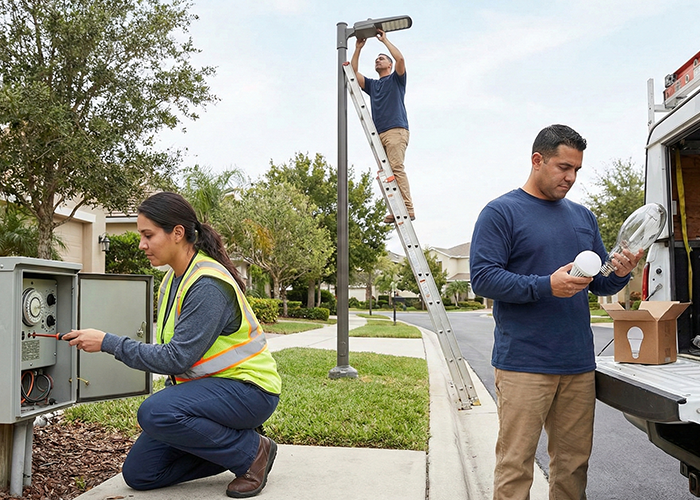
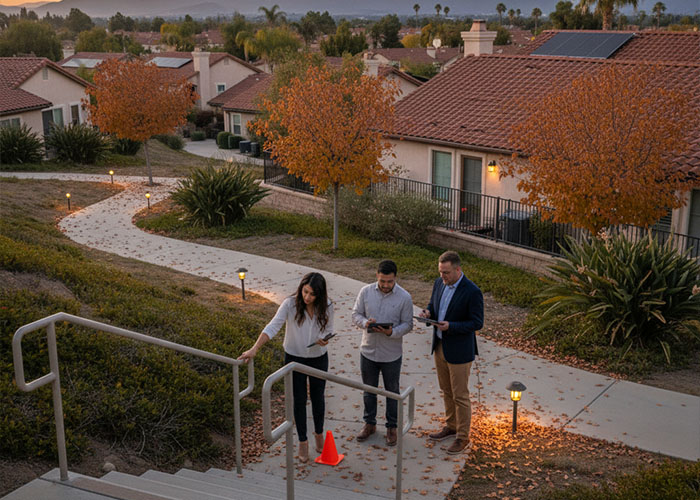
Scan for raised slabs, loose treads, or shaky rails at every building. Mark trip hazards and set cones until repairs are made to reduce the risk. Check the lighting along paths at dusk, then note any dark spots, broken lenses, and timer settings that require simple fixes.


Landscaping and Trees

fall maintenance for hoas

Healthy grounds set the tone for the whole property. They also protect structures from wind, rain, and wildfire risks common in SoCal. During landscaping maintenance, use a short checklist to assess tree health, slope stability, and seasonal planting needs.


Tree Trimming and Clearance

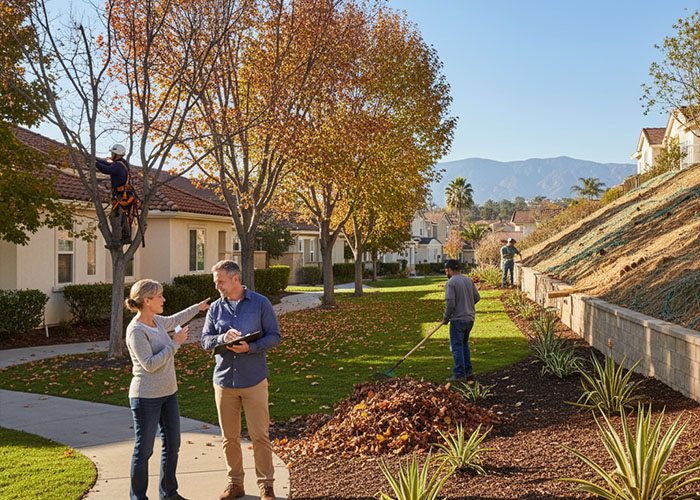
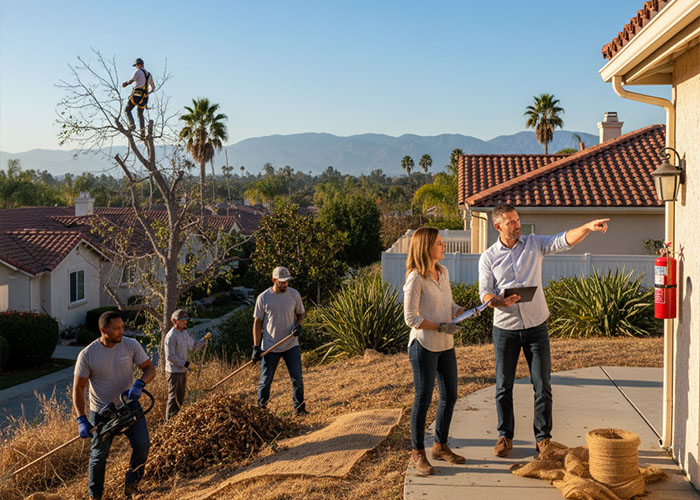
Remove dead wood and lift low branches near buildings and roads. Keep branches off roofs and clear of gutters to prevent abrasion and clogs. If growth is heavy, schedule a certified arborist to evaluate structure, storm load, and sightlines at intersections and entries.


Turf and Plant Beds

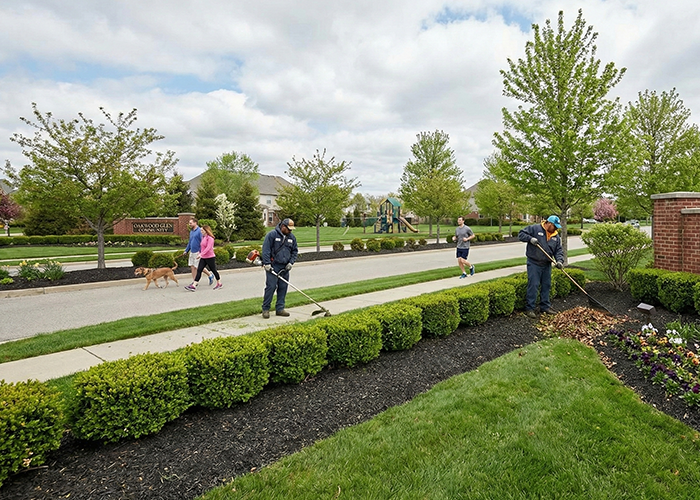
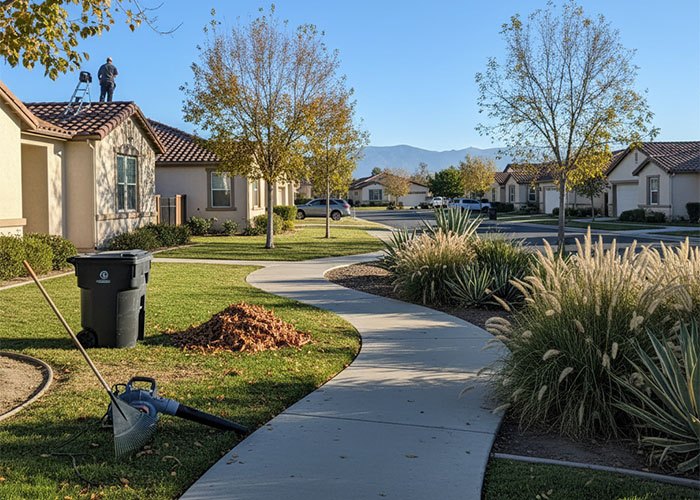
Rake leaves so they do not smother turf or clog drains. Refresh mulch to protect roots, suppress weeds, and help soils hold moisture through cool, dry spells. Select hardy, low-water plants that complement your design palette and position them where irrigation coverage is reliable.


Slopes and Erosion Control

Walk slopes after the first light rain and after a scheduled irrigation cycle. Watch for channels where water cuts into the soil or undercuts edges. Add wattles, jute netting, or groundcovers to slow runoff, and inspect retaining walls, weep holes, and nearby drains for blockages.


Managing Irrigation and Water

california fall maintenance

Fall usually means cooler days and shorter run times. Save water while keeping your plants healthy, and comply with local watering rules as required.


Reset Schedules for Cooler Weather

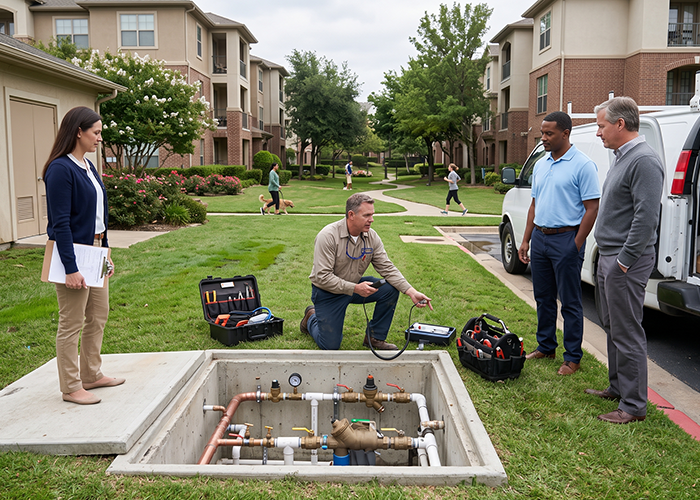
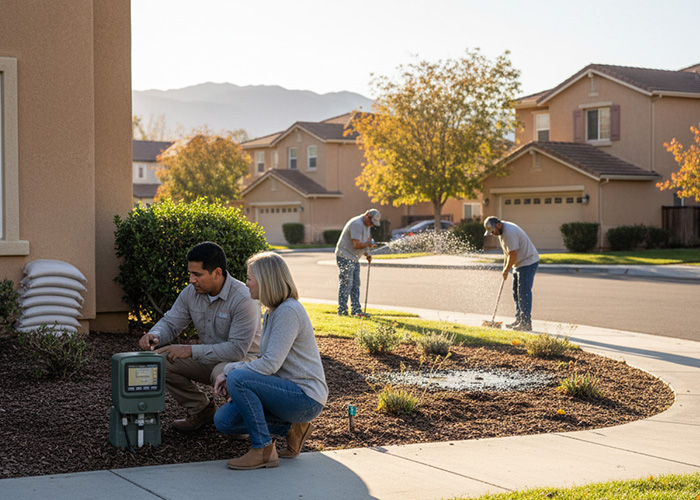
Dial back irrigation controllers to match seasonal needs. Reduce frequency first, then shorten run times if areas stay wet. Whenever possible, aim for deep, less frequent watering rather than daily misting, and utilize cycle-and-soak settings for slopes that tend to shed water.


Fix Leaks and Faulty Nozzles

Look for soggy spots, overspray on pavement, tilted heads, and clogged nozzles. Replace worn risers and seals, then adjust the arcs so that water lands on plants, not on sidewalks or fences. Map repairs by zone so you can verify savings on the next water bill.


Rainy Day Prep

Clear surface drains, scuppers, and curb inlets before heavy rain. Sweep leaves and debris from grates and swales, and confirm trash enclosures have intact pads and berms. Keep a small supply of sandbags and drain socks to direct flow away from buildings, garages, and low doors.


Recreational Area Checks

hoa fall maintenance

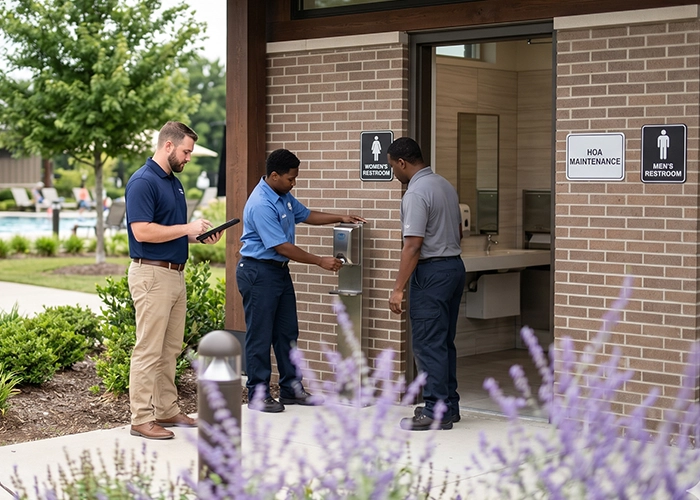
Even if your pool stays open, fall brings new patterns of use. Keep safety and cleanliness as your top priorities, and adjust staffing to accommodate shorter daylight hours.


Seasonal Hours and Safety

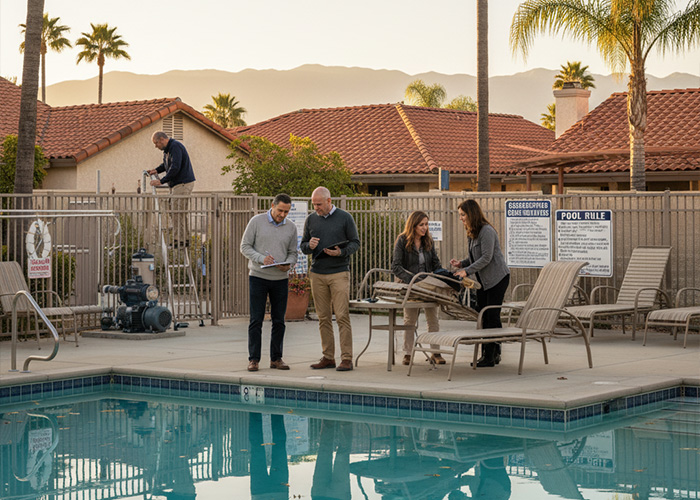
Review posted hours, rules, and emergency contacts. Check gates, self-closers, and latches for smooth action and proper closing. Test lifesaving gear and inspect deck surfaces for cracks or slick areas, then schedule quick patches before cold nights slow down the curing process.


Furniture and Surfaces

Clean and inspect lounges, umbrellas, and tables for loose hardware. Store or repair damaged items to prevent them from becoming hazards in the wind. Pressure wash carefully to avoid forcing water under expansion joints or into door thresholds. Reapply sealant to worn areas that receive frequent foot traffic.


Water Quality and Equipment

Confirm chemical logs are current and legible. Backwash filters on schedule and inspect pump seals for drips. Check heater start-ups before cooler evenings, then verify set points match posted hours to avoid wasted energy.


Inspecting the Clubhouse and Indoor Systems

fall maintenance for hoas

A little preventive work keeps community rooms comfortable and welcoming. Focus on air quality, lighting, and plumbing that support events and regular use.


HVAC and Filters

Replace filters and clean return vents to improve airflow. Get furnaces serviced and package units so that they heat up evenly and run quietly. Then, calibrate the thermostats, check the door sweeps, and confirm that the condensate lines are clear to prevent leaks on finished floors.


Plumbing and Water Heaters

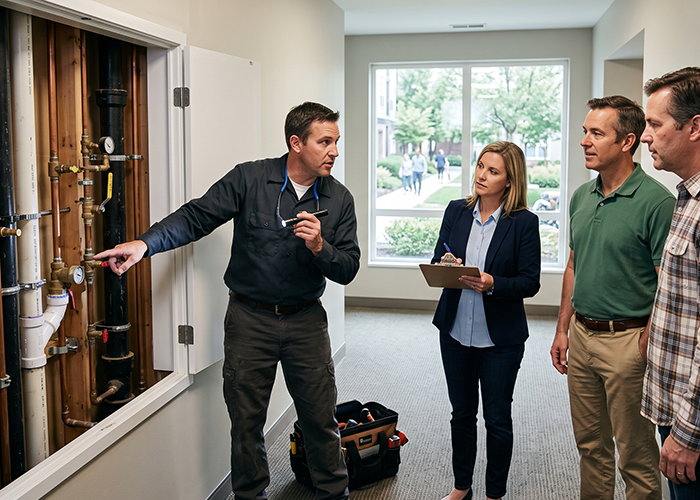
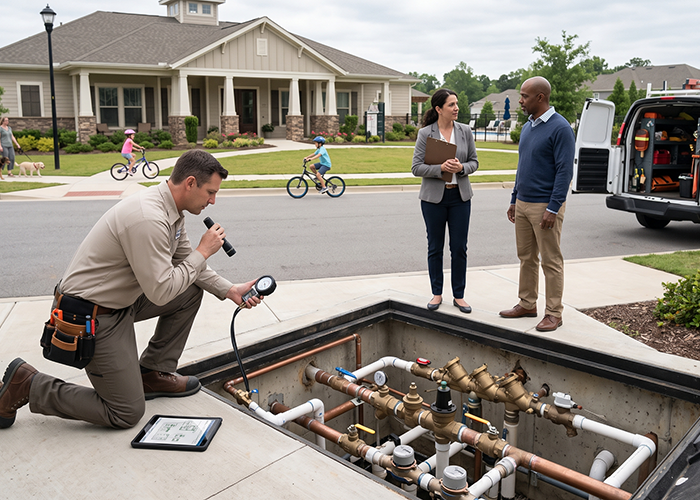
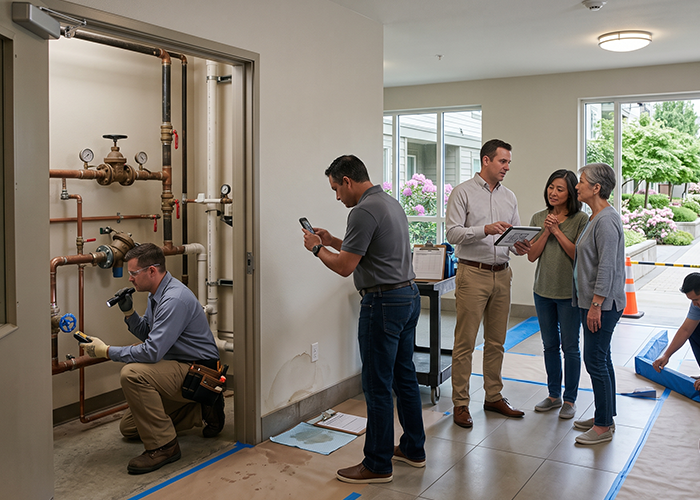
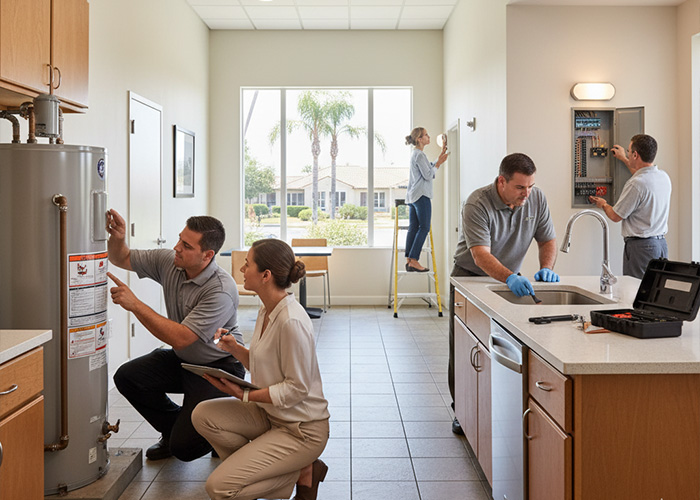
Inspect water heaters for corrosion, slow leaks, and expired relief-valve tags. Test temperature settings for comfort and safety in kitchens and restrooms. Look for drips at sinks and toilets that waste water and raise bills, and keep spare parts for standard fixtures on hand.


Safety Fixtures

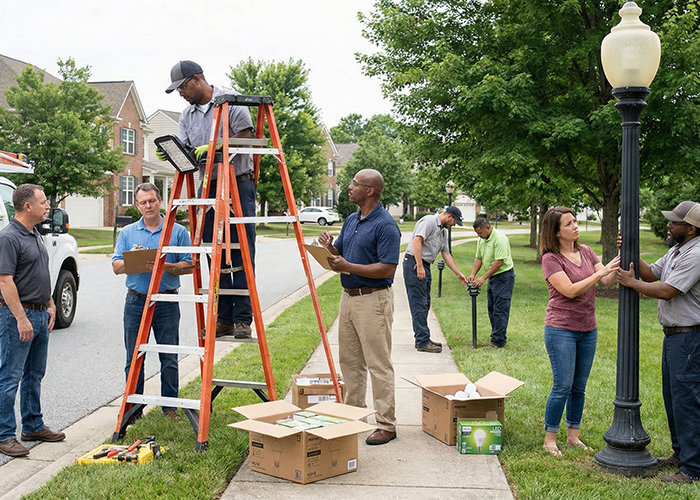
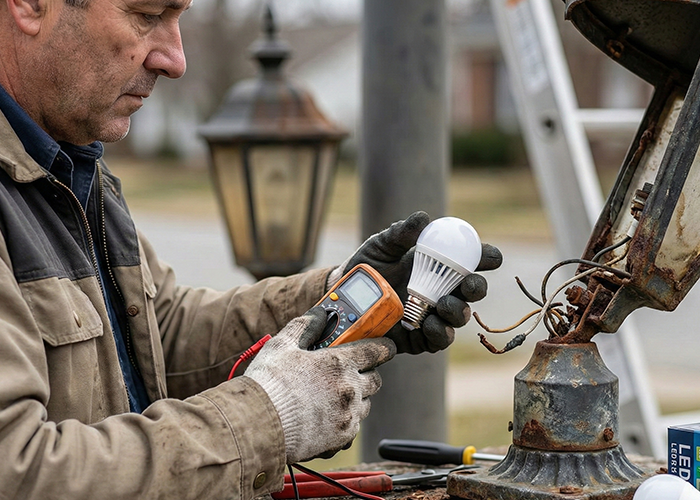
In any community, proper lighting is essential for safety. Replace dim bulbs and test emergency lighting and exit signs. Clean lenses and wall plates so light levels feel bright and safe after sunset. Test GFCIs in kitchens and near sinks, and label panels so responders and vendors can act quickly.


Fire Safety and Wildfire Readiness

california fall maintenance

Southern California communities should treat fall as a readiness window. Use this time to tighten up basics that matter during Red Flag warnings and windy days.


Brush Clearance

Remove dry brush, ladder fuels, and leaf piles around buildings and fences. Keep combustible items, including stored furniture and pallets, away from walls. Maintain a clear band around structures and keep ignition sources, such as grills, in approved areas under supervision.


Emergency and Evacuation

Check inspection tags on extinguishers and service as needed. Test smoke and carbon monoxide alarms in clubhouses and common rooms. Confirm that exit paths are clear, doors swing freely, and stairwells are free of obstructions that could slow evacuation.


Resident Communication for Red Flag Days

Share short reminders on wind safety, parking, and grill use before high-risk periods. Encourage residents to report hazards like sparking lights, damaged lines, or downed limbs. Post phone numbers and a simple plan so people know who to call after hours.


Pest Prevention

hoa fall maintenance

Cooler weather drives pests to warm spaces. Tighten gaps and make food and shelter hard to find across the site.

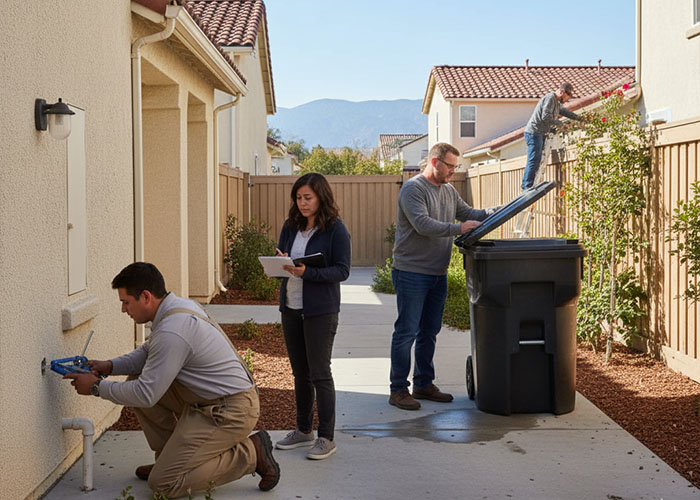
Seal penetrations at utility lines and door thresholds with durable materials. Keep trash lids closed, rinse pads, and schedule extra pickups if bins overflow. Trim vegetation off walls and fences to prevent pests from entering buildings, and treat known ant and roach trails before activity spikes.


Budget and Schedules

all maintenance for hoas

Fall is a smart time to connect maintenance with money plans. Review reserve schedules and align repairs with the budget to ensure projects remain predictable.

Price out tree work, roof patches, paint touch-ups, and drain cleaning now, while vendors still have open slots. Request comparable scopes and written warranties so bids are easy to evaluate. Locking in work early can reduce costs, prevent holiday delays, and ensure accurate updates to your reserve study.

Tie your fall maintenance checklist to component timelines for roofing, painting, paving, and mechanical equipment. Small fixes today protect large reserve items tomorrow and help boards explain how spending supports long-term value.


Ensure Compliance

california fall maintenance

Keep maintenance aligned with your CC&Rs and architectural rules. If a project changes exterior appearance or materials, route it through architectural review with precise submittal requirements.

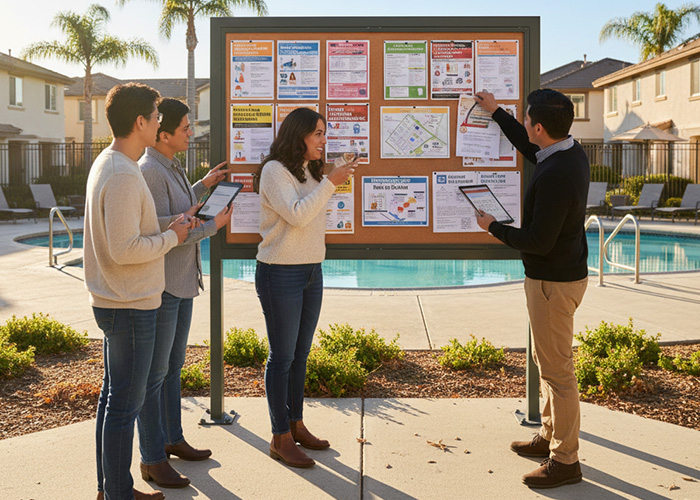
Post notices if areas close during repairs and add simple maps where routes change. Document approvals, start dates, and inspection results so that future boards can follow the trail and homeowners can see a consistent, fair process.


Resident Coordination

hoa fall maintenance

Residents appreciate clear updates and short timelines. Share what is happening, where, and why through email, text alerts, and posted signs.

Create a seasonal calendar from your fall maintenance checklist that highlights vendor visits, drain cleaning, tree days, and pool service. Include rain dates so that crews and residents are aware of the plan in case the weather shifts, and keep the language straightforward so that everyone understands the next steps.

Welcoming the Fall Season

A comprehensive fall maintenance checklist ensures your community remains safe, attractive, and well-prepared for the cooler days ahead. Start with quick wins, communicate often, and track what you finish. Small steps this fall can prevent big repairs later.

Need professional support for fall maintenance in your community? Personalized Property Management offers HOA management services around Southern California. Call us at 760-325-9500 or email us at info@ppminternet.com for more information!


Related Articles:

Should the HOA Mow Vacant Lots?

Vacant lots in neighborhoods can quickly become a detriment to the community. If they’re neglected, they become an eyesore and a possible safety risk for everyone in the community. If that were the case, should the HOA mow vacant lots? 

What are Considered Vacant Lots?

Simply put, vacant lots are areas or parcels of land in a neighborhood that are undeveloped. This means no residential (or commercial, if in a mixed-use community) structures are standing on that piece of land. 

Usually, vacant lots are privately owned, whether by a private individual, the developer, or an investor. They differ from common areas in HOA neighborhoods, which the HOA itself handles.

Because vacant parcels of land don’t have buildings yet, they tend to be easily overlooked. When this happens, they become both an eyesore to the community and a danger to people’s safety. 

Why Neglecting HOA Vacant Lots is a Bad Idea

Any area that is unkempt or neglected in a neighborhood hurts the community. From property values going down to safety risks, here are reasons you shouldn’t overlook vacant lots in your HOA community.

Fire Hazards

In many overlooked empty lots, weeds and brush tend to grow and thrive. If left unmanaged, this can easily spread into adjacent lots. 

With that much unmanaged foliage comes a considerable fire hazard. In places like Southern California, which may experience dry weather, that foliage can dry up. These leaves can easily start or become fuel for any wildfires that may start, causing damage to the lot and possibly nearby homes. 

Health and Safety Risks

Many pests, such as mosquitoes and rats, thrive in empty, overgrown lots. If left alone, a vacant lot can become a breeding ground for diseases carried by these animals. The worst part is that this could easily affect nearby properties and their residents if not handled immediately. 

Negative Curb Appeal

Another possible reason why one may ask “Should HOA mow vacant lots?” is the negative effect of unkempt properties on curb appeal. No matter how pristine the rest of the neighborhood looks, one overgrown empty lot can ruin that.

With negative curb appeal, potential homeowners may be less inclined to choose your community and move in. Not only do you have an eyesore with a neglected lot, but your property value also plummets.

Who is Responsible?

Who has the responsibility of mowing? Should the HOA mow the vacant lot if it’s unkempt and is affecting the community as a whole? 

In most HOAs, the person responsible by default is the owner of the property, even if it’s undeveloped. The association only maintains common areas and shared amenities.

Most local governments in Southern California also place this burden on the “owner of the record.” They need to keep the vacant property clear of weeds and trash, which will help minimize any safety hazards. 

There are rare occasions when the HOA has the responsibility. However, in those situations, this is written in the governing documents. With these arrangements, the HOA would be responsible for landscaping services for all properties, vacant or not. The expenses for this are usually part of the HOA dues.

What If Owners Don’t Maintain Their Lot?

tall grass | hoa mow vacant lots

If a lot is overgrown or unsafe and the owner doesn’t fix it, the board can move through these steps.

1. Violation Notice

Send a clear letter to the titled owner. Cite the exact CC&R section, describe what you saw, attach date-stamped photos, and give a firm deadline. 

For routine lawn and weed issues, 10 to 30 days is typical. At the same time, fire hazards may require less time under local codes. 

As part of the notice, explain how to contact the HOA, what happens if the deadline is missed, and the owner’s right to a hearing.

2. Hearing Opportunity (Civil Code §5855).

If the owner disputes or doesn’t respond, offer a hearing with at least 10 days’ written notice that lists the violation and possible actions. Let the owner present evidence or a cure plan. The board deliberates in closed session and sends a written decision within 15 days, including any deadlines or fines. Keep minutes and exhibits.

3. Self-help and Cost Recovery

If the CC&Rs allow and the problem remains, the HOA may do limited abatement. 

For this, you should give advance notice of the date and scope unless there’s an immediate safety risk. Use a licensed, insured contractor, take before/after photos, and do only what’s needed (mowing, weed removal, debris haul-off). Bill the owner the actual, reasonable cost and any permitted admin fee, with time logs and invoices to back it up.

4. Fines and Penalties

For continued noncompliance, levy fines under an adopted, properly noticed penalty schedule. Each fine still requires notice, a chance to be heard, and a written decision. Escalate for repeat or ongoing issues, and stop fines once the issue is resolved. You may suspend common-area privileges if the documents allow.

5. Lien and Collection

If reimbursable costs or other sums go unpaid, proceed to collections. In California, send a pre-lien letter with the disclosures in Civil Code §5660 at least 30 days before recording a lien. The owner may meet with the board, request IDR, and dispute the debt. 

Fines are generally not lienable for foreclosure. However, reimbursement assessments for abatement may be collected like assessments if your documents and the Davis-Stirling Act permit. Meanwhile, foreclosure will require statutory thresholds. 

As best practice, you should work with your HOA’s legal counsel or your collection agent.

6. Local Government Involvement

In high fire-hazard areas or where weeds and debris violate codes, agencies such as CAL FIRE or county code enforcement can cite, order abatement, or arrange work and add costs to the tax roll. Align your timeline with local weed-abatement calendars and defensible-space rules.

Something to Remember in Between Steps:

Re-inspect soon after the deadline, document any change, and send either a closure note or the next notice. Clear timelines, photos, and consistency resolve most cases without escalation.

Self-Help Enforcement: When the HOA Mows Vacant Lots Themselves

Sometimes, associations decide it’s easier to handle the problem directly. But this comes with pros and cons.

Why HOAs Step In

When the HOA mows vacant lots itself, it is trying to preserve the visual and environmental quality of the community. Quick action helps prevent further issues like neighbor complaints or fire risks. It also ensures that community standards are upheld without waiting for a possibly uncooperative owner to take action.

Making Effective and Practical HOA Vacant Lot Policies

Clear rules for vacant lots help everyone know what’s expected and give the board a fair, consistent way to act when there’s a problem. A good policy also reduces arguments and protects the association if disputes arise.

What to include

  • Define the basics. Spell out what counts as a “vacant lot” and what “neglect” looks like (for example: overgrown vegetation, piled debris, or obvious safety hazards).
  • Set an inspection plan. Note how often the HOA will check lots, what items are on the checklist, and how conditions will be documented (photos, dates, notes).
  • Give a clear timeline. State how long an owner has to fix an issue after being notified, and how to request more time if there are legitimate delays.
  • Explain enforcement. Describe the steps the HOA will take if problems aren’t addressed: how notices are sent, the owner’s right to a hearing, possible fines, and when the HOA may arrange the work and bill the cost back to the owner (“self-help”), with records kept throughout.

Keep the tone firm but fair, use plain language, and apply the same process every time. Consistency is what makes the policy work.

Alternatives to HOA-Managed Mowing

professional grass cutter | hoa mow vacant lots

While direct intervention works in some situations, there are alternative approaches that may be more sustainable or cooperative in the long run.

Contracted Services Paid by Owners

The HOA can manage a master contract with a landscaping company and assign mowing services to vacant lot owners. The HOA then bills each owner individually based on service use. This streamlines vendor management but keeps financial responsibility with the lot owner.

Owner Incentive or Opt-In Programs

Some associations offer early-compliance discounts or other perks for proactive owners. Others form volunteer beautification groups to help with occasional cleanups, especially if a lot is abandoned or in probate.

Education and Awareness

An informed community is more likely to comply. Regular newsletters, board meeting announcements, or community forums can highlight the importance of vacant lot maintenance. Promoting neighborhood pride may also encourage owners to do their part.

Best Practices for HOA Boards

Successful enforcement and policy management start with preparation. Here are a few best practices every board should follow.

Review Governing Documents

Before taking any action, double-check what your CC&Rs and bylaws allow. If the language is vague or unclear, consult your HOA attorney to avoid overstepping your authority.

Standardize Enforcement

Consistency is key. Use pre-drafted templates for notices, set clear deadlines, and follow a step-by-step process for all violations. This protects the HOA from claims of selective enforcement or bias.

Keep Records

Maintain logs of complaints, inspection results, notices sent, and any corrective action taken. These records are vital if the association faces legal challenges or disputes from owners.

Maintaining Appeal

Should your HOA mow vacant lots? It depends on who’s responsible, what your rules allow, and your budget. A clear, lawful plan prevents disputes, protects values, and keeps the neighborhood looking cared for.

Need professional help with handling unmaintained vacant lots in your HOA? Personalized Property Management offers HOA management services around Southern California. Call us at 760-325-9500 or email us at info@ppminternet.com for more information!

Related Articles:

Before Making Changes, Know The HOA Landscaping Maintenance Rules

Do you have a new idea that would make your yard the prettiest in the community? Before even planning what to do, take a step back and assess if it complies with your HOA landscaping maintenance rules. It can save you from a lot of headaches down the road.

The Role of HOA Landscaping Maintenance Rules

You may think that such rules eliminate all the fun and creativity in maintaining and designing your yards. That’s not the case. These guidelines are in place to keep the neighborhood’s pleasant appearance, ensure safety, and preserve property values.

Imagine having a neighbor who doesn’t follow these rules. They have wild vines climbing all over their fences. Compare that neighbor to another who makes the effort to keep a neatly trimmed lawn. Compared side by side, the image of the community starts to fray.

When your community has and follows landscaping rules, there is consistency in the neighborhood’s aesthetic. Each yard can complement its neighbors. It makes the community look and feel cohesive and cared for.

Their importance goes beyond simple looks. There’s another layer: your investment. Homes with well-kept landscaping tend to retain or increase in value. And when every property looks tended to, buyers notice. Whether you’re planning to sell or stay put, these rules quietly work in your favor.

How to Find Your Community’s Landscaping Guidelines

Not all HOAs play by the same playbook. What works for a neighborhood in Irvine won’t necessarily apply in Palm Springs. So, where do you look?

  • Start with the governing documents: The CC&Rs typically cover broad landscaping expectations.
  • Then, check any Architectural Guidelines or Design Review standards your HOA maintains. These tend to specify details, such as approved plant types or fence styles.
  • Many associations post these documents online or make them available through the management office. If you don’t see them, ask. Board members would rather answer your questions up front than deal with a rule violation later.
  • Keep an eye on those seasonal newsletters (yes, the ones that land in your inbox or mailbox). They often contain reminders about water restrictions, maintenance expectations, or changes to landscaping rules.

In short, when in doubt, ask.

HOA Landscaping Maintenance Rules: What’s Covered?

Every community is different, but you’ll often see common ground when it comes to what landscaping rules address:

  • Lawn care (including mowing frequency and turf height)
  • Pruning requirements for trees and shrubs
  • Maintenance expectations for flower beds and seasonal plantings
  • Approved mulch and ground covers
  • Artificial turf guidelines
  • Removal of dead or diseased plants
  • Hardscape elements (such as paths, stones, and decorative borders)
  • Outdoor lighting in landscaped areas

For communities across Southern California, expect to see added guidance on drought-tolerant landscaping and water conservation, which reflect the region’s climate realities.

Do You Need HOA Approval for Landscaping Changes?

In many cases, yes, but it still depends on a few factors.

Routine upkeep, like mowing your lawn or replacing a wilted plant, generally won’t require approval. But bigger changes? Adding a new tree, swapping turf for drought-friendly plantings, and installing stone borders will likely need the green light.

If you find yourself wondering, “Do I need HOA approval for this?” that’s probably a sign to reach out to your board or management office before moving forward. It’s far better to ask first than to face a fine or, worse, be asked to undo all your hard work.

How the Approval Process Typically Works

clean yard | hoa landscaping maintenance

When approval is needed, here’s how the process typically plays out:

  1. Submit your application: Provide a clear, detailed request. Photos, plant lists, design sketches—anything that helps the committee understand your vision is helpful.
  2. Wait for review: The architectural committee or board reviews requests, often at the next scheduled meeting. Some boards give early feedback, but don’t count on it.
  3. Hold off on starting: Don’t purchase materials or hire a contractor until you have written approval. Yes, waiting can feel frustrating, but it can also save you from larger frustrations later.
  4. Get a decision: You’ll receive approval, a denial, or a request for changes. Denials aren’t always the end of the road. Usually, minor revisions can tip the balance in your favor.
  5. Revise or appeal if needed: If denied, you can typically revise your proposal or submit an appeal. Boards generally appreciate flexibility and will often work with homeowners who approach things in good faith.

Common Landscaping Mistakes

Even the most well-meaning homeowners can occasionally trip up. A few missteps to watch for:

  • Starting a major project without first getting approval
  • Planting species that are on the prohibited list or invasive
  • Letting grass or shrubs get overgrown (life happens, but it’s noticeable)
  • Overlooking seasonal maintenance
  • Using non-compliant materials (neon gravel or low-quality artificial turf are common offenders)

A quick review of your HOA’s landscaping rules from time to time can help you stay in the clear. And if you’re unsure about something, ask first.

Seasonal Tips for HOA Landscape Maintenance

Southern California’s climate keeps landscaping a year-round job. Here are a few seasonal reminders:

Spring: Ideal for pruning, refreshing mulch, and planting. It’s also smart to inspect irrigation systems for winter damage.

Summer: Be mindful of watering, especially during drought alerts. Check for local restrictions and adjust irrigation schedules to match rising temperatures.

Fall: Clear leaves, prep plants for cooler weather, and consider adding drought-tolerant perennials.

Winter: Prune dormant plants, clean gutters, and inspect hardscaping for wear or repairs.

Partnering with HOA Landscape Services

Many HOAs already contract with landscape services for common areas, and you can hire these same pros for your own yard. They’ll know your HOA’s standards and can handle mowing, pruning, seasonal changes, and irrigation maintenance with ease.

That frees you up to enjoy your outdoor space without the worry of whether you’ve crossed any lines with your landscaping.

What to Look for in an HOA Landscape Services Company

When hiring one for your home, it’s best to hire landscaping services based on the following factors.

  • Familiarity with your HOA’s landscaping rules
  • Experience with SoCal’s plants and climate
  • Licensing and insurance (don’t skip this)
  • Clear communication and reliability
  • Positive word-of-mouth from neighbors

While reviewing different vendors may seem tedious, it saves you from a lot of potential hiccups later on.

Handling Common Area Maintenance

Residents manage their yards. The HOA oversees common spaces, such as parks, greenbelts, entry features, and medians. Dues cover this work, and boards often hire experienced contractors to maintain these shared areas.

Although the board and their contractors can’t keep track of everything at the snap of a finger, they may miss some areas that need work. Residents can contribute by simply reporting anything that seems out of place.

How Rules May Change with Drought Conditions

Southern California’s persistent drought risk influences landscaping regulations, and those regulations may evolve rapidly.

Your HOA might promote drought-tolerant landscaping, cap turf areas, or even offer rebates for switching to water-wise designs. Staying informed is key—not just through HOA channels, but also city and county updates.

If you’re thinking about making drought-friendly changes, talk to your board first. They’ll help ensure your plans align with current standards—and could even point you toward incentives.

How California Laws Can Affect HOA Landscaping Rules

long grass | hoa landscaping maintenance

State law plays a role here, too. The Davis-Stirling Act governs HOAs in California, and more specifically, the Civil Code Section 4735 protects homeowners who want to install drought-friendly landscaping.

In short, your HOA generally can’t force you to maintain a thirsty lawn during drought conditions or prohibit you from replacing it with more sustainable options.

City and county watering restrictions also play a role. If local regulations limit irrigation, those requirements supersede HOA guidelines. Simply put, the HOA can’t ask you to use more water than the law allows.

Occasionally, HOA rules lag behind updated state laws. If you’re ever unsure, check with your board or management office before starting a project.

Balancing Creativity with Compliance

It’s only natural to want your outdoor space to reflect your taste. You can absolutely personalize your landscaping within the framework of HOA rules.

Choose plants from approved lists. Coordinate designs with your home’s style and the community aesthetic. If you want to try something new, ask for guidance first. A quick conversation can prevent future hassles and help ensure your project enhances both your property and the neighborhood.

When in Doubt, Communicate

Keep the lines of communication open. Are you unsure whether a project requires approval? Do you need to know whether a certain material or plant is allowed? Again, it never hurts to ask.

Boards and management companies generally appreciate homeowners who take the time to clarify questions. It demonstrates respect for the community and the shared goal of maintaining a beautiful neighborhood.

Attractive and Compliant Landscaping

A well-maintained yard helps preserve the character and value of the entire community. Before tackling a landscaping project, take time to review your HOA’s maintenance rules. It’s time well spent—and will help ensure your yard remains both attractive and compliant.

Looking for professional help in managing landscaping maintenance? Personalized Property Management offers HOA management services around Southern California. Call us at 760-325-9500 or email us at info@ppminternet.com for more information!

Related Articles
HOA Landscaping Rules In California HOA Communities
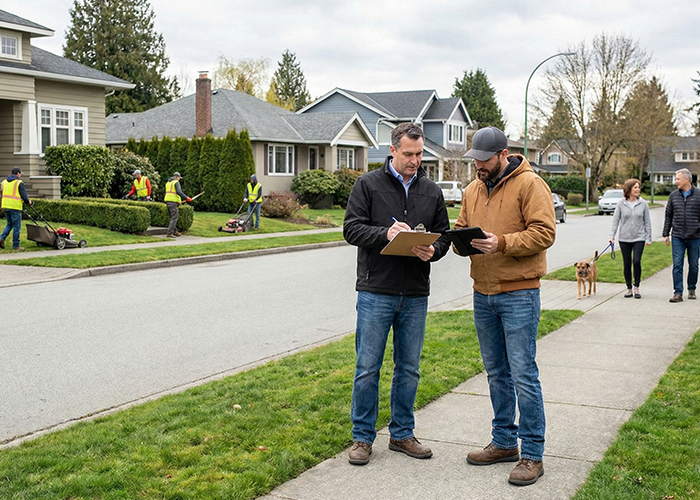
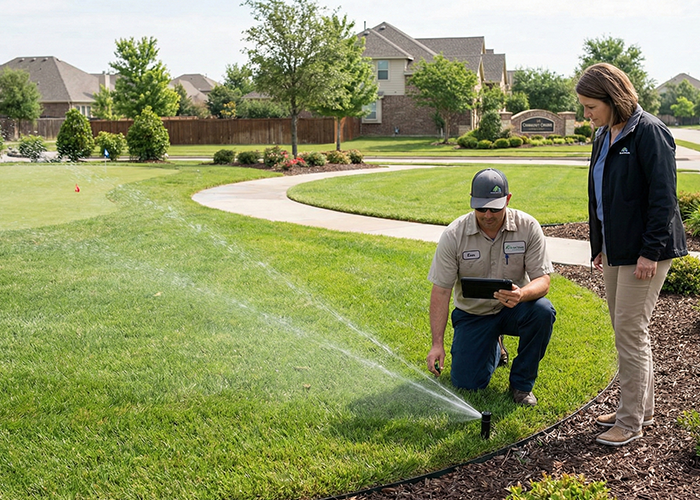
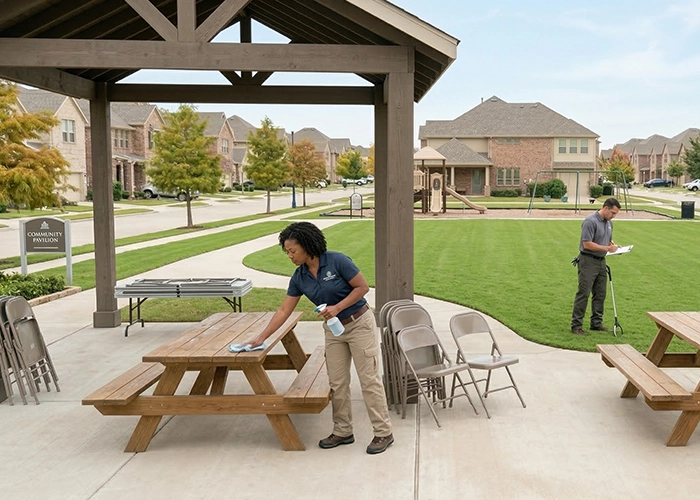
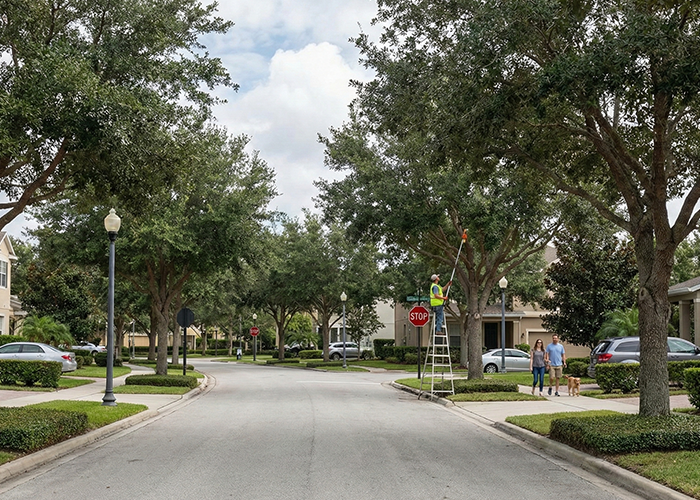
Landscaping can be a surprisingly heated topic in HOA communities across California. From neatly trimmed lawns to eco-friendly drought-tolerant plants, what a yard looks like often matters just as much as what’s behind the front door. For HOA board members, understanding California’s legal landscape is essential for creating fair, enforceable, and sustainable landscaping rules.
The Basics of HOA Landscaping Oversight

Landscaping plays a big role in defining a community’s curb appeal and property values. In an HOA setting, rules about landscaping help ensure consistency and preserve the community’s visual identity. But they also have to stay within the bounds of California law.

Under the Davis-Stirling Common Interest Development Act, HOAs have the authority to regulate landscaping in common areas and sometimes on private property, depending on how the governing documents are written. These rules typically address:

  • What types of plants and materials are allowed
  • Where landscaping features can be placed
  • Irrigation and watering requirements
  • Lawn maintenance expectations
  • Rules around artificial turf or drought-friendly landscaping

While it might seem straightforward, there are legal limits. Homeowners associations can’t overreach into decisions that are protected by law, especially when it comes to water conservation and environmental compliance.

Water Conservation and Civil Code Protections

California’s long-standing battle with drought has made water conservation more than just a good idea—it’s now a legal right for homeowners. Civil Code §4735, amended in recent years to reflect California’s water-conscious priorities, restricts HOAs from enforcing landscaping rules that interfere with a homeowner’s efforts to conserve water.

Here’s what that means in practice:

  • HOAs cannot prohibit artificial turf in backyards or front yards.
  • Residents are allowed to replace grass with drought-tolerant landscaping, and HOAs must permit these changes.
  • Fines for reducing or stopping lawn watering during drought periods are not allowed if the area is under official water use restrictions.
  • Landscaping modifications that align with local or state water-efficient landscaping ordinances cannot be disallowed by an HOA.

This is a big deal, especially in communities where green lawns were once the standard. HOA landscaping in California has had to evolve—boards must now create guidelines that respect both aesthetic values and homeowners’ legal right to install sustainable landscaping.

HOA Landscaping Guidelines and Community Design

A well-maintained landscape contributes to a pleasant community feel, but not every design choice is up to individual residents. That’s where HOA landscaping guidelines come in. These documents help preserve harmony by setting standards for things like:

  • Color and type of mulch or rocks
  • Size and species of trees or shrubs
  • Lawn replacement materials (e.g., decomposed granite, bark, or native grasses)
  • Locations of planter beds or trellises
  • Use of potted plants, fountains, or yard ornaments

But it’s important to note: these guidelines must also be reasonable. A board can’t enforce subjective aesthetic preferences or adopt rules that would make compliance with water conservation laws impossible. If your HOA’s landscaping guidelines haven’t been updated in a few years, it’s a good idea to review them with legal counsel or a professional management company.

Architectural Review and the Application Process

Most HOAs require homeowners to submit a request before making major landscaping changes, especially in front yards or areas visible from the street. The Davis-Stirling Act requires this architectural review process to be:

  • Consistent and fair
  • Completed within a reasonable timeframe (generally 45 days)
  • Based on written guidelines
  • Documented with clear approval or denial letters

HOAs that don’t respond to an application within the required period may find that the homeowner’s request is automatically approved by default. This is one area where delays or disorganized review processes can lead to costly problems down the line.

For boards, it’s critical to keep track of application timelines, document all decisions, and communicate clearly with homeowners throughout the process. This not only keeps the association in compliance, it also helps prevent unnecessary friction.

Who Handles What? Understanding Maintenance Obligations

landscape expert | hoa landscaping

Landscaping upkeep is often split between the HOA and homeowners. According to Civil Code §4775:

  • The HOA is responsible for the repair, replacement, and maintenance of common areas.
  • The homeowner is responsible for maintaining their separate interest (their own lot or unit; including vacant lots) and exclusive use common areas (like a patio or front lawn).

However, some HOAs may shift responsibilities through their CC&Rs. For example, the HOA might take care of front lawns or shared driveways, even if those areas are technically part of individual lots. That’s why it’s critical for boards to define maintenance roles in their governing documents clearly. If residents are unclear about who trims which tree or waters which part of the lawn, disputes are likely to happen.

In master-planned communities, it’s not uncommon for the HOA to manage large-scale landscaping, including medians, trails, and parks, while homeowners handle their planting beds. In smaller communities or townhome associations, the HOA may provide full-service landscaping across all exterior spaces.

Common Violations and How to Handle Them

HOA lawn maintenance rules aren’t just there for appearances—they’re a reflection of community standards. When a homeowner falls short of those standards, such as letting the grass die or leaving tree branches to overhang a neighbour’s fence, the board may need to step in.

But enforcement needs to follow proper procedure:

  • Start with a courtesy reminder or friendly notice
  • Move to a formal violation letter, if necessary
  • Allow time for the homeowner to fix the issue
  • Impose fines only if allowed in your governing documents and after a hearing

Boards should avoid heavy-handed tactics or singling out specific residents. Not only does that create tension, but it may also open the association to legal claims of selective enforcement.

Updating HOA Landscaping Rules

If your HOA is still operating under the same landscaping rules it adopted in the 1990s, it’s probably time for an update. California’s climate and homeowner expectations have shifted. What once made sense—like strict lawn requirements or ornamental plant lists—may now conflict with sustainability goals or state laws protecting water conservation efforts.

Before revising your rules, assess whether they accommodate artificial turf, drought-tolerant materials, or modern irrigation systems. Take a fresh look at your approved plant lists and architectural review procedures to make sure they reflect current laws and practical needs.

Consider these questions:

  • Do your rules accommodate artificial turf or water-efficient irrigation systems?
  • Are the plant lists outdated or incompatible with today’s climate concerns?
  • Do your guidelines support residents who want native or pollinator-friendly gardens?
  • Are architectural review procedures clearly documented and legally compliant?

Work with your community manager or HOA attorney to review and revise your HOA landscaping rules. Focus on flexibility, sustainability, and clarity. Good rules don’t just enforce—they empower residents to make smart, compliant decisions.

Encouraging Better Landscape Design

landscape plant | hoa landscaping

Good HOA landscape design does more than make a yard pretty. It contributes to healthier ecosystems, lower water bills, and stronger property values. Some HOAs now offer sample plans or landscape design resources to help homeowners make informed choices. Others host workshops on native planting or provide rebates for removing turf.

If your HOA is committed to environmental leadership, you might also:

  • Partner with local water agencies for conservation programs
  • Establish a landscaping committee to oversee updates and compliance
  • Recognize homeowners who implement sustainable designs

These types of proactive programs show that the board isn’t just enforcing rules—it’s helping shape a better community.

How to Navigate Pushback and Disputes

Every HOA board will, at some point, face disagreement over landscaping. Maybe a homeowner installs a rock garden that doesn’t match the rest of the street. Or someone wants to replace their front lawn with succulents, and a neighbor complains. These are common scenarios.

When conflict arises:

  • Don’t rush into a violation notice. Open a conversation.
  • Review the governing documents and legal obligations.
  • Seek a compromise where possible.
  • Use dispute resolution services if things escalate.

Boards that maintain open channels of communication are less likely to face prolonged or hostile disputes.

The Future of HOA Landscaping in California

California’s climate realities aren’t going away. As heat, drought, and water restrictions become more common, HOAs will need to adapt continually. Forward-thinking associations are already doing this by updating their HOA landscaping guidelines to prioritize sustainability and ease of care.

Expect to see more communities embrace:

  • Drip irrigation systems
  • Native grasses and pollinator plants
  • Landscape zoning for different water needs
  • Reduced lawn areas

And perhaps most importantly, expect homeowners to become more vocal about their rights. Boards that stay informed, updated, and open to change will be best positioned to keep the peace and protect property values.

Where the Grass Is Greener by Design

In California, landscaping should always consider policies, drought, sustainability, and community values. As HOA board members, your understanding needs to go beyond managing turf and trees. You’re shaping the community’s first impression, protecting shared investments, and leading the way into a more sustainable future—one yard at a time.

Do you need help in managing your HOA community? Personalized Property Management offers HOA and property management services around Southern California. Call us at 760-325-9500 or email us at info@ppminternet.com for more information!

Related Articles:

Spring Maintenance For HOAs In Southern California

professional gardening | spring maintenance for HOAs

Spring is the perfect season for HOAs for large-scale community maintenance and enhancement projects. But for this to go well, you will need a good spring maintenance plan to ensure a safe and pleasant environment for all residents. 

The Importance of Spring Maintenance for HOAs

Spring maintenance is crucial for many HOAs as it is the best time to address any wear and tear accumulated over the past year. Through regular upkeep, you are helping prevent minor issues from getting bigger and becoming costly issues just to preserve your community’s aesthetic appeal. If done properly, HOAs can ensure the longevity of shared amenities and infrastructures and boost resident satisfaction.

First Things First: Community Inspection Checklist

As with any maintenance task, your HOA will first need to inspect all common areas and amenities in the community comprehensively. Through this, the HOA will be able to spot major and minor issues that need to be addressed. It also helps set priorities for maintenance work in the spring. 

Here’s a checklist for conducting a community inspection.

Assess Building Exteriors

When doing inspections, the first spot you can observe is the building’s exteriors. For this part, make sure to look for signs of wear and tear. These may come in the form of peeling or cracked paints, cracks in stucco or sidings, and damaged window seals, among others.

Chipping paint and small cracks only lead to more significant structural issues if neglected. Take note of areas that need repainting and resealing so that you can ensure that the building is protected from the elements. On top of that, addressing exterior crafts helps maintain the visual appeal of buildings and increases property value. 

Inspect Roofs and Gutters

roof maintenance | spring maintenance for HOAs

Another major area that you need to inspect for spring maintenance is roofing. You should check if your roofs have missing or damaged shingles. Also, take note of any possible leaks and signs of wear and tear.

Besides the roof, you must inspect your gutters for any dirt, damage, or clogging. Proper drainage is essential to avoiding bigger roofing damage, so getting buildup early is key to preventing this. 

Evaluate Common Area Interiors

After checking the exterior of buildings for any issues, your HOA should head inside common areas to spot any damages. Clubhouses, fitness centers, and recreational facilities should be thoroughly inspected for signs of wear and tear.

Other than structural damages, your HOA must also check that the equipment in these common buildings is in good working order. Take note of any broken locks, damaged flooring, or malfunctioning HVAC systems that you must repair or change.

Landscaping and Grounds Maintenance Checklist

Proper landscaping contributes to the visual beauty of your neighborhood. Moreover, it provides residents with enjoyable outdoor spaces. 

Spring is the best time to refresh your neighborhood’s landscape appeal. Here are some things you need to address.

Lawn Care and Planting

When maintaining common lawn areas, you should factor in aeration, fertilization, and weed control so that the grass grows healthily. If you notice they are patchy or thinning, you should assess whether reseeding is needed. 

Other than the grass, planting native California plants that use less water may be a great move to do in spring. It requires less maintenance but adds more vibrancy to your common areas. 

Tree and Shrub Pruning

tree trimming | spring maintenance for HOAs

When it comes to trees and shrubs, pruning is a must to promote healthy growth. Neglecting overgrown branches may pose a safety risk for residents, especially in common areas like walkways and parking lots.

Removing dead branches also promotes new branch growth and improves the area’s appearance. It also prevents the branches from potentially damaging nearby structures and powerlines when they overgrow or when it is windy. 

Irrigation System Check

As part of your spring maintenance checklist, you should ensure an efficient irrigation system in good working order. Check whether the sprinkler heads have issues, such as leaks or misalignment, and address them promptly. This ensures your garden areas are well watered while avoiding any wasted water from leaks. 

Safety and Infrastructure Assessments

Ensuring the safety and integrity of the community’s infrastructure is a key responsibility of the HOA. Therefore, finding and addressing possible safety hazards immediately is a must, especially for spring maintenance. Doing so prevents accidents and costly liability issues.

Playground and Recreational Areas

To ensure the safety of everyone in the community, especially the kids, your HOA must ensure your playground is safe.

To do this, you must inspect the area and the playground equipment installed. Find any safety hazards that need to be removed or repaired. 

Other than repairs, renew any safety surfacing that may have been worn out in the past year. These may include mulch, rubber mats, and cushions that prevent injuries. 

If recreational amenities, such as tennis or basketball courts, are found in your playground, inspect them and address any crack or damage that may cause a person to trip. 

Walkways and Parking Lots

As part of your regular yearly maintenance, your HOA should check if sidewalks, pathways, and parking have cracks, potholes, or uneven surfaces that must be repaired. These are common issues that pose a safety risk for the community. They also contribute to the pavement’s deterioration as time passes. 

After inspection, your HOA should schedule repairs or repavements when needed. 

Lighting and Signage

changing lights | spring maintenance for HOAs

For your neighborhood’s safety and security, you need to ensure that there is adequate outdoor lighting. During your maintenance inspection and process, check the streetlights, pathway lighting, and entrance sights. See if they are adequately lit and note those needing lightbulb repairs.

Your HOA can consider upgrading your outdoor lighting to more energy-efficient options, such as LED lighting or solar panels to power streetlights. 

Pool and Spa Maintenance

Many residents in the neighborhood probably enjoy their time at your HOA community’s recreational facilities, like pools or spas. To keep these residents safe, ensure that you perform regular maintenance and safety inspections. 

Chemical Balancing

If you have pools, make sure to test the waters regularly. Check if its levels are right at the sweet spot. Pool levels must be in the sweet spot to keep the water safe and clean.

Unbalanced pool chemicals can lead to several issues, including algae growth and cloudy water. To avoid this, perform chemical balancing and ensure your chlorine and water pH are at the proper level, and there is proper water circulation.

Equipment Inspection

Your HOA should periodically inspect pool and spa equipment, including pumps, filters, and heaters, to ensure they function well. If you find leaks or malfunctioning equipment, they should be addressed promptly to prevent more damage or unexpected service disruptions. On top of that, by scheduling routine professional maintenance, you are also extending the lifespan of these systems, effectively reducing long-term costs.

Facility Cleanliness

pool cleaning | spring maintenance for HOAs

Keeping pool areas clean and well-maintained is crucial for resident satisfaction. Pool decks should be power-washed, and lounge chairs should be inspected for damage. Also, make sure your restrooms are stocked and sanitary. Also, make sure trash bins are emptied regularly to prevent unsightly messes.

Communication and Resident Involvement

Proper communication with residents helps create a sense of community, especially between the HOA board and homeowners. It also promotes cooperation during your maintenance efforts.

As part of the HOA board, you should keep homeowners informed about projects while encouraging them to participate in keeping the community well-maintained.

Informing Residents of Maintenance Schedules

One of the most important things you will need to communicate with residents is your maintenance schedules, whether they happen yearly in spring or periodically every season. They should have access to schedules for roof repairs, landscaping upkeep, and pool maintenance.

This can easily be done through numerous communication channels, like email, newsletters, or via your HOA’s website. 

Encouraging Resident Feedback

While the HOA board and your contractors will have experience inspecting for maintenance-related issues, they are still prone to missing things. For this, it is important to have more sets of eyes to notice issues that were overlooked.

Encouraging residents to report any concerns or suggest improvements should be welcomed. You may use surveys, meetings, or an online submission portal to gather feedback from residents.

Organizing Community Clean-Up Events

Spring is a great time to get the residents involved in community upkeep. You can organize voluntary clean-up events, where homeowners who want to help can join in keeping shared spaces visually appealing. 

Doing so has at least a couple of benefits to the community. First, having more hands to help out means that maintenance would be quicker. Second, gatherings are social events that help cultivate community and create engagement among neighbors. 

Budgeting and Planning for Future Maintenance

Effective financial planning ensures the HOA can address current maintenance needs while preparing for future projects. Here are some of the things your HOA needs to consider. 

Reviewing Maintenance Budgets

group meeting | spring maintenance for HOAs

Your HOA board or budget committee should review the association’s maintenance budget. Doing so ensures you can allocate sufficient funds for necessary repairs and upkeep. If your HOA has major projects planned, such as repaving roads or upgrading amenities, properly planning your finances helps ensure funds are available when needed.

Scheduling Preventative Maintenance

Other than addressing already-visible issues, your HOA should consider regular preventative maintenance. After all, prevention is better than cure. 

Planning for Future Improvements

In addition to regular maintenance, your HOA must also consider long-term improvements to enhance the community. These upgrades may include better and more sustainable landscaping, security systems upgrades, or amenity renovations. Planning these projects will help maintain property values and keep the community desirable for current and future residents.

Getting Ready for Spring

Spring maintenance for HOAs in Southern California is essential to keeping communities safe, functional, and visually appealing. As the HOA board, you are responsible for having thorough inspections performed, landscaping needs addressed, and safety in common areas secured. By doing so, your HOA can create a welcoming and well-maintained environment for its residents. Personalized

Property Management offers professional community management services around Southern California. Call us at 760-325-9500 or send us a message if you want to know more about what we do.

Related Articles:

HOA Pest Control: Who’s Responsible For Keeping Pests At Bay?

pest control | hoa pest control

HOA pest control is crucial to maintaining the safety and cleanliness of your HOA community. However, it’s also usually a contention on who’s responsible for it. But what is the scope of the HOA’s responsibility when it comes to pest control?

Understanding the Scope of HOA Pest Control

Pests can pose serious threats to property and health. Given this, the HOA should prioritize effective pest control for the community’s safety.

HOAs, in most cases, are responsible for maintaining shared spaces, such as clubhouses, pools, parks, and landscaped zones. They must ensure these areas are safe and clean for residents to use or be in. Part of this responsibility is keeping away pests like rats and other rodents, termites, or insects in common areas.

The scope and limitations of the HOA’s pest control obligations should be outlined in the association’s governing documents. It should include which areas the HOA’s pest control efforts cover and which parts the homeowners maintain. Usually, the governing documents also say that the HOA will also be responsible for pest control if the issues can affect multiple properties in the community.

Does the HOA Cover Pest Control?

While it should serve the community’s best interest, there is no one answer to this question. This will all depend on the state laws, which may differ based on the HOA is location. To answer this question, you can check the laws in your state and find out if HOAs cover pest control. 

In California, however, California’s Civil Code Section 1364 states that the HOA must cover the cost of repairs and upkeep for the community’s common areas. It also mentions what property owners are responsible for, namely their property and exclusive-use common areas.

Included in that upkeep is pest control. However, the law allows the association’s governing documents to say otherwise. Suppose your HOA’s governing documents outline what is included in its pest control duties, which will be followed. Meanwhile, the provisions found in California’s civil code will be followed if no such inclusions are found in your HOA documents.

However, there are times when the infestation starts in one property and spreads to other areas of the community. In cases like this, some HOAs have policies indicating that whoever causes the infestation will have to cover the services. The caveat to this is that it’s always hard to distinguish where such issues start. 

What Happens When a Pest Infestation Strikes an HOA?

Pest infestations can happen due to a number of factors, and they may strike your HOA community at any time. When this happens, the HOA must contract a professional pest control services company. Pest management is best left to the professionals, and the earlier they are contacted, the lower the likelihood of the infestation spreading to other areas in the HOA community. 

Professional pest control services have the expertise and tools to effectively manage or provide solutions to pet issues. Depending on the type of pest, the contractor may provide various solutions that are both safe for the community and effective in removing the infestation. 

Common Types of Pests

Many types of pests can affect HOA communities, and some may be more common than others. Here are some of the most common pests you may encounter in an HOA community. 

Rodents and Rabbits

three rats | hoa pest control

One of the most common pests that households and communities encounter is rats and other rodents like mice, gophers, and squirrels. Rats may be more common in larger cities, where sanitation can be difficult to manage. Meanwhile, in suburban or rural areas, rodents and rabbits, which thrive in larger, more open spaces, are seen more frequently.

Such pests are one of the biggest health and safety concerns. They can become carriers of diseases, with some being serious or life-threatening. Therefore, when your community encounters this issue, they need to contact professionals as soon as possible. 

Disease-Carrying Insects

Another type of pest that commonly causes problems in HOA communities is insects, specifically disease-carrying insects. These may include cockroaches and mosquitoes, known carriers of bacteria and viruses that may negatively affect residents.

Mosquitoes are more common in HOA neighborhoods situated in rural areas. If there are only a few mosquitoes around, residents can help keep them away from their homes by using aromatic herbs like lavender, citronella, or mint, which mosquitoes tend to avoid. 

Although there are times when mosquitoes come in swarms, that’s when it’s best to call professionals. They would organize fumigations that would get rid of mosquitoes. 

On the other hand, cockroaches, which are more common in urban areas, can be harder to eliminate. Preventing them from infesting your community is better than getting rid of them later. But if your community is already facing a cockroach infestation, it is best to contact pest control immediately. 

Termites and Wood-Damaging Insects

wood damaged by termites | hoa pest control

They’re small but terrible—termites and other wood-damaging insects can swarm buildings without you even noticing until it’s too late. They would eat away at wooden foundations, damaging buildings and possibly making them brittle enough to be considered a safety hazard.

When you first notice signs of a termite infestation, it’s best to call professionals immediately to remove them—also, schedule inspections to check whether other properties and buildings in your community are affected. 

Can Residents Refuse HOA Pest Control?

There are instances when a homeowner may refuse to have pest control. However, in such cases, the HOA can still check the laws to see if it has the right to impose pest control. Of course, the HOA board would need to provide prior notice and a proper reason before doing so.

Some homeowners may agree to the pest control procedures but deny them based on the chemicals that professionals plan to use. These usually happen because the resident may have allergic reactions or health issues, or if they follow a specific lifestyle, such as using environmentally friendly products. 

In these cases, the homeowners may ask for alternative pest control products, and the Fair Housing Act is a federal law that supports such accommodations. To solve this problem, the HOA may ask the residents what products they prefer or discuss the possible alternative options with the contractor.

Relocation Due to HOA Pest Control

There are instances when infestations become dangerous and uncontrollable, posing a risk to the community’s residents. When this happens, and you bring in pest control, it’s best to have residents relocate for a while while the professionals do their job. 

When this happens, who is responsible for relocation expenses? 

Again, the answer to this varies for every state. In California, the association may need to cover these expenses if pest control measures, such as fumigation, are required. Usually, homeowners are open to temporary relocation if the HOA covers that cost. 

Amending Governing Documents to Address Pests in Han OA Community

While rare, some HOA communities do not have provisions about pest control in their governing documents. In other cases, these provisions are outdated and need amendments. 

If you plan to update or amend your governing documents in relation to pest control, you need to do several things. 

First, you need to check your governing documents or state laws to determine the formal process of amending these bylaws. Then, you should outline what amendments are required and whether they would be legal in your state. It is best to consult your HOA attorney to ensure compliance. 

During the process, you must also gather input from the residents of your community. For best results, ask to collaborate with them to find out the best course of action for the community as a whole. 

What to Include in HOA Pest Control Policy

If you’re amending or creating a pest control policy for your HOA, here are some things you should consider. 

Scheduling Routine Inspections

pest control professional | hoa pest control

Having routine inspections is crucial for maintenance and upkeep in general. This helps spot any damages or cracks where pests may hide or use to enter a building. Inspections of hard-to-reach areas also help detect infestations that are just starting to spread.

Landscaping Amendments

You can also add provisions in your governing documents about landscaping that help prevent pests in common areas. These can include preferences for plants that double as pest repellants. 

A Logistics Plan

As mentioned before, there are cases when pest control will have to cause residents to relocate. To avoid any issues with residents about this, part of your pest control policies should be a logistics plan. It needs to outline how to address such scenarios, along with other logistics processes needed for pest control. 

A Shared Responsibility

Keeping pests at bay requires collaboration. HOAs and homeowners must understand their roles and work together. Clear guidelines ensure effective pest management, creating safe and comfortable communities.

Personalized Property Management offers professional community management services around Southern California. Call us at 760-325-9500 or send us a message if you want to know more about what we do.

Related Articles: