
Well-maintained lighting plays a quiet but essential role in how a community feels and functions. A property that is properly lit tends to feel more secure, more welcoming, and easier to navigate after dark. HOA light maintenance is part of how safety, appearance, and daily comfort are supported across shared spaces.
Lighting Maintenance for HOA Communities Starts With Awareness
Proper HOA light maintenance begins with understanding where light matters most. Entrances, walkways, parking areas, and common gathering spaces all rely on consistent illumination to reduce risk. Poor visibility often leads to avoidable accidents and resident complaints.
Regular observation helps identify early issues before they grow into larger problems. Flickering fixtures, dim bulbs, or uneven lighting patterns signal the need for attention. Through steady lighting maintenance for HOA properties, safety concerns can be addressed before residents even notice them.
HOA light upkeep also benefits from a clear inventory of fixtures. Knowing what types of lights are installed and where they are located simplifies maintenance planning. That awareness reduces delays when repairs or replacements are needed.
Why Consistent Lighting Supports Community Safety
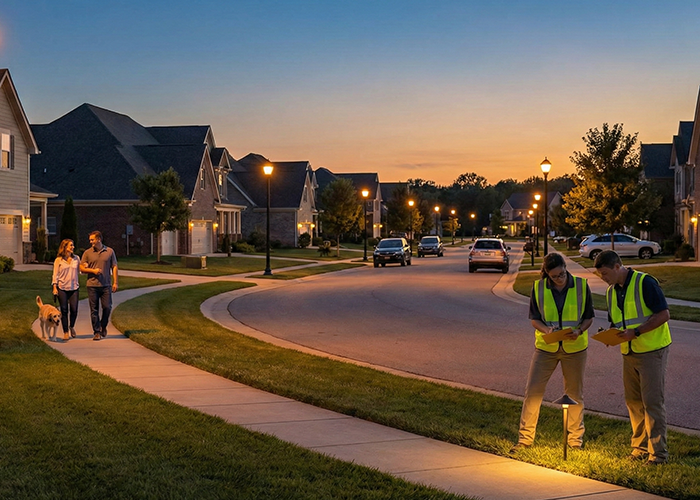
A well-lit environment naturally discourages unwanted behavior. Shadows and dark corners tend to attract issues that residents would rather avoid. Lighting maintenance for HOA communities helps eliminate those problem areas without creating harsh or excessive brightness.
Pedestrian safety improves when paths and sidewalks remain clearly visible at night. Changes in elevation, curbs, and steps become easier to spot. Through consistent HOA light upkeep, the likelihood of trips and falls is reduced.
Vehicle movement also becomes safer with proper lighting. Drivers can see pedestrians more clearly, while residents feel more confident walking near parking areas. That balance between visibility and comfort defines effective lighting maintenance for HOA neighborhoods.
The Role of Routine Inspections
Routine inspections create a strong foundation for long-term lighting performance. Scheduled walk-throughs allow boards or managers to notice outages and inconsistencies early. HOA light maintenance becomes far more manageable when issues are caught quickly.
Inspection schedules do not need to be complex. A simple monthly or quarterly review often provides enough oversight. Through consistent HOA light upkeep, replacement cycles become more predictable and budget-friendly.
Documentation also plays an important role. Records of repairs and replacements help track fixture performance over time. That information supports better planning and reduces guesswork during future maintenance decisions.
Bulb Selection and Fixture Compatibility
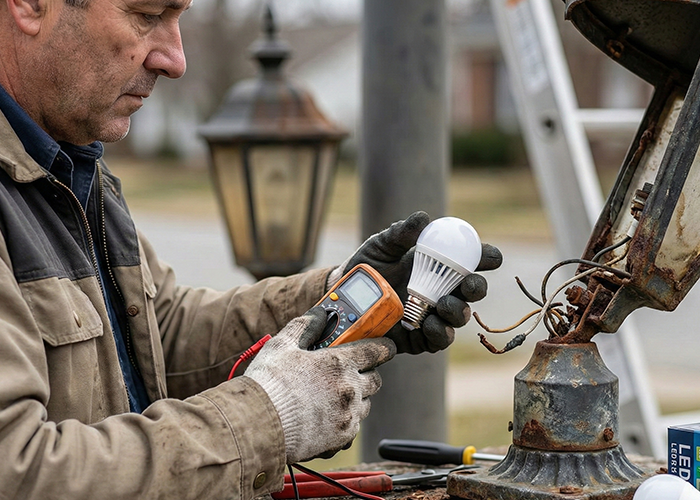
Not all bulbs perform the same way in every setting. Selecting the right bulb type affects brightness, energy use, and longevity. Lighting maintenance for HOA properties benefits when fixtures and bulbs are properly matched.
LED options are often favored for their long lifespan and steady performance. Fewer replacements reduce labor costs and resident disruptions. HOA light upkeep becomes more efficient when bulbs last longer and perform consistently.
Fixture condition matters just as much as bulb choice. Aging or damaged fixtures can reduce light output even with new bulbs installed. Through careful lighting maintenance for HOA communities, fixtures can be repaired or replaced before they compromise visibility.
Managing Outdoor Lighting Challenges
Outdoor lighting faces unique challenges due to weather and environmental exposure. Moisture, heat, and debris can affect performance over time. Lighting maintenance for HOA boards should account for these conditions when planning inspections.
Sealed fixtures and weather-rated components help extend service life. Regular cleaning also improves light output and appearance. HOA light upkeep that includes basic cleaning can make existing fixtures perform better without upgrades.
Tree growth and landscaping changes sometimes block light coverage. Adjustments may be needed as the community evolves. Through ongoing lighting maintenance for HOA properties, coverage remains effective even as surroundings change.
Energy Efficiency Without Sacrificing Visibility
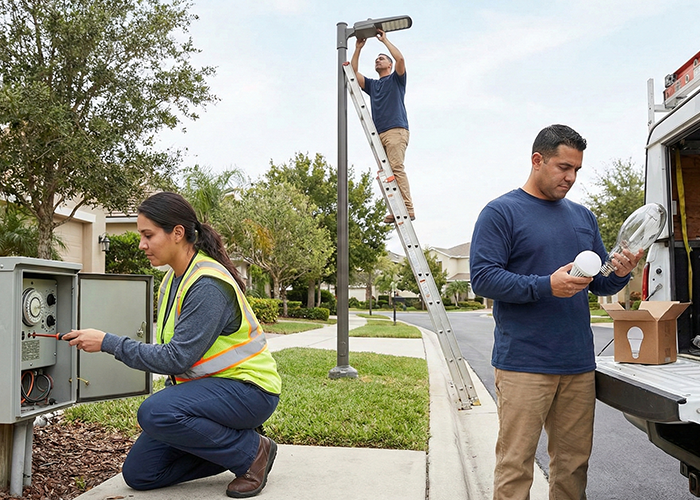
Energy efficiency often becomes a concern when lighting costs rise. Efficient lighting does not require dim or insufficient coverage. Lighting maintenance for HOA communities can balance energy savings with proper illumination.
Timers and photocells help ensure lights operate only when needed. These controls reduce waste while maintaining safety. HOA light maintenance becomes more cost-effective when operating hours are managed wisely.
Upgrading older systems can also reduce long-term expenses. While initial costs may exist, savings often follow over time. Lighting maintenance for HOA properties benefits from viewing efficiency as an investment rather than a shortcut.
Resident Expectations and Communication
Residents notice lighting issues quickly, especially when safety feels affected. Clear communication helps manage expectations and reduces frustration. Lighting maintenance for HOA boards improves when residents know how to report concerns.
Providing a simple reporting process encourages timely feedback. Small problems can then be addressed before they escalate. HOA light upkeep becomes more responsive when communication remains open.
Transparency about maintenance schedules also builds trust. Residents appreciate knowing when repairs are planned. Through clear updates, lighting maintenance for HOA communities feels proactive rather than reactive.
Budget Planning and Long-Term Maintenance

Lighting costs extend beyond immediate repairs. Bulb replacements, fixture upgrades, and labor all contribute to expenses. Lighting maintenance for HOA boards benefits from realistic budget planning.
Reserves set aside for lighting help prevent delays. When funds are available, repairs can be handled promptly. HOA light upkeep becomes smoother when financial planning supports maintenance goals.
Long-term planning also reduces emergency spending. Anticipating replacement cycles avoids last-minute decisions. Through thoughtful lighting maintenance for HOA properties, budgets stay stable and predictable.
Professional Support and Vendor Coordination
Some lighting tasks require professional expertise. Electrical work and system upgrades often fall outside routine maintenance. Lighting maintenance for HOA communities improves when qualified vendors are involved.
Clear contracts and service expectations support better outcomes. Vendors who understand the community layout can respond more efficiently. HOA light upkeep benefits from consistent relationships rather than one-time fixes.
Coordination between management and contractors also reduces downtime. Scheduling work during low-traffic hours minimizes disruption. Lighting maintenance for HOA boards becomes less intrusive when planning remains thoughtful.
Special Considerations for Common Areas
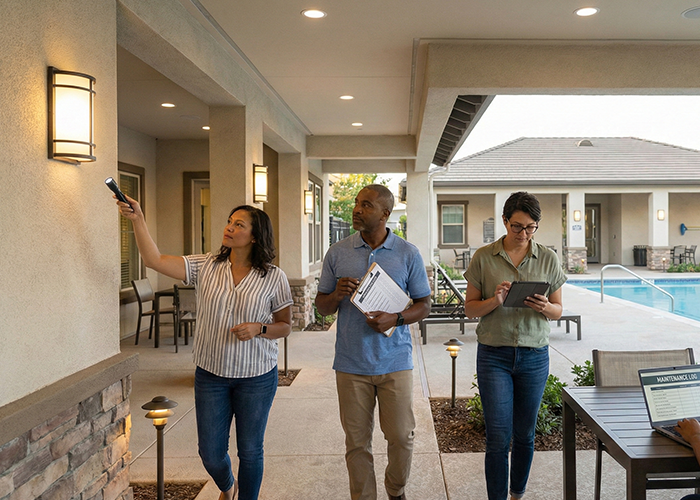
Common areas often require higher lighting standards due to frequent use. Clubhouses, pools, and recreation spaces depend on clear visibility. Lighting maintenance for HOA properties should prioritize these areas.
Safety codes may apply depending on the space. Compliance helps protect both residents and the association. HOA light upkeep that aligns with regulations reduces liability risks.
A consistent look also matters in shared spaces. Matching light color and brightness supports a cohesive appearance. Through careful lighting maintenance for HOA communities, common areas feel polished and welcoming.
HOA Street Lights and Neighborhood Flow
HOA street lights influence how residents move through the neighborhood after dark. Even coverage improves visibility without overwhelming drivers. Lighting maintenance for HOA boards ensures these fixtures remain reliable.
Outages can create uneven lighting that affects safety perception. Prompt repairs restore balance quickly. HOA light upkeep that includes street lighting supports both pedestrian and vehicle traffic.
Street lighting also shapes the community’s nighttime appearance. Consistent brightness contributes to a calm and orderly environment. Through steady lighting maintenance for HOA properties, streets remain functional and inviting.
Seasonal Adjustments and Timing
Lighting needs often shift with the seasons. Shorter days increase reliance on artificial light during evening hours. Lighting maintenance for HOA communities should account for these changes.
Timers may require adjustment as daylight hours shift. Regular reviews keep schedules aligned with real conditions. HOA light upkeep that adapts seasonally prevents unnecessary energy use.
Holiday decorations and events can also affect lighting needs. Temporary adjustments may be required. Through flexible lighting maintenance for HOA boards, seasonal changes are handled smoothly.
The Quiet Value of Well-Maintained Lighting
Lighting often goes unnoticed when it works well. That quiet reliability reflects effective planning and care. Lighting maintenance for HOA communities supports safety without drawing attention.
Residents feel more comfortable when shared spaces remain visible and secure. That comfort builds confidence in the association’s management. HOA light upkeep contributes to that sense of stability.
Over time, consistent lighting reinforces the overall quality of life within the community. Through thoughtful lighting maintenance for HOA properties, safety becomes part of everyday living rather than a constant concern.
A Brighter Path Forward
Strong lighting practices help communities feel secure without effort or stress. When HOA community lighting maintenance is consistent, residents enjoy safer evenings and clearer spaces. With thoughtful planning and steady HOA light upkeep, lighting becomes a quiet asset that supports the entire neighborhood.
Related Articles: