
A well-run community feels predictable, and that predictability comes from fair follow-through. A consistent violation process keeps standards clear, protects property values, and prevents small issues from turning into personal feuds. That steadiness is what makes a violation process feel fair.
A Clear Violation Process Sets the Tone
The best violation process starts with a simple promise: the rules will be applied the same way, every time. Owners can live with a rule they dislike when the steps feel fair and the communication stays respectful.
Clarity reduces conflict. When expectations are written in plain language, most problems get fixed quickly and quietly.
A steady system also protects volunteers. Boards change, managers change, and enforcement stays smoother when the process is written down and followed.
Authority and the Governing Documents
Authority for enforcement comes from the declaration, bylaws, and adopted rules. State law often adds requirements for notice, hearings, and limits on certain penalties, so alignment matters.
A quick document review prevents common missteps. Fine schedules, hearing procedures, and suspension rules should match what the documents allow.
Legal counsel can confirm the basics, especially when a community has older documents. Confidence grows when the board knows the rule is valid before trying to enforce it.
An Enforcement Policy Owners can Follow

A written policy turns board intent into repeatable steps. The goal is not harshness, just consistency that holds up when challenged.
Key timelines should be stated clearly, including cure periods, hearing scheduling, and when fines can begin. A simple flow chart can help, yet the main policy still needs real words, not just boxes.
Many communities see fewer HOA rule violations after the policy is shared during onboarding and posted in the owner portal. A reminder email at the start of the year can also prevent avoidable issues.
Definitions That Remove the Gray Area
Ambiguous rules create arguments. A strong rule explains what is required and what is prohibited, with enough detail that a neutral person could apply it.
Examples help when the rule involves appearance or conduct. Exterior storage, trash can placement, noise, and parking work better with clear boundaries.
Consistency comes from definitions. A “repeat violation” should be defined by timeframe, not by feelings, and the policy should explain how repeats are tracked.
Inspection Rhythm That Feels Fair

Routine inspections reduce the sense of targeting. A predictable schedule also limits the power of neighborhood gossip and complaint cycles.
Management teams often rotate day and time windows. That rotation helps capture real conditions while staying balanced across the community.
Photos should be taken from common areas or public view. Privacy boundaries should be respected, and the file should focus on facts, not commentary.
Complaints Without Community Drama
Complaints can reveal real problems, yet they can also be used as a tool in personal disputes. A consistent intake process keeps the focus on the rule, not the relationship.
Anonymous complaints deserve extra caution. Evidence should be gathered before any notice is issued, and inspection results should be documented the same way as routine checks.
A calm acknowledgement email sets expectations. Owners tend to relax when they hear the concern will be reviewed under the standard process.
Notices That Get Results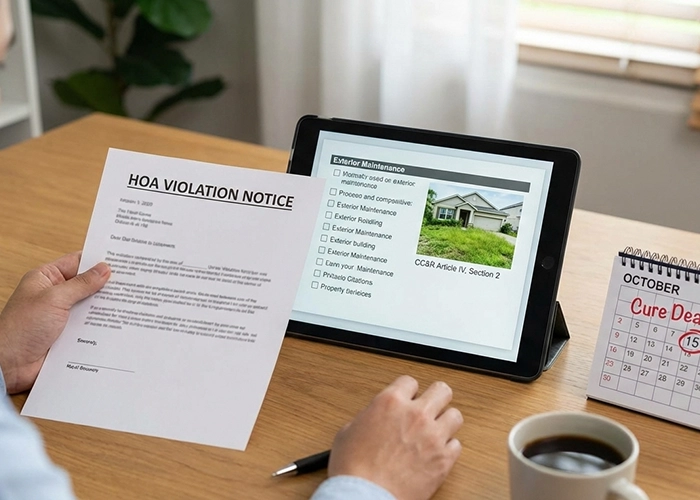
A notice should read like a checklist. Specific details reduce back-and-forth and make compliance easier.
The rule citation, the observed condition, and the cure deadline should be included every time. A photo can help, especially for exterior issues, yet it should be used thoughtfully.
Tone matters. Neutral language keeps defensiveness low, and it also helps if the issue reaches a hearing.
Cure Times That fit Real Life
Cure timelines should match the effort required to fix the issue. A trash or parking issue may need a short window, while repairs and architectural corrections often need more time.
Ranges can still be consistent. A policy that sets typical cure periods by category helps owners predict outcomes and helps managers avoid case-by-case improvisation.
Extensions should stay controlled. A written request, a clear plan, and a defined new deadline keep the exception fair to everyone.
Documentation That Holds Up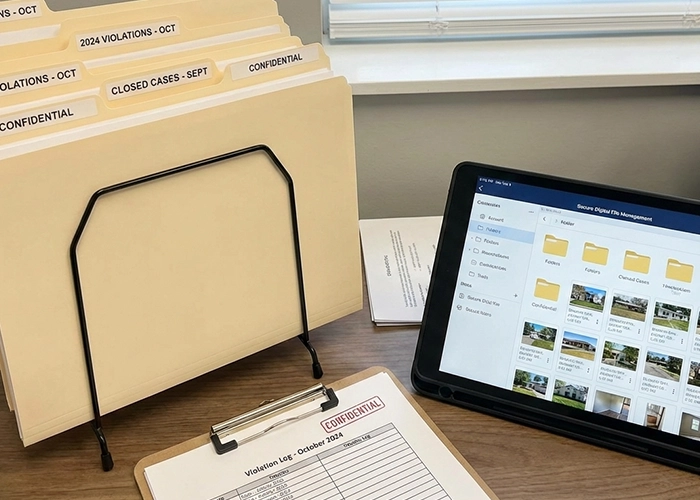
Records protect the association and the owner. Dates, photos, letters, and notes should be stored in one place and kept easy to follow.
A simple log supports the violation process from start to finish. The timeline should show what happened, when it happened, and what the next step is.
Confidentiality should be maintained. Community-wide messages should avoid identifying details, and files should be limited to those with a need to know.
Hearings With Structure and Respect
A hearing should feel organized, not chaotic. Owners respond better when they know what will happen and how decisions are made.
A straightforward structure works well: statement of the issue, review of evidence, owner response, questions, and a clear timeline for the decision. Professional tone from the board sets the pace.
Notes should be taken and stored with the file. That record becomes important if a decision is later challenged.
Decisions Tied to the Rule
A decision should be tied to evidence and to the rule. Personal opinions about a homeowner should not influence the outcome.
Consistency improves when the board uses the same questions each time. Was the rule violated, was the owner given fair notice, and was there a reasonable chance to cure?
A written decision letter closes the loop. The letter should state the finding, the next step, and any deadline that applies.
A Fine Schedule Owners can Predict
Fines work best when they feel proportional. A predictable schedule also reduces claims of favoritism.
A first fine amount should be modest enough to feel corrective, not punitive. Escalation can be reserved for repeat issues or failures to cure.
Some penalties are limited by law or by the documents. Suspensions of amenity access should be reviewed carefully before being used as leverage.
Escalation That Stays Consistent
Repeat issues can drain energy fast. A clear escalation plan keeps the board from debating the same situation at every meeting.
Timeframes should be defined. A repeat within a set number of days can trigger higher fines, shorter cure windows, or faster hearings.
Consistency protects the association. Selective enforcement claims often begin when one owner is escalated while another is given endless chances.
Safety Concerns Need a Faster Track
Safety issues deserve speed. Broken gates, blocked fire lanes, and hazardous conditions can create real liability.
Emergency authority is often included in governing documents. Immediate action may be allowed when a condition threatens people or property.
Notice can still follow. Even when action is urgent, a clear letter should explain what happened and why.
Owners are Still Responsible for Tenants
Tenants and guests can create issues the owner never sees. Clear rules should state that the owner remains responsible for compliance.
Direct outreach to occupants can help, yet the primary legal relationship is usually with the owner. A copy of the notice to both parties often reduces delays.
Lease addendums should be encouraged. A simple requirement that tenants receive the rules can prevent repeat problems.
Architectural Issues Deserve Extra Clarity
Architectural problems often feel personal, especially when money has already been spent. A clear review process prevents misunderstandings.
Applications should be required before work begins, and approval conditions should be written. Owners usually cooperate when they know what to submit and how long review takes.
Correction timelines should be realistic. Contractors, permits, and supply delays can complicate compliance, so a structured extension process helps.
Maintenance Standards Without Nitpicking
Maintenance rules exist to protect the community’s look and safety. Enforcement becomes easier when the board focuses on meaningful issues, not tiny imperfections.
Objective standards help. “No peeling paint” is easier to enforce than “paint must look nice,” and consistent photo documentation keeps the discussion factual.
A seasonal approach reduces friction. A spring exterior reminder and a fall cleanup reminder can prevent many notices from ever being needed.
Conduct Issues With Calm Language
Noise and nuisance complaints can escalate fast. Neutral communication reduces the chance the association becomes part of a personal fight.
Evidence should be requested when possible. Witness statements, logs, and incident reports can help the board separate real patterns from one-off irritation.
Warnings can work well here. A first letter that focuses on expectations, without accusations, often changes behavior.
Selective Enforcement Risk
Selective enforcement claims often hinge on patterns. Similar issues should be handled using the same steps and timelines.
Exceptions should be documented. A disability-related accommodation, a temporary hardship extension, or a documented mistake in a prior case should be recorded clearly.
Board education matters. New directors should be trained on the policy so the community does not experience sudden shifts in tone.
Fair Housing and Accommodation Duties
Some enforcement choices can create legal risk. Fair housing laws may require reasonable accommodations, and those requests should be handled with care.
A standard request pathway helps. Written requests, timely responses, and a confidential review process keep the board compliant and respectful.
However, the HOA may a need outside advice for complex situations. Legal counsel can confirm obligations while the board stays focused on the rule and the requested change.
Technology That Supports Consistency
Good systems reduce mistakes. Templates, automated reminders, and centralized files help staff follow the same steps every time.
A portal can improve transparency. Owners appreciate being able to see what was sent, what deadline applies, and how to confirm the cure.
Human review still matters. Automation should support judgment, not replace it, especially when a situation is close to the line.
Roles for the Board and Management
Clear roles reduce tension. Management can handle inspections, notices, documentation, and owner communication under the approved policy.
Boards typically handle hearings and final decisions. With that, enforcement remains professional, and it prevents staff from being put in the role of judge.
Additionally, committee support can help. A compliance committee can review evidence and recommend outcomes, yet final authority should stay where the documents place it.
Reconsideration and Appeals
Some states and documents allow an appeal or reconsideration step. A simple, written pathway can reduce anger and keep owners engaged with the process instead of storming away.
A narrow standard helps. New evidence, proof of compliance by the deadline, or a documented error in notice timing can justify a second look.
A fast timeline matters. Delays can make the enforcement file look messy, so a short window for appeal requests keeps the violation process clean.
Fines and Collections Stay Separate
The HOA should handle fines carefully and track them separately from assessments. State law and governing documents can treat these categories differently, especially when using collection tools.
Meanwhile, payment expectations should be clear. Policies should clearly state due dates, late fees, and interest rules.
Additionally, hardship plans can exist without undermining enforcement. The HOA can offer a written payment plan, even while an underlying violation remains unresolved.
When Legal Help Makes Sense
Some cases will not resolve through normal steps. Chronic violations, denial of access for inspections, and refusal to comply with final decisions may require counsel.
Demand letters can also bring focus. A well-written letter can clarify consequences and establish a firm timeline without immediate litigation.
Injunctive relief sometimes call for court action. However, HOA boards should take that step carefully, and with a strong file and a consistent history of enforcement.
A System That Improves Over Time
Policies should not stay static. A yearly review helps spot rules that cause repeated confusion and helps update fine schedules to match current needs.
Training keeps the steps steady. New board members and new managers should receive the same enforcement playbook and the same communication expectations.
Owner education helps, too. A short annual “rules refresh” message can prevent many cases and reduce defensiveness when residents receive a notice.
Keeping it Fair
A steady violation process protects standards while keeping relationships intact. Strong rules, clear notices, and consistent follow-through make enforcement feel less personal and more predictable.
Looking for professional support following an HOA violation process? Personalized Property Management offers HOA management services around Southern California. Call us at 760-325-9500 or email us at info@ppminternet.com for more information!
Related Articles: