
Homeowners across Southern California are thinking about energy costs and sustainability. Boards are hearing more requests for solar panels in HOAs, and they want a clear path that respects property rights and community standards.
Solar Panels and California Law
California protects a homeowner’s right to install solar panels in HOAs. Associations may set reasonable rules, yet they cannot prohibit solar energy systems or make them impractical. That balance matters, because the goal is simple: allow solar while keeping the community looking and functioning as planned.
Reasonable rules usually involve placement, safety, and aesthetics. They should not cause large cost increases or big performance losses. When policies align with that standard, approval is more predictable for everyone.
Boards should also know the difference between rules for single-family lots and rules for condos or townhomes. Shared roofs and common areas add steps, but projects are still workable with the right agreements in place.
HOA Solar Panels: CC&Rs and Design Rules

Your CC&Rs and design rules are the starting point. They outline what is allowed, what needs board review, and the standards for appearance. If your governing documents are silent or outdated, adopt a clear solar policy that follows state law and your community’s character.
Keep the focus on objective criteria. Spell out where panels should go, how conduit should be routed, and acceptable screening methods. Objective criteria help owners understand what to submit and help boards apply rules consistently.
Make the policy easy to find and easy to read. A one-page summary attached to your architectural guidelines helps owners plan before they sign a contract.
The Proper ARC Review for Solar Panels in HOAs
Most solar projects will go through the architectural review committee. A streamlined checklist shortens review time and avoids back-and-forth emails. It also sets the same expectations for every owner.
Ask for a complete package. That typically includes plans, roof layout drawings, equipment specs, mounting details, and a construction schedule. Many boards also ask for proof of licenses and insurance from the contractor.
Timelines matter. Give owners a clear review window and stick to it. If the ARC needs more information, request it once with a complete list. Owners appreciate a fair, predictable process.
Reasonable Restrictions
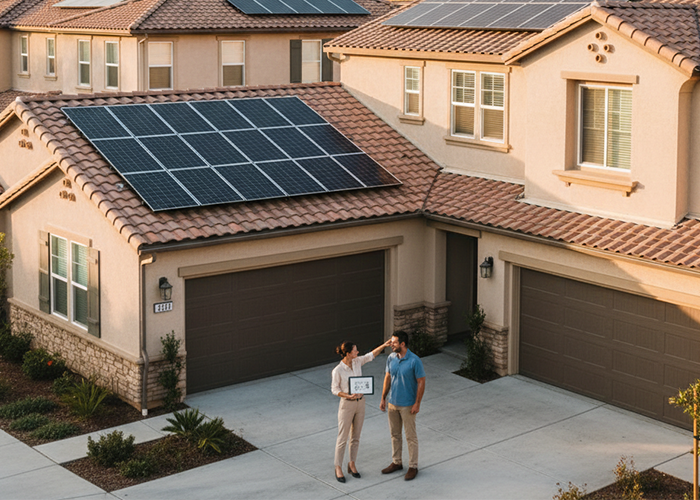
Boards can shape how systems look and how they fit with the community. The key is to avoid rules that push costs well above normal or reduce system output in a major way. For example, requiring panels to move from an optimal south-facing slope to a shaded side roof could cut production too much.
Prioritize solutions that meet both goals. If the conduit can run inside an attic, ask for that route when safe and feasible. However, ifa skirt kit cleans up the panel edges, make that your standard. If panel color choices blend better with the roof, note preferred options in the policy.
When owners see that a requirement protects the look of the neighborhood without ruining performance, they are more likely to accept it.
Where to Place Solar Panels in HOAs
Small design choices reduce complaints. Keep panels in neat rectangles with aligned edges where possible. Match conduit and junction boxes to the surface color. Use low-profile mounting that sits close to the roof plane.
On tile roofs, require compatible mounting hardware and proper flashing. On flat roofs, confirm ballast loads and wind ratings. These details protect the building envelope and the roof warranty while keeping the system tidy.
Ask the contractor to mark the final conduit paths on the plan. That simple step prevents surprises on install day.
Solar Panel Considerations for Shared Roofs
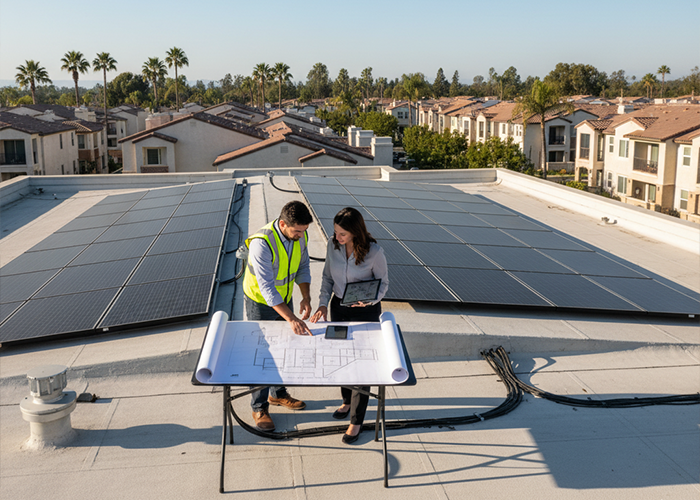
Shared roofs change the conversation. An owner’s system may sit on common area roofing, so maintenance and liability must be clear. Many communities require a license or easement that allows the system to occupy a defined roof area with specific terms.
Spell out who pays for roof penetrations, future roof work, and system removal or re-installation when re-roofing occurs. Clarify who carries insurance, what limits apply, and how to handle claims. Clear agreements protect neighbors and the association while giving individual owners a path to solar.
If your building will not support multiple independent arrays, consider a common system owned or leased by the association. A building-level project can deliver benefits without the complexity of many individual easements.
Insurance, Indemnity, and Maintenance Responsibilities
Solar equipment introduces new risks that can be managed with paperwork and good vendors. Require proof of contractor general liability and workers’ compensation. Confirm a license appropriate for photovoltaic work. Ask for a warranty summary that covers equipment and workmanship.
For owner-installed systems on common roofs, require an indemnity in favor of the association. If the policy calls for owner-carried insurance, state the coverage limit and the additional insured language. Keep certificates on file and track renewal dates.
Maintenance should not fall on the association unless the association owns the system. If the owner installs it, the owner should maintain it. That includes inspections, cleaning, monitoring, and any repairs.
Permits and Inspections for SoCal

Cities and counties in Southern California use expedited solar permitting, which speeds up residential solar panels and related inspections. Even so, contractors still must follow local submittal standards. That can include structural calculations, product listings, and electrical one-line diagrams.
Encourage owners to hire a contractor familiar with your jurisdiction. Familiarity reduces delays. It also helps the owner set a realistic timeline from application to activation.
Once the utility permission to operate is issued, ask the owner for a copy. Keeping a small system folder at the HOA office makes future roof and electrical work easier to plan.
Solar Panels for Common Areas
Some communities choose association-owned solar energy systems to offset common electricity use. Clubhouse lights, gate motors, and pool equipment can be good loads for a shared array. If your pool uses gas heat, solar thermal panels may still reduce operating costs.
Start with a short feasibility study. Look at roof age, shading, utility rates, and available incentives. If the numbers make sense, plan around your reserve schedule so the roof and solar timelines align.
For larger sites or limited roof space, consider carport canopies. They produce power and add shaded parking, which residents value in the summer.
What are Your Funding Options?

There is no single right way to pay for a common area solar project. Some HOAs use reserves if the study supports it. Others finance through bank loans or specialized energy programs. Leases and power purchase agreements can shift upfront costs to a provider, though long-term terms need careful review.
Whatever path you choose, match the term to the useful life and your reserve plan. Avoid deals that outlast the roof cycle by a wide margin unless replacement is built into the contract. Get apples-to-apples bids so the board can compare true lifetime costs.
Share the summary with members before a vote. Clear numbers lead to better buy-in.
Working With Neighbors
Good communication prevents most solar disputes. Let the owner know when roof access will affect neighbors and when noise or parking impacts could occur. Give a simple timeline with start and finish windows.
Ask the owner to post a short notice at the mailbox cluster or lobby. A courteous 48-hour heads-up goes a long way. After installation, confirm that the site is clean and fasteners, tiles, and gutters are intact.
If questions come in about glare or reflection, remind neighbors that modern panels are designed to absorb light, not reflect it. Offer a shade analysis snapshot from the application if someone wants to understand the layout.
How Can Residents Apply for Solar Panels?

A tidy application speeds approval and protects everyone’s interests. Consider asking owners to include:
- Roof plan with panel layout and dimensions
- Mounting details, flashing method, and structural notes
- Electrical one-line diagram and equipment cut sheets
- Contractor license and insurance certificates
- Proposed conduit routes and color notes
- Utility interconnection summary and expected production
Store the approved set with a date stamp. If plans change in the field, request a quick revision before work continues.
Making Safety a Priority During Installation
Safety rules are not red tape. They protect workers, neighbors, and your property. Require compliance with ladder safety, fall protection, and electrical lockout practices. Ask the contractor to keep materials organized and clear of walkways.
If crews need to stage in guest spaces, limit the footprint and time window. Mark areas with cones or caution tape and make sure emergency access stays open. A short daily clean-up checklist keeps the site professional.
When work finishes, request a roof inspection report or photos. It creates a record in case leaks show up later.
Future Proofing Solar Panels
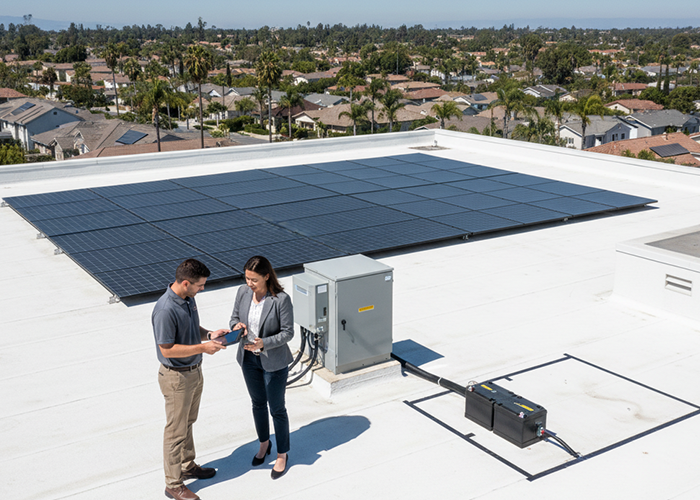
Solar alone reduces utility bills during the day. Storage can shift that power into the evening when rates are higher. If an owner wants batteries later, plan service space and clearances now so upgrades are simple.
Communities with EV charging plans should think ahead. Panel placement, main-service capacity, and conduit paths can support future charging stations. A little planning now prevents costly rework later.
When the HOA owns a common system, consider a monitoring portal that the manager can review. Alerts for inverter faults help you respond before residents notice a problem.
Adopting Renewable Energy
Solar energy is no fad in Southern California. With clear guidelines and a predictable process, your community can welcome solar while protecting property and neighbors. Start with a strong policy, then apply it with care and consistency.
Looking for professional support in managing solar panels in your HOA? Personalized Property Management offers HOA management services around Southern California. Call us at 760-325-9500 or email us at info@ppminternet.com for more information!
Related Articles: