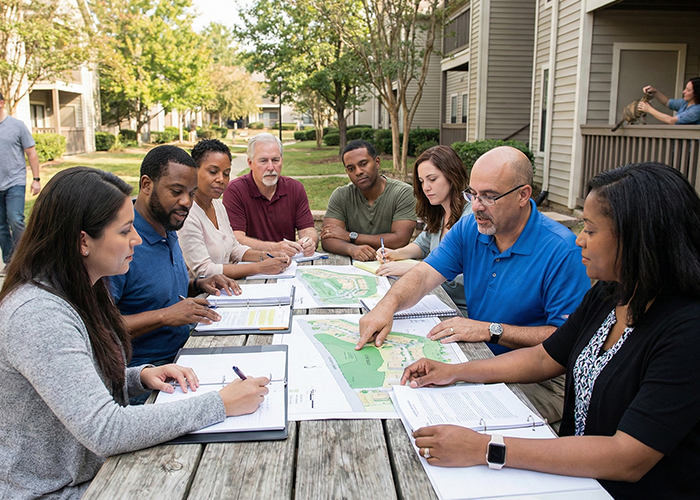
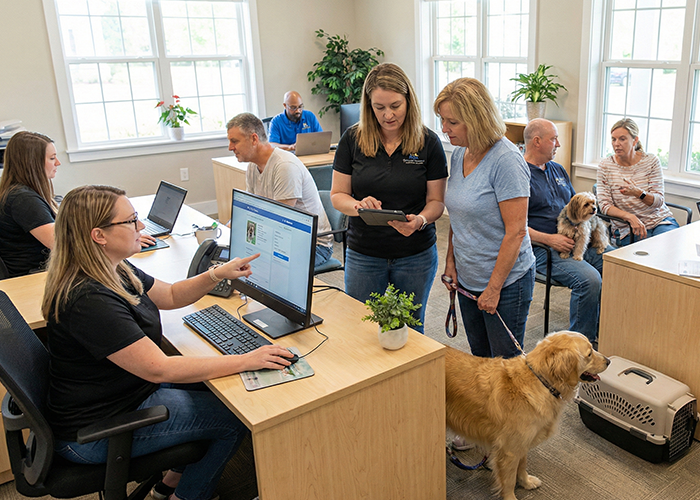
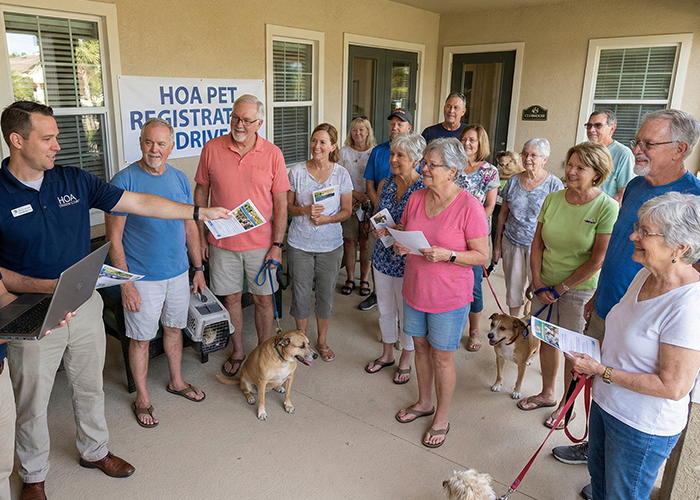
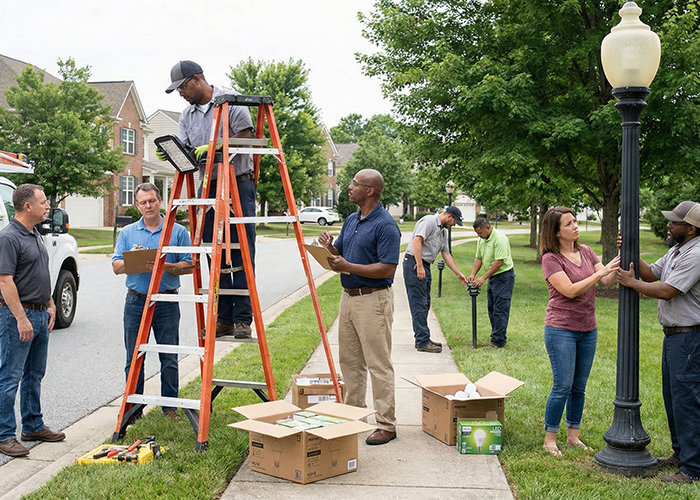
HOA Communication Tools for the Modern Community

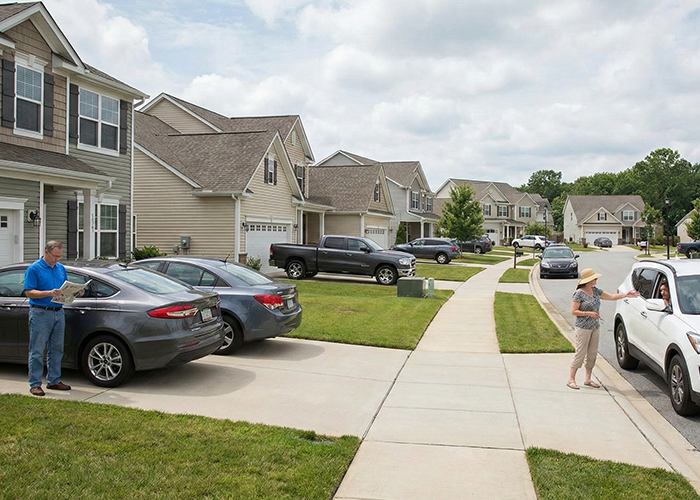
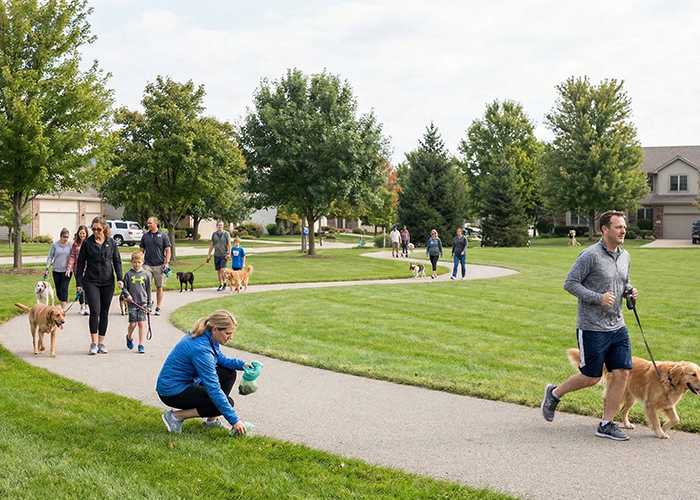
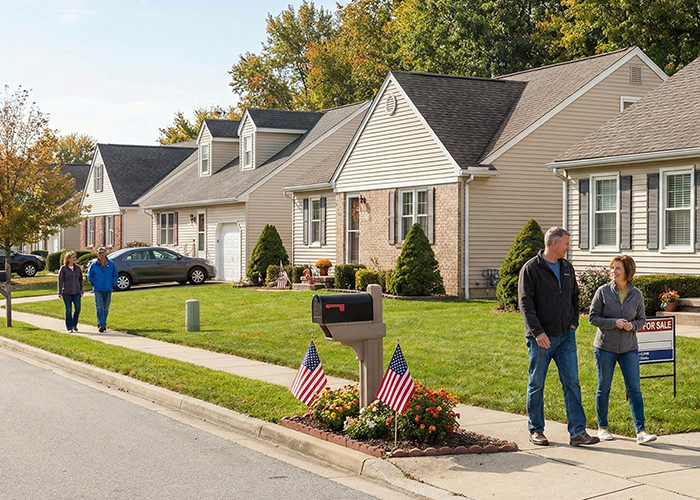
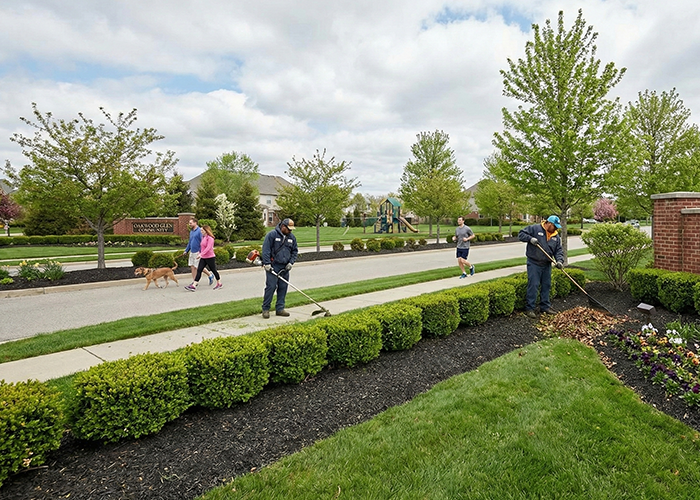
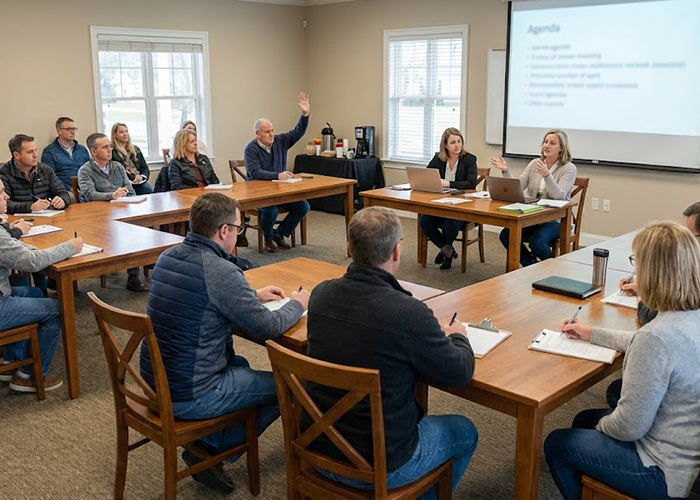
A lot of HOA frustration starts with a simple problem: residents miss the message, or they never trusted the message source in the first place. The right HOA communication tools help boards share updates clearly, cut down repeat questions, and keep the community in the loop without turning every week into a fire drill.

HOA Communication Tools That Residents Actually Check

Modern communities run on a mix of channels, not a single “official” inbox. The best HOA communication tools meet residents where they already are, while still keeping the board in control of the message.

A quick reality check helps at the start. Residents tend to read what feels relevant, timely, and easy to find again later. Too many blasts, too many platforms, or too many logins can make people tune out.

Consistency matters just as much as convenience. One main “source of truth” should exist for documents, policies, and board updates, even if reminders go out by email or text.

A Home Base for Every Message

HOA communication plan

A central hub keeps communication from turning into a scavenger hunt. A community website or resident portal works well when it stays current, organized, and simple to navigate.

The same hub can hold board-approved notices, meeting info, governing documents, FAQs, and common forms. Fewer “Can you resend that?” emails show up when residents know exactly where to look.

Clean contact records support that setup. Updated emails, mailing addresses, and phone numbers should be treated like basic community infrastructure, not an afterthought.

Email That Feels Less Like Spam

Email still carries a lot of HOA communication, mainly because it’s familiar and searchable. Clear subject lines and short messages usually get better results than long updates packed with side notes.

A steady cadence keeps residents from feeling blindsided. Monthly roundups, brief meeting reminders, and targeted maintenance notices land better than random bursts that arrive only when something goes wrong.

A little structure helps every time. One topic per email, a clear action step when needed, and a link-free note telling residents where to find details inside the community hub can go a long way.

Text Alerts When Minutes Matter

HOA communication solutions

Some updates should not sit in an inbox for two days. Text alerts work best for time-sensitive items like water shutoffs, gate issues, weather closures, or urgent safety reminders.

Restraint keeps texts effective. A phone buzz should mean something important, not a casual announcement that could have waited for the next email.

Opt-ins and privacy deserve attention here. Residents should know what types of texts to expect, who sends them, and how their numbers are protected.

Portals That Reduce Repeat Questions

A well-run portal cuts down the back-and-forth that drains board and manager time. Many HOA communication tools include portals that handle routine tasks like dues reminders, document access, maintenance requests, and architectural submissions in one place.

Fewer loose ends show up when requests are tracked inside a single system. Status updates, timestamps, and message threads keep everyone aligned, especially when a project spans multiple weeks.

The right fit depends on the community’s needs, not the fanciest feature list. Many boards compare HOA communication solutions by looking at ease of use, support quality, mobile access, and how well the system handles real-life tasks like approvals and work orders.

Board Work That Stays Organized

HOA communication plan

Resident-facing communication is only half the story. Board operations improve when internal notes, drafts, and tasks stay in one shared place.

A private board workspace helps with agendas, minutes drafts, committee updates, and vendor follow-ups. Less confusion tends to follow when one record exists for decisions and next steps.

Clean boundaries protect the process. Board discussions belong in official channels, not personal email chains or text threads that disappear or get forwarded.

Meetings That Reach More People

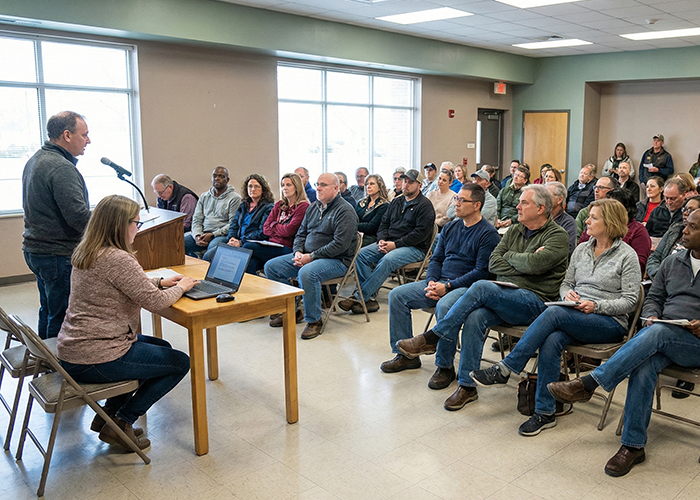
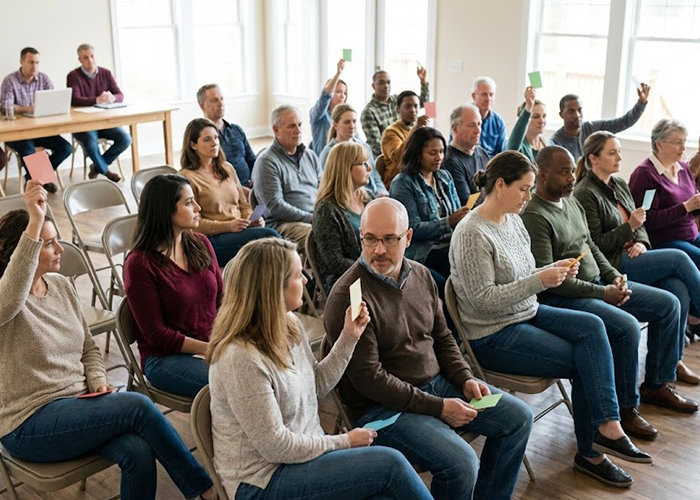
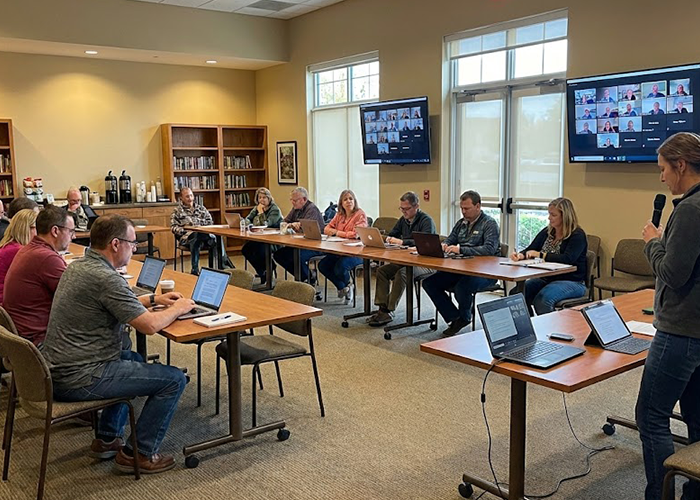
Attendance usually improves when meetings are easier to join. Hybrid options can help, especially for residents who travel, work nights, or handle childcare during typical meeting times.

Clarity sets the tone before the meeting begins. Agenda timing, topic summaries, and instructions for submitting questions can reduce side conversations and keep the session focused.

Follow-through matters afterward. Short recaps, posted minutes, and a simple “here’s what was decided” update build confidence over time.

Social Media With Clear Boundaries

HOA communication solutions

Social platforms can support community connection, yet they can also turn into rumor factories. Clear ground rules keep social media useful without letting it replace official channels.

A board-approved policy should spell out what belongs there and what does not. Official notices, rule enforcement, and account-specific issues usually belong in controlled communication channels.

Moderation protects neighbors from needless conflict. A consistent approach to comments, tone, and respectful behavior helps prevent the space from becoming a complaints-only feed.

When Paper Still Wins

Digital tools help most residents, but not all residents. Printed notices, mailed updates, and posted bulletin boards still matter in communities with older homeowners or limited internet access.

Compliance can be a factor, too. Some notices may need physical delivery depending on governing documents and state requirements, so paper should not be treated as outdated by default.

A simple approach works best here. Short mailed notices for major items and posted signage for near-term disruptions keep residents informed without creating extra clutter.

Turning Tools Into Routine

HOA communication plan

Great tools can still fail in day-to-day use without clear ownership. A written HOA communication plan helps define who sends what, which channels are used for which topics, and how often residents can expect updates.

Shared standards keep messages from sounding scattered. A consistent tone, simple templates, and a basic review process reduce errors and reduce heated replies caused by unclear wording.

Feedback closes the loop. Periodic surveys, a predictable Q&A process, and small adjustments over time help HOA communication tools stay effective as the community changes.

A Clearer Signal

Better communication usually shows up in smaller ways first: fewer repeat emails, calmer meetings, and fewer residents saying they “never heard about it.” With steady habits and the right mix of channels, HOA communication tools can support a community that feels more informed and easier to manage.


Related Articles:

Common HOA Violations to Look Out For and Avoid

Most owners want to enjoy their home without unexpected notices or fees, yet common HOA violations can sneak up on even well-meaning residents. A little awareness goes a long way, especially in communities where standards are meant to protect property values and day-to-day comfort.

Common HOA Violations: the Basics

The phrase common HOA violations usually refers to rule breaches that show up again and again across many communities. The details can vary, though, because every association has its own governing documents, design guidelines, and enforcement process.

A clear picture starts with one simple idea: rules apply to the whole community, not just a single home. Consistent enforcement tends to matter, since selective enforcement can create conflict and confusion.

Why Rules Still Matter When Life Gets Busy

hoa resident violations

A community can look and feel well-run when expectations are shared and predictable. That sense of order often supports resale appeal, reduces neighbour disputes, and keeps small issues from turning into bigger ones.

More importantly, a fair system protects everyone’s investment. A few unchecked patterns, like neglected exterior upkeep or repeated parking issues, can change the tone of a street faster than most people expect.

The Usual “Curb Appeal” Triggers

Exterior appearance tends to generate the highest number of notices, largely because it’s visible from the street. Paint, siding, fencing, and roofing issues can turn into common HOA violations when routine maintenance gets delayed.

Seasonal changes can create problems, too. Storm damage, sun fading, and normal wear can make a home look “out of compliance” even when the owner has not noticed the change yet.

A quick review of exterior standards helps, especially before a repair or refresh begins. Many communities require approved colours, specific materials, or a formal request before visible work starts.

Landscaping and Yard Standards That Catch People Off Guard

community violations

Landscaping rules often exist for safety and appearance, yet misunderstandings are frequent. Lawn height, edging, weeds, dead plants, and tree trimming can all land on a violation notice list.

A surprising number of residents assume yard choices are entirely personal. In practice, design standards may cover plant types, mulch, garden borders, and even the placement of decorative items.

Some associations also regulate irrigation overspray and standing water. Attention to these details can prevent common HOA violations that feel minor but add up quickly.

Trash, Recycling, and “Container Timing”

Trash cans may seem like a small issue, but container rules are among the most frequent enforcement topics. Late pick-ups, missed pick-ups, and windblown debris can make the problem visible for days.

Many communities set specific time windows for placing bins out and bringing them back in. Storage location can matter as well, especially when containers must be screened from view.

A consistent habit helps here. Calendar reminders and a designated storage spot usually reduce repeat notices.

Parking and Vehicle Rules Without the Drama

hoa resident violations

Parking complaints can become emotional because they affect daily routines and guest access. That’s why many associations set firm rules around assigned spaces, street parking, commercial vehicles, and long-term storage.

Guest parking often causes the most confusion. In some communities, guest areas exist but still come with limits, permits, or time restrictions.

Clarity tends to solve most problems. A copy of the parking policy, shared with household members and frequent visitors, can prevent common HOA violations tied to “I didn’t know.”

Noise and Nuisance Issues That Build Over Time

Noise rules are usually written broadly, which can make them tricky. Loud music, late-night gatherings, repeated barking, and even ongoing construction noise can fall into nuisance territory.

The pattern often matters more than the single event. One loud evening might result in a warning, while repeated complaints can lead to hearings and fines.

A respectful approach can help before enforcement escalates. A direct, calm conversation with neighbours can resolve issues early, especially when sound carries more than expected.

Pets, Leashes, and Clean-Up Expectations

community violations

Pet rules exist to protect shared spaces and reduce conflict. Leash requirements, pet waste rules, pet limits, and restrictions on certain animals show up in many governing documents.

Confusion sometimes arises around assistance animals. Different laws can apply, and associations often follow a specific process for requests and documentation.

Clean-up standards matter just as much as leash rules. A single missed clean-up can become a recurring complaint when it happens in high-traffic areas.

Exterior Changes and “Silent” Improvements

Small improvements can still require approval, even when they feel harmless. Items like outdoor lights, doors, shutters, satellite dishes, patio covers, and visible security devices often fall under architectural control.

A common frustration shows up when a resident completes a project and learns the approval should have come first. That scenario becomes one of the more expensive common HOA violations, since “fixing it” might require changes or removal.

A short approval request usually saves time. Many boards move faster when plans include photos, materials, colours, and a clear timeline.

Signage, Flags, and Items on Display

hoa resident violations

Signs can create disputes because they touch personal expression and community appearance. Real estate signs, political signs, contractor signs, and window postings are often regulated in some way.

Flag rules vary widely. Some associations allow certain flags with size and placement limits, while others set strict guidelines to keep displays consistent.

Seasonal décor can fall into this category as well. Time limits for holiday decorations can surprise residents, particularly when items stay up weeks after the season ends.

Shared Areas and Everyday Courtesy

Rules often extend beyond private lots. Pool behaviour, clubhouse reservations, gym use, hallway storage, and balcony standards can all lead to notices when expectations are not followed.

In many communities, these are the areas where HOA resident violations are most visible. A stroller left in a corridor, items stored on a balcony, or doors propped open can trigger safety and compliance concerns.

A helpful mindset goes a long way. Shared areas work better when residents treat them like an extension of their own home.

A Simple Self-Check Before a Notice Shows Up

A routine check can prevent many common HOA violations, especially the ones tied to visibility and timing. Once a month tends to be enough for most households.

  • A walk around the exterior to spot peeling paint, broken fixtures, or visible clutter
  • A quick yard scan for weeds, dead plants, and overgrown edges
  • A look at trash and recycling habits, including storage and return timing
  • A review of parking routines for household members and regular guests
  • A reminder to submit approval requests before exterior-facing changes

A small habit like this can also reduce neighbour frustration. Fewer repeated issues often means fewer complaints and fewer conflict points over time.

Staying in the Clear

Most common HOA violations come from misunderstandings, rushed decisions, or routines that drift over time. A quick review of the rules, paired with simple home habits, often prevents the bulk of community violations that lead to notices and fines.


Related Articles:

HOA Groundskeeping Basics: Best Practices to Keep in Mind

Strong HOA groundskeeping keeps common areas looking cared-for and helps residents feel proud of where they live. Better curb appeal is nice, but day-to-day safety and fewer complaints matter just as much. With the right routines, the work stays predictable instead of stressful.

HOA Groundskeeping Starts With a Simple Plan

HOA Groundskeeping Starts With a Simple Plan

A good season rarely happens by accident, especially with HOA groundskeeping spread across turf, beds, trees, and walkways. Clear standards help everyone stay on the same page, from the board to the on-site crew. Consistency also protects the budget, because “emergency fixes” cost more than steady upkeep.

A site map helps more than most boards expect. Each zone can be labeled by priority and use, such as entry areas, pool paths, playground corners, and quiet side lots. From there, a simple calendar can be built around what actually grows and what residents actually see.

Weekly expectations deserve a written scope, even with a long-time vendor. A short list of “must-look-right” items prevents misunderstandings, especially when crews change mid-season. Fewer surprises usually follow when standards are spelled out early.

The Daily Look Residents Notice

First impressions often come from edges and clean lines, not from expensive plants. Crisp trimming along sidewalks, tidy bed borders, and grass kept at a steady height can make an older landscape feel newer. Meanwhile, litter and stray branches can ruin the same area in a single afternoon.

Small walkthroughs keep quality high. A quick loop by a board member, manager, or committee volunteer can catch issues before they turn into resident emails. Better still, that loop can follow the same route each time so changes stand out.

A short checklist can help those walkthroughs stay focused without turning into a long report:

  • Entry sign area free of weeds and debris
  • Sidewalk edges trimmed and easy to see
  • Clippings cleared off hard surfaces
  • Trash cans serviced and not overflowing
  • Bare spots noted for repair or reseeding

Simple mowing habits protect turf health over time. Cutting too much in one visit can stress grass and lead to brown patches, even with plenty of water. A steady schedule, adjusted for growth spurts, tends to look better and cost less.

Water That Works for You

Water That Works for You

Irrigation can either support the landscape or quietly drain the budget. Leaks, broken heads, and poor coverage often show up as soggy spots in one area and dry turf in another. Those patterns are worth fixing quickly because the longer they sit, the harder the turf becomes to recover.

Local watering rules can change with drought conditions, so flexibility matters. Seasonal adjustments to timers can reduce waste, and smarter controllers can prevent watering during rain or high winds. Pooling water and runoff signal that the system needs attention, not extra run time.

Deep watering helps roots grow down instead of staying shallow near the surface. Shallow roots tend to mean weak turf, especially during heat waves. A routine check of spray direction and pressure can improve coverage without adding minutes to every zone.

Beds That Stay Neat

Mulch does a lot of quiet work in common areas. Weed pressure drops, soil holds moisture longer, and beds look finished even when flowers come and go. Too much mulch, though, can cause trouble around tree trunks and shrubs.

A moderate mulch layer usually looks clean without smothering plants. Space around trunks matters, since bark needs air and moisture balance. A quick rake-through can refresh the look and break up matted mulch without adding new material every time.

Plant selection makes a big difference in how hard the beds are to maintain. Native and well-adapted plants often handle local weather with fewer replacements. When a community wants seasonal color, a few high-visibility beds can carry the look while quieter corners stay simple.

Clear Sightlines Around Trees

Clear Sightlines Around Trees

Tree care affects both beauty and risk. Overgrown branches can block lighting, hide signs, and limit driver visibility at corners. Storm season can also turn weak limbs into a real hazard.

Regular pruning helps shape growth and keeps branches off roofs, fences, and walkways. Larger trees may call for an arborist, especially when limb weight, decay, or past storm damage becomes a factor. Safer can be cheaper, since a single fall can cost more than routine care.

Shrubs deserve the same common-sense approach. Sightlines near entrances, intersections, and paths should stay open. A landscape that looks lush still needs to feel safe, particularly near play areas and parking.

Paths and Places People Use

Hardscapes often get overlooked in grounds plans, even though residents use them every day. Sidewalk edges, curbs, pavers, and breezeways collect clippings, mud, and stains over time. Clean surfaces make the whole property feel more cared-for.

Trip hazards should stay on the radar, even when they seem minor. Lifted pavers, cracked corners, and uneven transitions can lead to complaints or injuries. A small repair list reviewed monthly can prevent a “sudden” problem from growing for a year.

Drainage deserves attention in the same way. Standing water near walkways and entrances can lead to algae, slipping, and faster surface wear. Downspouts, swales, and catch basins should stay clear so water goes where it was meant to go.

Vendor Oversight Without Drama

Vendor Oversight Without Drama

Great landscapes usually come from clear communication, not constant pressure. Strong HOA groundskeeping depends on a contract that explains what “done” looks like, how often work happens, and who handles exceptions. Service schedules, clean-up expectations, and response times for issues like storm debris help avoid arguments later.

Insurance and safety practices belong in the vendor conversation, too. Crew training, equipment rules, and site safety around pedestrians should be addressed upfront. A community with kids, pets, and evening foot traffic needs extra care during work hours.

A simple reporting rhythm keeps everyone informed. Photos after each visit, notes on irrigation issues, and a quick monthly summary can reduce resident frustration. Better trust often follows when residents see steady upkeep and timely fixes.

Seasonal reviews also help the board stay in control. Budget planning becomes easier when plant replacements, mulch refreshes, and irrigation tune-ups are anticipated instead of guessed. Over time, that planning keeps HOA groundskeeping steady, even when vendors change.

A Well-Kept Welcome

The best communities usually rely on basics done well: clean edges, healthy turf, safe paths, and clear expectations. Pride shows up in the little details residents see every day. With steady routines, HOA groundskeeping becomes a habit the whole neighborhood can count on.

Related Articles:

How to Organize HOA Meetings

A solid meeting plan keeps board business moving and resident tension down. When you organize HOA meetings with the same rhythm every time, people know what to expect and show up ready. That kind of consistency matters in homeowners association meetings, where time is limited and opinions can run hot.

How to Organize HOA Meetings With a Clear Goal

plan hoa meetings

The best meetings have a point that can be said in one sentence. Budget approval, vendor selection, rules enforcement, project updates, board elections, or homeowner input all work, but mixing too many goals in one night tends to create drift.

A simple question helps before planning begins: “What decision needs to be made, or what update needs to be shared?” Once that answer is clear, the rest of the meeting structure becomes easier to build, and organize HOA meetings stops feeling like guesswork.

Common meeting goals usually fall into a few lanes:

  • Required board business and votes
  • Project status updates and next steps
  • Financial review and approvals
  • Owner comments within a set format

Start With the Paperwork

Governing documents set the ground rules, and those rules deserve a quick review before dates get picked. Quorum, notice timelines, voting thresholds, and meeting types often live in bylaws or CC&Rs, along with basic instructions for motions and elections.

State and local requirements can add another layer, especially around open meetings, notice delivery, and record access. A short “rules check” at the start prevents awkward resets later, like discovering the agenda needed to be posted earlier or the meeting required a different notice method.

Put Dates on the Calendar Early

plan hoa meetings

A predictable calendar reduces last-minute scrambling and helps owners plan around meetings. Many communities do well with one regular board meeting each month, plus a separate annual meeting window that stays consistent year to year.

Timing also affects the mood in the room. Evening meetings tend to work better for working households, while weekend mornings can help in communities with a lot of retirees. For yearly HOA meetings, earlier scheduling pays off because elections, budgets, and reports often take longer than expected.

Write an Agenda People Can Follow

An agenda works best when it reads like a path, not a wish list. The early items should be routine and time-sensitive, with heavier decisions placed where attention is strongest. A clear open forum section also helps, because residents can see when comments will happen.

A basic flow usually covers what boards need without getting fancy:

  • Call to order, roll call, and quorum
  • Approval of prior minutes
  • Officer and committee reports
  • Old business
  • New business and votes
  • Owner forum
  • Next steps and adjournment

A time estimate next to big items can help, even if it’s rough. The goal is less about perfect timing and more about protecting the meeting from being swallowed by one topic.

Build the Packet Before the Meetingplan hoa meetings

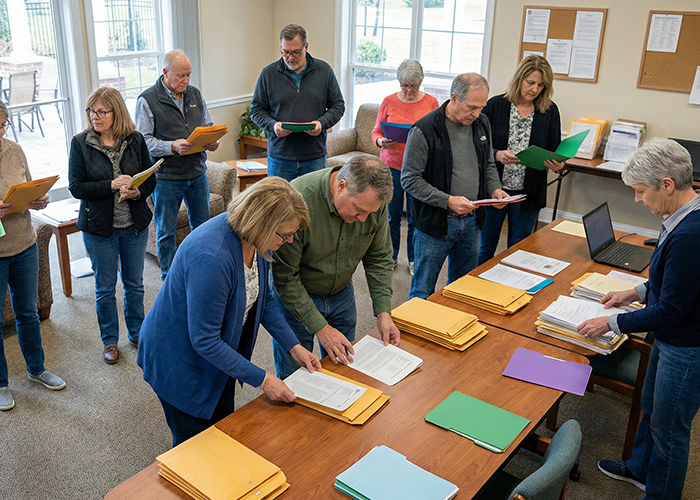
Meeting time gets wasted when board members see key documents for the first time at the table. A simple packet keeps discussion focused on decisions, not discovery. Better meetings usually come from better preparation, not stronger personalities.

Most packets include a few basics:

  • Agenda and last meeting’s minutes
  • Financials that match the agenda items
  • Vendor bids or proposals tied to voting items
  • Short background notes for complex topics
  • Draft motions for items expected to be voted on

A short cover note for each big decision helps too. Context tends to calm the room, especially when owners have questions.

Notice and Communication That Reduce Surprises

Notice is more than a date and time. Meeting notices work better when they explain what will be discussed, how owners can participate, and what limits apply. A board that is clear up front usually gets fewer interruptions later.

Reminder timing matters as well. A first notice can go out early, followed by a brief reminder a few days before. A final day-of reminder can be helpful for virtual meetings, as long as the official notice requirements were already met.

Roles That Keep the Meeting Steadyplan hoa meetings

A chair or president sets the pace, and the tone usually follows. Calm facilitation keeps arguments from becoming the main event. A timekeeper role can help too, even if it’s informal.

Meeting records also deserve attention. Minutes should capture decisions, motions, and votes without turning into a transcript. That work often falls to the secretary, though support from management can make the process far less stressful.

A few roles tend to cover most needs:

  • Chair to run the agenda and recognize speakers
  • Secretary to record motions and outcomes
  • Treasurer to guide financial items
  • Manager to support logistics and compliance

Handling Tension Without Losing Control

A meeting plan can still get tested when emotions show up. Ground rules help, but follow-through matters more. Consistent enforcement of time limits, speaker order, and topic boundaries keeps the meeting from turning into a debate club.

Some topics do not belong in open session, especially when privacy or legal issues are involved. Executive sessions exist for a reason, and the transition into them should be handled cleanly, with a clear note in the agenda and minutes about when the closed portion begins and ends.

Minutes, Action Items, and Real Follow-Through

plan hoa meetingsA meeting that ends without clear next steps tends to repeat itself next month. Action items help decisions turn into outcomes. A simple list with an owner, deadline, and status can be tracked between meetings without a complicated system.

Post-meeting habits can stay light while still being effective:

  • Finalize and store minutes promptly
  • Send a short recap of decisions and next steps
  • Log action items with due dates
  • File supporting documents with the meeting record

When boards organize HOA meetings with follow-through in mind, the room starts to feel less like a complaint session and more like a working session.

Tools That Make Meetings Easier

Technology can help, but only when it stays simple. A basic projector for the agenda, a shared folder for board packets, and a consistent video platform can cover most needs. Hybrid meetings can be a good fit for communities with travel schedules or older residents, as long as participation rules stay clear.

A few small details also matter more than people expect. Clear sign-in procedures, working microphones, and a visible agenda clock can keep the room grounded. With those basics in place, the board can organize HOA meetings that feel orderly instead of chaotic.

Meeting Momentum

Progress feels better when the process stays familiar. A consistent agenda, clear notice, and strong follow-through can make even difficult topics manageable. Over time, the effort it takes to organize HOA meetings drops, because the system starts doing the heavy lifting.


Related Articles:

What Are Annual HOA Meetings?

Annual HOA meetings are the one time each year when the whole community is invited to hear how the association is doing and weigh in on key decisions. A formal feel is common, but the goal is simple: keep the HOA accountable and keep owners in the loop. A little context ahead of time makes the night feel a lot less stressful.

Why Annual HOA Meetings Matter

yearly HOA meetings

A real check-in is what many owners want, and annual HOA meetings are built for that. The board shares updates from the past year, explains what is changing, and records member votes when the agenda calls for them. Trust gets built here, even in communities where opinions run hot.

A practical benefit shows up, too. Elections often happen at the annual meeting, and a quorum is often required for results to count. When turnout is low, important business can stall and the same topics keep getting pushed to “next time.”

How the Meeting Fits Into HOA Life

Most communities hold different types of meetings, and each one has a different job. Board meetings focus on day-to-day business, vendor approvals, and policy choices. Annual meetings are usually membership meetings, so the emphasis shifts toward reporting, voting, and bigger-picture direction.

The phrase homeowners association meetings covers all of these gatherings, but the annual meeting has its own rhythm. Owners who never attend a board meeting still have a reason to show up once a year. That single evening can shape the board roster, confirm major plans, and clear up a lot of rumor-based chatter.

A Typical Order of Business

A clear structure keeps the room calmer. Governing documents often set the basics, and many associations borrow from parliamentary procedure to stay organized. When the agenda is followed, conversations tend to stay focused and the meeting stays on time.

A typical flow looks like this:

  • Call to order and basic housekeeping
  • Proof of notice and confirmation of quorum
  • Approval of the prior annual meeting minutes, if required
  • Reports, such as finances, projects, and reserve planning
  • Director elections or other member votes
  • Owner comments, often with time limits
  • Wrap-up, next steps, and adjournment

Some communities keep reports short and place more time into elections and owner comments. Others do the opposite, especially when a big repair or a funding plan is on the horizon. In most annual HOA meetings, though, the same idea applies: show what happened, vote on what needs a vote, and document it clearly.

Notice and Paperwork

homeowners association meetings

Meeting notice can feel like a small detail until it is missed. State law and governing documents usually spell out how notice must be delivered and how far in advance it must go out. In Florida, for example, a 14-day notice rule is written into the statute for membership meetings, and other states set their own timing and delivery rules.

Good notices do more than satisfy a deadline. A time, date, and location should be easy to spot, and remote access details should be included when a virtual or hybrid format is allowed. Candidate information, proxy forms, and voting instructions are also easier to handle when they arrive early.

For many boards, yearly HOA meetings go better when owners know what will be discussed. A simple packet can reduce side debates because the basics are already on paper. Less confusion in the room usually means better questions, fewer surprises, and smoother annual HOA meetings overall.

How the Board Sets the Tone

A smoother meeting usually starts weeks earlier. A clear agenda should be built around what must be voted on and what simply needs an update. Better pacing often follows when reports are kept short and the meeting packet answers the obvious questions.

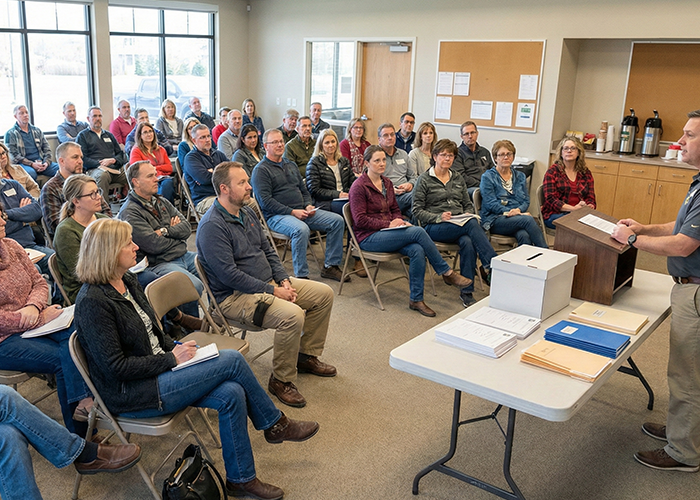
Room setup matters more than it seems. Sign-in tables, ballot control, and basic sound checks help the meeting feel fair from the first minute. In many annual HOA meetings, a calm chair and a simple process do more to prevent conflict than any speech ever will.

Quorum and Voting Basics

homeowners association meetings

Quorum is the quiet gatekeeper of an annual meeting. Many associations need a minimum percentage of the membership present, in person or by proxy, before official business can be conducted. A strong turnout helps, but the written rules matter more than the headcount.

Proxy voting is permitted in many communities, although the requirements can be strict. Some states require a dated proxy that names the meeting, and many documents limit how long a proxy stays valid. Secret ballots can be required for certain votes, especially elections, and a specific envelope process may be used to protect privacy.

Electronic voting has also become more common, but it is not a free-for-all. Statutes and governing documents set the boundaries, and emergency rules may differ from normal rules. Clean voting steps make annual HOA meetings harder to challenge later.

Elections That Stick

Director elections are often the headline item, even when budgets and projects are also being discussed. A fair process starts with clear candidate requirements and a consistent nomination method. Most boards want the election to feel boring, because boring usually means it ran correctly.

Candidate statements help when they stay short and factual. Voting goes smoother when instructions are plain and the timeline is predictable. When results are announced, the minutes should reflect what was decided and how votes were counted.

Owner Powers at the Annual Meeting

yearly HOA meetings

A lot of owners arrive expecting a town hall, and that expectation can backfire. The annual meeting is not always the place where every complaint gets solved, but it is a place where member power shows up in a real way. When the meeting is treated as a decision point, the conversation tends to stay grounded.

Member votes usually focus on items that the documents reserve for owners. Director elections, amendments, and certain special assessment approvals are common examples. Routine operations, vendor issues, and enforcement decisions often remain with the board, even when owners feel strongly about them.

Speaking up Without Taking Over

A good owner forum can be helpful, and many states expect members to have some right to speak. Time limits are common, and they usually exist to keep the meeting moving rather than to silence anyone. A short, specific comment tends to land better than a long speech.

Better results often come from a little prep. A written question can keep emotions from driving the conversation, and it keeps the topic clear for the minutes. More productive annual HOA meetings tend to happen in communities where owners speak plainly and the board answers with the same tone.

Remote and Hybrid Options

homeowners association meetings

Remote meetings are now normal in many places, but the rules still apply. Access details need to be clear, and everyone in the room should be able to hear and be heard. Voting rules should be explained before the first motion is on the table.

Hybrid setups bring their own issues. Tech problems can pull attention away from the agenda, so a short test run helps. When the format is handled well, annual HOA meetings become easier to attend for owners who travel, work nights, or have mobility limits.

What Happens Afterward

Minutes should be drafted soon while details are fresh, and they should be approved according to the association’s process. A clean record can protect the association if a vote is later questioned. When decisions are written down clearly, fewer follow-up disputes tend to pop up.

Follow-up communication is also part of a healthy cycle. Election results, next steps, and any deadlines that owners need to know should be shared in a simple way. Consistent follow-through gives annual HOA meetings real weight instead of making them feel like a yearly formality.

A Meeting Worth Showing up For

Annual HOA meetings can be brief, productive, and even reassuring when the process is clear and expectations are realistic. A bit of preparation turns a once-a-year obligation into a straightforward check-in. The community ends up better served when more owners make room on the calendar for it.


Related Articles:

Unenforceable HOA Rules: What You Need to Know

Homeowners in Southern California see many community rules, yet some turn out to be unenforceable HOA rules once state or federal law steps in.

Unenforceable HOA Rules in California: The Basics

Community associations sit under a clear legal ladder. At the top, federal and state law. Below that, recorded CC&Rs, then bylaws, then operating rules. When a rule conflicts with higher law, the rule falls away. That is the core idea behind unenforceable HOA rules.

California’s Davis-Stirling Act sets the framework for how associations operate. It speaks to rulemaking, meetings, elections, records, fines, and more. Federal law and state civil rights laws add further limits. Because of this, an HOA cannot create a rule that contradicts those protections or reaches beyond the board’s authority in the governing documents.

Reasonableness matters as well. Rules must be rational, tied to a legitimate association interest, and applied evenly. A rule that looks arbitrary, targets a person or group, or changes core property rights without the right process can be challenged.

How a Valid Rule Gets Made

Process often decides enforceability. California requires notice to the membership before many operating rules take effect. Members must see proposed language, understand the purpose, and have time to comment. Boards then vote in an open meeting and record the action.

Skipping the notice window or adopting rules outside an open meeting can make the result vulnerable. Even a well-meant policy can fail if it never followed the required steps. Documentation is key. The agenda, minutes, and rule text should match. Clear dates and a record of member comments help show compliance.

Delivery to the membership after adoption closes the loop. Owners need the final rule in plain view. When boards cannot show proper adoption and distribution, enforcement becomes risky.

Signs and Flags During Elections
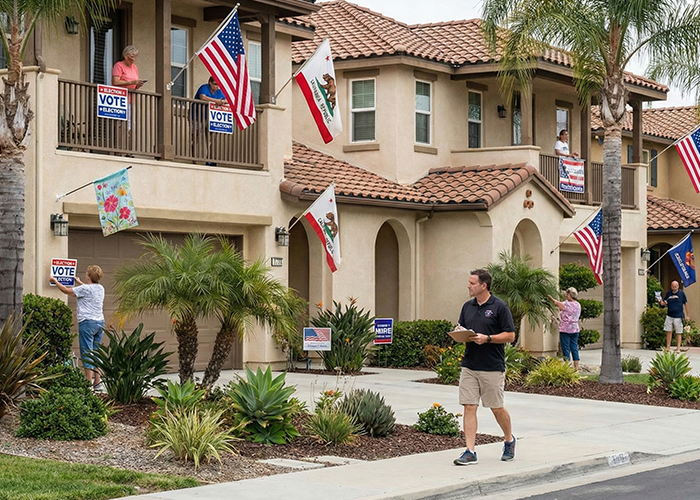
Signs and Flags During Elections

Political seasons bring yard signs and balcony banners. California protects noncommercial speech on an owner’s separate interest. Associations may use reasonable, content-neutral limits on size, number, and duration. However, an outright ban on signs at a home or in an exclusive-use yard usually conflicts with state law.

Flags carry special protection as well. Federal law shields the right to display the American flag, subject to reasonable restrictions on placement and safety. California recognizes similar rights for certain other flags. A blanket “no flags” policy tends to overreach. Even in condominiums, placement rules must stay reasonable and content neutral.

Common areas remain different. Boards can limit signs and flags in shared spaces. Yet even there, election season policies should be even-handed, clearly posted, and consistent with free-speech protections tied to association governance.

Receivers and Doorbell Cameras

Small satellite dishes and certain antennas enjoy federal protection. The FCC’s OTARD rule prevents associations from unreasonably restricting receivers placed within areas the owner controls, such as a patio, balcony, or yard. Size and safety rules may apply, but a simple ban will not hold.

Doorbell cameras fall into a growing category. Associations can set privacy-minded placement and angle requirements. Cameras should not capture inside a neighbor’s home or a place where someone has a reasonable expectation of privacy. Broad bans that forbid all cameras at an entry door or within an exclusive-use porch often go too far.

Reasonable architectural guidelines help. Clear mounting height limits, wiring standards, and rules against drilling into structural elements keep things safe without violating rights.

Landscape Rules During Drought
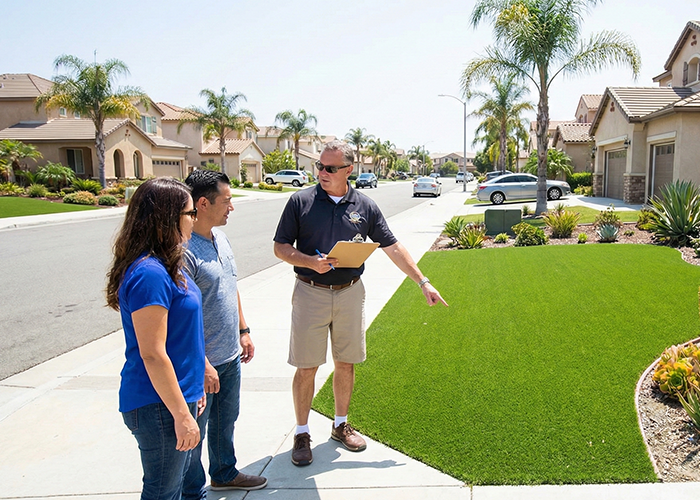
Landscape Rules During Drought

Water scarcity changes the rulebook. California protects water-efficient landscaping choices. Associations cannot force owners to keep a thirsty lawn green during a declared drought. Fines for brown grass in that period run afoul of state law.

Low-water plants and similar designs also receive protection. Associations may approve palettes and maintain community standards, yet they may not require high-water turf where drought or law suggests otherwise. Many communities now allow artificial turf with reasonable quality standards. A reflexive “no turf, period” rule often needs to be revisited.

Irrigation timing, runoff control, and maintenance expectations remain fair ground. The key is balance. Conservation comes first, while curb appeal is preserved with sensible guidelines.

Solar Energy on Roofs and Patios

California’s Solar Rights Act is strong. It stops associations from imposing rules that significantly increase the cost of a solar system or reduce its performance. Architectural review stays in place, but conditions must be reasonable and grounded in safety or aesthetics that do not undermine the system’s function.

Where rooftops or exterior walls are common area, owners often need recorded licenses or maintenance agreements. Even so, an outright bar on solar usually conflicts with state policy. Timelines for review should be prompt. Excessive delay can be treated like a denial.

Insurance, indemnity, and workmanship standards are normal. The trick is to write them in a way that protects the association without making solar unworkable.

EV Charging in Assigned Spaces
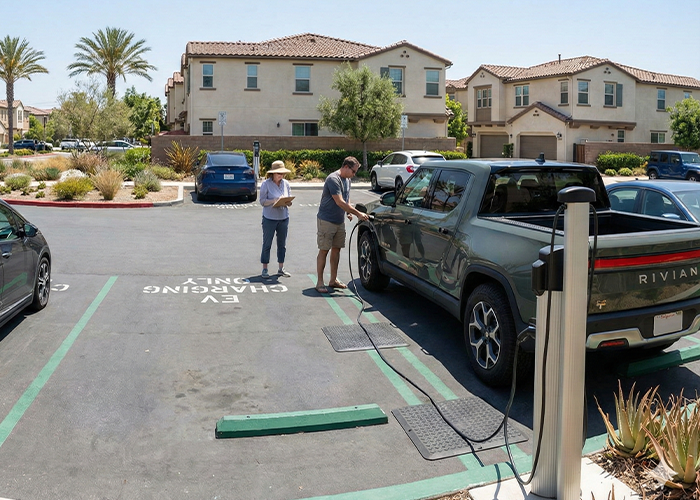
EV Charging in Assigned Spaces

Electric vehicles have moved from trend to normal. California law limits an association’s ability to restrict EV charging stations in an owner’s designated or exclusive-use parking space. Installation must follow building codes and be done by qualified contractors, but a flat ban will not survive scrutiny.

Cost allocation and maintenance plans belong in the approval. Owners typically pay for installation, electricity, and repairs. Separate meters or submeters are encouraged. Boards can require protective equipment and proof of insurance. Those steps keep common property safe while respecting the right to charge.

Shared charging in common areas is a policy choice. When offered, rules should be clear on scheduling, fees, and enforcement. Clarity prevents disputes and supports fair use.

Clotheslines and Drying Racks in Exclusive Areas

Clotheslines sit at the crossroads of energy use and aesthetics. California protects the use of clotheslines and drying racks in certain exclusive-use outdoor spaces. Associations may regulate location, height, and visibility, but total bans in those areas typically conflict with state law.

Rules against drilling into building envelopes still make sense. Portable designs often solve that issue. Reasonable screening or placement behind fences preserves community appearance while honoring the right to line-dry.

Complaint-driven enforcement should be careful here. A quick check against the statute saves time and avoids unnecessary fines.

Rental Caps and Long-Term Leasing
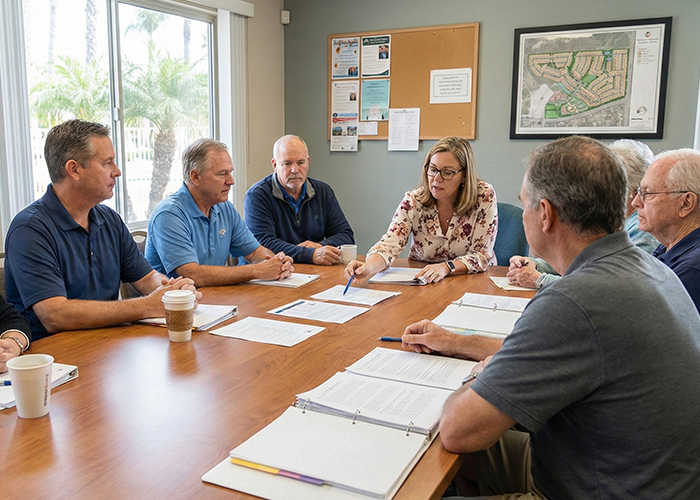
Rental Caps and Long-Term Leasing

Rental policies affect both community culture and home values. California limits how far a board can go. An association cannot prohibit rentals of more than 30 days. Minimum lease terms remain allowed if reasonable. Caps on the total number of rentals must follow statutory guardrails and cannot be set below allowed thresholds.

Older CC&R clauses may conflict with today’s law. Boards should review rental language after legislative changes. When a prohibition is no longer legal, it becomes one of those unenforceable HOA rules and must give way.

Fair and transparent waitlists, clear approval timelines, and consistent documentation make rental rules workable. Consistency is the best defense against claims of selective enforcement.

Fair Housing and Assistance Animals

The federal Fair Housing Act and California’s civil rights laws bar discrimination based on protected characteristics. Rules that single out families with children, people with disabilities, or other protected groups are off-limits. Policies that produce a discriminatory effect can fail even without hostile intent.

Pet restrictions often collide with disability rights. Associations must make reasonable accommodations for service animals and support animals when disability-related needs are documented. Extra fees or deposits that apply only to assistance animals do not pass muster.

Training volunteers and managers pays off here. A standard process for accommodation requests keeps decisions consistent, respectful, and lawful.

Member Meetings and Advocacy Rights

Member Meetings and Advocacy Rights

Community life includes debate. California law protects an owner’s right to assemble and discuss association matters, including board elections and budgets. Rules that block peaceful meetings in common rooms or forbid leafletting about association issues risk invalidation.

Reasonable use rules still apply. Reservations, cleanup standards, and nondisruptive hours protect shared space. However, a policy that singles out political or governance speech for stricter limits usually crosses a legal line.

Valid time, place, and manner rules are the safer path. Everyone gets the same guardrails, and the content of the speech is not the target.

Parking Rules and Local Ordinances

Parking touches safety, fairness, and local law. Associations may regulate permits, guest spaces, and storage of inoperable vehicles. Yet city codes and state vehicle laws still govern public streets and towing procedures.

A community cannot authorize towing from public streets it does not control. Disabled parking rules and fire-lane standards come from law and must be respected. When a rule conflicts with ordinance, the ordinance wins.

Clear signage, published maps, and consistent ticketing help. Enforcement based on ambiguous signage can be challenged and may fail.

Fines and Due Process

Even a valid rule needs fair enforcement. Before imposing a fine, associations must give written notice of the alleged violation and a chance to be heard. That hearing is not a formality. Owners can present evidence, ask questions, and request a written decision.

Fine schedules must be reasonable and in writing. Surprise penalties outside the schedule raise red flags. Discipline tied to attorney fees also requires care; fees must be legally recoverable and connected to actual enforcement steps.

When due process is skipped, the fine is vulnerable. Boards that follow the playbook tend to prevail. Boards that rush risk turning a valid rule into an unenforceable outcome.

When a Rule Becomes Unenforceable Over Time

Laws change. A rule that was permissible five years ago may not be permissible now. Legislative updates about rentals, solar, signs, or meetings can wipe out older restrictions. Regular legal checkups protect the association.

Waiver and estoppel can matter as well. If a board ignores a rule for years, then suddenly enforces it against a single owner, the action may look selective or unfair. Consistent enforcement across similar cases protects the association’s position.

Recorded documents evolve through amendments. When owners vote to change the CC&Rs, conflicting rules should be cleaned up. Old handbooks left unchecked are a common source of trouble.

How Homeowners Can Challenge a Questionable Rule

Start with a calm request for the legal basis. Ask for the rule text, the adoption date, and any statute the association relies on. Many disputes end with a single page from the Davis-Stirling Act or a clarification about where a rule applies.

Internal dispute resolution offers a simple path. Most communities must provide a direct meeting with a board designee to talk through the issue. Mediation or another form of alternative dispute resolution can follow if needed.

Court remains a last resort. Small claims court works for certain fines or reimbursements. For broader relief, owners speak with counsel about injunctive options. Clear evidence of conflict with statute or improper adoption strengthens the case.

Board Checklist to Avoid Unenforceable HOA Rules

  • Authority check: Confirm the CC&Rs and bylaws grant power to regulate the topic.
  • Statute scan: Review federal and California law for protections that apply.
  • Member notice: Circulate proposed text with a plain-English summary and allow comment.
  • Open vote: Approve the final language at a properly noticed open meeting.
  • Distribution: Send the adopted rule to all members and archive the record.
  • Consistency: Apply the rule evenly and track enforcement steps.
  • Refresh: Revisit policies after legislative updates or major court decisions.
  • Counsel review: Ask association counsel to vet complex or high-impact policies.

Common Myths That Lead to Unenforceable HOA Rules

“We can ban all signs.” Not in an owner’s separate interest. Reasonable limits are fine; blanket prohibitions usually are not.

“No solar on any roof.” State policy favors solar. Reasonable conditions can apply, yet a total ban rarely stands.

“Assistance animals count as pets.” Fair housing laws require accommodations for disability-related needs. Extra pet deposits and pet bans cannot be used to deny those requests.

“Street parking is ours to control.” Public streets fall under city or county authority. Association stickers and towing there are not allowed unless local law grants control.

Short, Real-World Examples

The balcony sign. A condominium banned all election signs. An owner posted a small window sign. After a fine, the board learned state law protects noncommercial signs in an owner’s separate interest. The fine was rescinded and the rule revised.

The brown lawn. During a declared drought, a board sent violation letters about turf color. Owners pointed to California water-use protections. The board shifted to a drought-friendly palette with clear maintenance standards.

The charging station. A townhome owner installed an EV charger in a deeded carport with proper permits. The association tried to force removal under an old rule. State law allowed the installation with reasonable conditions. A maintenance agreement and insurance proof resolved the dispute.

Practical Tips for Boards in Southern California

Local conditions matter. Wildfire zones may require ember-resistant vents and defensible space. Coastal buildings face salt-air wear and seismic standards. Rules should fit those realities without straying into prohibited bans.

Communication softens conflict. Plain-language summaries, visual guides, and short Q&A notes help owners understand why a policy exists. Vague rules invite uneven enforcement and frustration.

Annual policy reviews keep the library current. A short checklist against new statutes, attorney updates, and insurance carrier recommendations protects both the association and its members.

Practical Tips for Homeowners

Read the recorded documents first. CC&Rs explain rights and duties better than rumor or social media. The bylaws and rules then fill in the details.

Ask early when a notice arrives. Managers and boards want voluntary compliance. Many will explain the rule’s purpose and provide the legal section on request.

Document your steps. Keep emails short and polite. Save notices, photos, and meeting dates. If the matter proceeds to IDR or mediation, a tidy file speeds resolution.

Knowing the Rules

Most communities thrive on clear, fair, and lawful policies. When boards follow proper process and respect statutory limits, disputes shrink and trust grows. When owners understand their rights, unenforceable HOA rules get fixed instead of fought over for months.


Related Articles:

 

HOA Pet Registration: How To Implement In Your Community

Pets brighten daily life in Southern California communities, yet unmanaged pet issues can strain neighbor relationships and distract boards from bigger projects. A clear, well-run HOA pet registration program gives everyone a common playbook that supports safety, accountability, and quick communication.

Most associations already have pet rules, but records often fall behind moves and adoptions. With HOA pet registration, boards and managers gain current information that makes enforcement fair, predictable, and calm.


Why Have HOA Pet Registration?
pet registration for hoas

HOA Pet Registration is a simple recordkeeping system that tracks the pets living in the community. The file for each home lists core details like species, photos, vaccines, and contact information for owners. Nothing fancy is required to start, but the records must stay accurate and secure.

Registration is different from general pet rules. Rules set expectations, while HOA pet registration provides the verified data that makes those expectations workable. When a complaint or incident arises, clear records replace guesswork.

A well-structured HOA pet registration program supports three big outcomes. First, enforcement improves because managers can confirm whether a pet is authorized and vaccinated. Second, incident response gets faster, since owners can be reached right away. Third, owners feel more responsible because the community treats pet care as shared stewardship rather than a loose suggestion.


Legal and Fair Housing Considerations in California

California law gives associations room to regulate pets, but it also sets boundaries. Associations may adopt reasonable rules that address health, safety, and nuisance concerns. At the same time, California Civil Code recognizes the right of owners in common interest developments to keep at least one pet, subject to reasonable restrictions.

Service animals and assistance animals require special care. Service animals under the Americans with Disabilities Act are trained to perform tasks for a person with a disability. Emotional support animals fall under fair housing protections and can be approved as a reasonable accommodation when documentation satisfies federal and state standards. These animals are not “pets” under the law, so HOA pet registration requirements should be tailored accordingly.

Policies must avoid discrimination. Overly broad breed bans, arbitrary weight limits, and rules that make accommodations unreasonably hard can create legal risk. Involving association counsel during drafting keeps the rulebook aligned with the Davis-Stirling Act, the Fair Housing Act, and ADA guidance. Regular counsel review is smart whenever the board updates forms or procedures.


Does Your Community Need a Pet Policy?

hoa pet rules

Every community has a different pet profile. Urban mid-rise buildings may face leash and elevator etiquette issues. Townhome developments might see more concerns about shared courtyards. Single-family associations often focus on dog waste, barking, and off-leash activity near trails.

A short assessment helps focus the solution. Complaints, incident logs, and manager notes can reveal patterns, such as early-morning barking or recurring dog waste near mail kiosks. The board can also look at use of amenities, like whether dogs frequent the greenbelts or the pool deck perimeter.

Governing documents set the baseline. The CC&Rs may already contain pet provisions, while rules and regulations add detail. A successful HOA pet registration program plugs into that structure rather than working around it. Clear goals keep the project on track: fewer complaints, stronger safety, better records, and consistent enforcement that respects due process.


Designing a Clear HOA Pet Registration Policy

Clarity comes from scope. Most communities require all dogs and cats to register. Some include caged pets if noise or escape concerns exist. Visiting pets and pets owned by tenants should be covered as well, with simple options for short stays and disclosures in leases.

Information requirements should be straightforward. Typical items include pet name, species and breed, color and description, a photo, vaccination records, microchip number if available, and proof of city or county licensing where required. Owner contact information, including a secondary contact, helps when time matters.

Fees should match the administrative burden. Many boards keep registration free to encourage high compliance. Others use a modest administrative fee and reserve punitive fines for non-compliance after warnings. Renewal timing should be predictable. Annual updates work well, along with updates when a pet leaves or a new pet arrives. Vaccine records can be refreshed on the same cycle to keep files current.

Consequences of non-compliance must follow the due process rules in the governing documents and California law. Courtesy notices, formal warnings, fines, and hearings create a fair progression that allows owners to correct issues. Links to the fine schedule and hearing procedures on the community website or portal keep the process transparent.

Managing Pet Registration

pet registration for hoas

Technology should fit the size and needs of the community. Associations on all-in-one HOA management platforms can activate pet modules that store profiles, documents, and renewal reminders. Smaller associations can start with online forms that feed secure spreadsheets. As records grow, moving to a portal with owner logins avoids inbox overload.

Privacy and security matter. Pet records contain owner contact information and veterinary documents. Access should be limited to staff and board members with a need to know. Clear retention policies help decide what to keep, where to store it, and when to archive it.

Optional features can make life easier. Pet ID tags that include the association name and a unit number help reunite lost animals. Some gated communities connect digital pet profiles to access systems, which supports quick confirmation during incident follow-ups. These extras should stay practical rather than flashy.


HOA Pet Registration Procedures

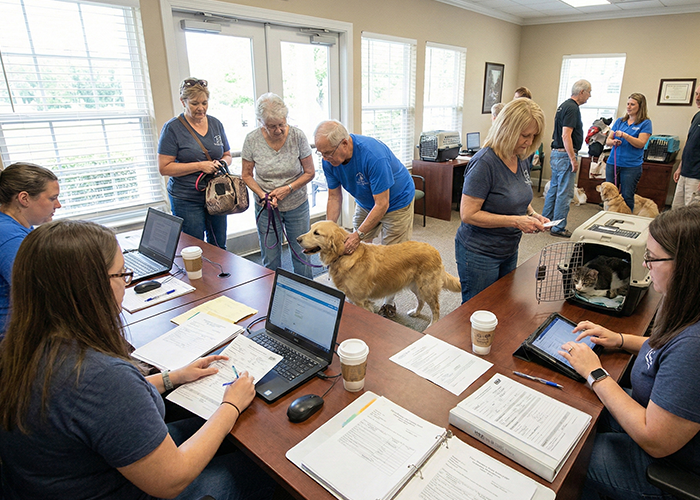
Owners need a simple path from start to finish. A one-page overview that explains the steps builds confidence. Residents should know where to find the registration form, how to submit documents, and when to expect confirmation. A standard timeline keeps things predictable, such as confirmation within a week of a complete submission.

Hoa pet registration should tie into move-in and onboarding workflows. New owners and tenants can receive the pet form with welcome materials. Landlords can include pet registration language in their leases, so renters understand expectations before they arrive. These touches lower friction and raise compliance.

Roles must be clear. The board sets the policy. Management receives forms, verifies documents, and records approvals. Onsite staff may help with reminders or distribute ID tags if the community uses them. A clean handoff between these roles prevents delays and mixed messages.

Communicating the Pet Registration Program to Homeowners

hoa pet rules

Strong communication turns a new rule into a community habit. A short board announcement can lead the rollout. Follow-up messages can appear in newsletters, email blasts, and portal reminders. A brief note mailed with assessment statements reaches residents who prefer paper.

Tone matters as much as timing. Owners respond better when HOA pet registration is framed around safety, cleanliness, and fairness. The message works best when it explains that registration helps managers contact owners quickly, confirm vaccines, and address complaints with facts rather than assumptions.

Education pieces keep the program visible without becoming noisy. A recurring “Pet Corner” in the newsletter can cover leash etiquette, quiet hours, and dog-waste reminders. Privacy questions deserve clear answers. Residents should know who can access pet records, how the records are stored, and what the association does with the information.


Implementing HOA Pet Registration in Southern California Communities

A smooth rollout uses time wisely. Advance notice gives owners a chance to gather vaccine records and photos. A reasonable grace period for existing pets encourages participation without stress. After the grace period, managers can shift to reminders, then formal notices when needed.

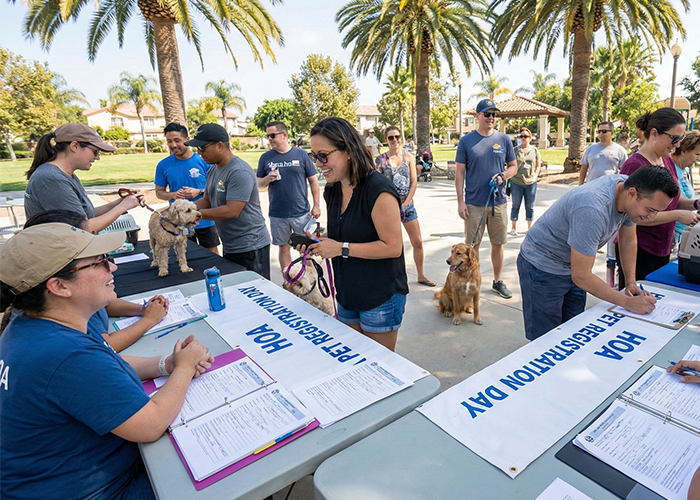
Community-building ideas can raise compliance while building goodwill. Weekend pet registration events with a visiting mobile vaccination clinic create a friendly touchpoint. Fee waivers for early registrants, or small perks like a community tag, help owners act sooner rather than later.

Local rules still apply. Most Southern California counties require dog licensing and up-to-date rabies vaccination. City leash laws and noise ordinances add another layer. A quick summary sheet tailored to the city or county helps residents follow the rules wherever they walk their pets.


Enforcement, Documentation, and Handling Disputes

pet registration for hoas

Fair enforcement feels consistent and predictable. Most associations use a progressive path that starts with a courtesy notice, then moves to a formal warning, fines, and a hearing when problems continue. Each step should cite the specific rule and invite owners to respond or correct the issue.

Good records protect everyone. Managers can log complaints with dates, times, and brief notes. Photos help when appropriate, such as repeated off-leash activity in a posted area. Copies of letters and emails should be kept in the relevant unit file, along with the pet registration entry.

Hoa pet registration supports better outcomes here. Managers can confirm whether a pet is authorized, vaccinated, and tied to the correct unit. Repeat patterns become visible, which helps the board apply the fine schedule fairly. For tough situations like aggressive behavior or ongoing noise, a respectful hearing gives the owner a chance to explain, while the board maintains the community standard.


Maintaining and Reviewing the Program

Programs thrive when they get regular tune-ups. An annual or biennial review keeps forms current and procedures efficient. Metrics help the board see what changed. Useful numbers include total registered pets, registration rate by unit, pet-related complaints, and time to resolve incidents.

Owner feedback can surface easy wins. Short surveys or a comment period during an open board meeting invite practical ideas, such as clearer renewal reminders or an improved photo upload step. Managers often notice friction points first, so their feedback deserves a front-row seat.

Leadership transitions should not reset the program. A short guide for new board members can explain the purpose of HOA pet registration, the legal backdrop, and the daily workflow. With a shared understanding, new leaders can refine the process without losing hard-won progress.


Practical Tips to Know

Clean forms boost compliance. Plain language, simple checkboxes, and a list of required attachments lower confusion. A visual example of a complete submission can help residents get it right the first time.

Renewals go smoother when owners get early reminders. Two reminders spaced a couple of weeks apart are usually enough. A final reminder after the due date, paired with a short grace period, keeps goodwill intact without weakening the rule.

Daily use should feel light. Managers can look up a profile in seconds when a concern comes in. Patrol notes can reference a pet’s profile when a warning is issued. Owners can update a photo or vaccine date without starting from scratch.


Special Situations: Rentals, Long-Term Guests, and Short-Term Stays

Rental homes introduce extra steps. Landlords should disclose any pets in the lease application stage and provide copies of the lease clauses that mirror community rules. Tenants then register pets through the same process. Clear contact points for both owner and tenant keep communication quick.

Long-term guests with pets benefit from a streamlined approach. A short guest pet form with key items, like proof of vaccination and length of stay, keeps the file accurate without a heavy lift. Short-term stays may not require formal registration, but a disclosure helps managers respond to questions if something happens.

Travel season adds unique challenges. Visitors, deliveries, and extra cars change routines. Pet reminders placed near elevators and lobbies help keep leashes on and noise down during busy weeks. Even communities that never see a snowy parking lot can reference winter holidays when pets accompany visiting family members and routines change.


Health, Safety, and Community Etiquette

A thoughtful HOA pet registration program pairs rules with shared norms. Leashes in common areas, quiet hours during the night, and firm dog-waste expectations set a respectful tone. Clear signage near lawns and along pathways reinforces the message without scolding.

Vaccination records protect the whole community. Rabies shots remain the core requirement across Southern California. Owners who keep their files current make common-area use safer for people and pets. Microchips help reunite lost animals faster, which can be highlighted during onboarding.

Seasonal notes round out the safety picture. Rainy weeks bring muddy trails and slippery sidewalks. Mountain and high-desert communities may deal with a winter parking area maintenance plan that changes walking routes. Simple, well-timed reminders help everyone adjust without friction.


A Pet-Friendly, Well-Managed Community

Southern California communities can stay both pet-friendly and orderly with a practical HOA pet registration program. Viewed as an ongoing partnership rather than a one-time rule, HOA pet registration strengthens safety, reduces conflict, and helps managers solve problems before they grow.

Looking for professional support in managing HOA pet registrations? Personalized Property Management offers HOA management services around Southern California. Call us at 760-325-9500 or email us at info@ppminternet.com for more information!


Related Articles:

HOA Light Maintenance: How to Keep the Community Safe

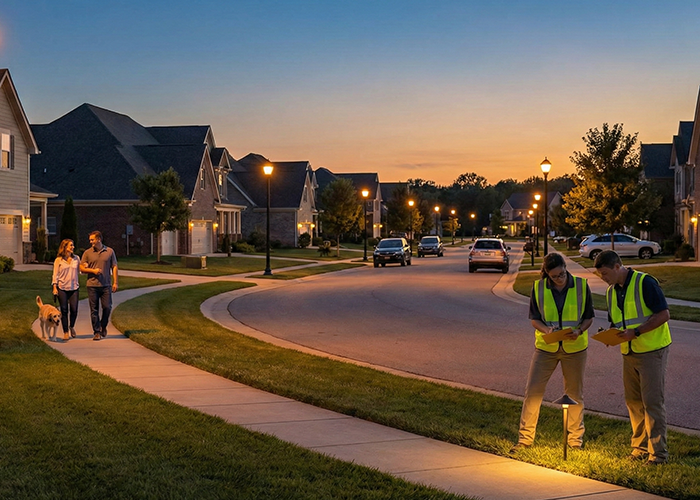
Well-maintained lighting plays a quiet but essential role in how a community feels and functions. A property that is properly lit tends to feel more secure, more welcoming, and easier to navigate after dark. HOA light maintenance is part of how safety, appearance, and daily comfort are supported across shared spaces.

Lighting Maintenance for HOA Communities Starts With Awareness

Proper HOA light maintenance begins with understanding where light matters most. Entrances, walkways, parking areas, and common gathering spaces all rely on consistent illumination to reduce risk. Poor visibility often leads to avoidable accidents and resident complaints.

Regular observation helps identify early issues before they grow into larger problems. Flickering fixtures, dim bulbs, or uneven lighting patterns signal the need for attention. Through steady lighting maintenance for HOA properties, safety concerns can be addressed before residents even notice them.

HOA light upkeep also benefits from a clear inventory of fixtures. Knowing what types of lights are installed and where they are located simplifies maintenance planning. That awareness reduces delays when repairs or replacements are needed.

Why Consistent Lighting Supports Community Safety

lighting maintenance in hoa

A well-lit environment naturally discourages unwanted behavior. Shadows and dark corners tend to attract issues that residents would rather avoid. Lighting maintenance for HOA communities helps eliminate those problem areas without creating harsh or excessive brightness.

Pedestrian safety improves when paths and sidewalks remain clearly visible at night. Changes in elevation, curbs, and steps become easier to spot. Through consistent HOA light upkeep, the likelihood of trips and falls is reduced.

Vehicle movement also becomes safer with proper lighting. Drivers can see pedestrians more clearly, while residents feel more confident walking near parking areas. That balance between visibility and comfort defines effective lighting maintenance for HOA neighborhoods.

The Role of Routine Inspections

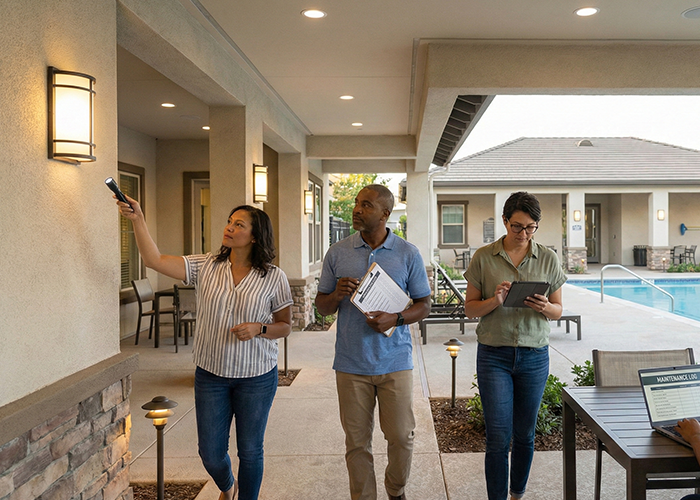
Routine inspections create a strong foundation for long-term lighting performance. Scheduled walk-throughs allow boards or managers to notice outages and inconsistencies early. HOA light maintenance becomes far more manageable when issues are caught quickly.

Inspection schedules do not need to be complex. A simple monthly or quarterly review often provides enough oversight. Through consistent HOA light upkeep, replacement cycles become more predictable and budget-friendly.

Documentation also plays an important role. Records of repairs and replacements help track fixture performance over time. That information supports better planning and reduces guesswork during future maintenance decisions.

Bulb Selection and Fixture Compatibility

hoa light upkeep

Not all bulbs perform the same way in every setting. Selecting the right bulb type affects brightness, energy use, and longevity. Lighting maintenance for HOA properties benefits when fixtures and bulbs are properly matched.

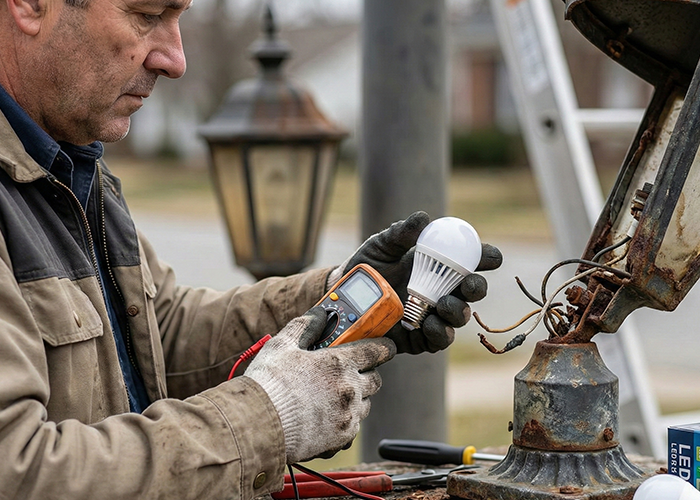
LED options are often favored for their long lifespan and steady performance. Fewer replacements reduce labor costs and resident disruptions. HOA light upkeep becomes more efficient when bulbs last longer and perform consistently.

Fixture condition matters just as much as bulb choice. Aging or damaged fixtures can reduce light output even with new bulbs installed. Through careful lighting maintenance for HOA communities, fixtures can be repaired or replaced before they compromise visibility.

Managing Outdoor Lighting Challenges

Outdoor lighting faces unique challenges due to weather and environmental exposure. Moisture, heat, and debris can affect performance over time. Lighting maintenance for HOA boards should account for these conditions when planning inspections.

Sealed fixtures and weather-rated components help extend service life. Regular cleaning also improves light output and appearance. HOA light upkeep that includes basic cleaning can make existing fixtures perform better without upgrades.

Tree growth and landscaping changes sometimes block light coverage. Adjustments may be needed as the community evolves. Through ongoing lighting maintenance for HOA properties, coverage remains effective even as surroundings change.

Energy Efficiency Without Sacrificing Visibility

lighting maintenance in hoa

Energy efficiency often becomes a concern when lighting costs rise. Efficient lighting does not require dim or insufficient coverage. Lighting maintenance for HOA communities can balance energy savings with proper illumination.

Timers and photocells help ensure lights operate only when needed. These controls reduce waste while maintaining safety. HOA light maintenance becomes more cost-effective when operating hours are managed wisely.

Upgrading older systems can also reduce long-term expenses. While initial costs may exist, savings often follow over time. Lighting maintenance for HOA properties benefits from viewing efficiency as an investment rather than a shortcut.

Resident Expectations and Communication

Residents notice lighting issues quickly, especially when safety feels affected. Clear communication helps manage expectations and reduces frustration. Lighting maintenance for HOA boards improves when residents know how to report concerns.

Providing a simple reporting process encourages timely feedback. Small problems can then be addressed before they escalate. HOA light upkeep becomes more responsive when communication remains open.

Transparency about maintenance schedules also builds trust. Residents appreciate knowing when repairs are planned. Through clear updates, lighting maintenance for HOA communities feels proactive rather than reactive.

Budget Planning and Long-Term Maintenance

hoa light upkeep

Lighting costs extend beyond immediate repairs. Bulb replacements, fixture upgrades, and labor all contribute to expenses. Lighting maintenance for HOA boards benefits from realistic budget planning.

Reserves set aside for lighting help prevent delays. When funds are available, repairs can be handled promptly. HOA light upkeep becomes smoother when financial planning supports maintenance goals.

Long-term planning also reduces emergency spending. Anticipating replacement cycles avoids last-minute decisions. Through thoughtful lighting maintenance for HOA properties, budgets stay stable and predictable.

Professional Support and Vendor Coordination

Some lighting tasks require professional expertise. Electrical work and system upgrades often fall outside routine maintenance. Lighting maintenance for HOA communities improves when qualified vendors are involved.

Clear contracts and service expectations support better outcomes. Vendors who understand the community layout can respond more efficiently. HOA light upkeep benefits from consistent relationships rather than one-time fixes.

Coordination between management and contractors also reduces downtime. Scheduling work during low-traffic hours minimizes disruption. Lighting maintenance for HOA boards becomes less intrusive when planning remains thoughtful.

Special Considerations for Common Areas

lighting maintenance in hoa

Common areas often require higher lighting standards due to frequent use. Clubhouses, pools, and recreation spaces depend on clear visibility. Lighting maintenance for HOA properties should prioritize these areas.

Safety codes may apply depending on the space. Compliance helps protect both residents and the association. HOA light upkeep that aligns with regulations reduces liability risks.

A consistent look also matters in shared spaces. Matching light color and brightness supports a cohesive appearance. Through careful lighting maintenance for HOA communities, common areas feel polished and welcoming.

HOA Street Lights and Neighborhood Flow

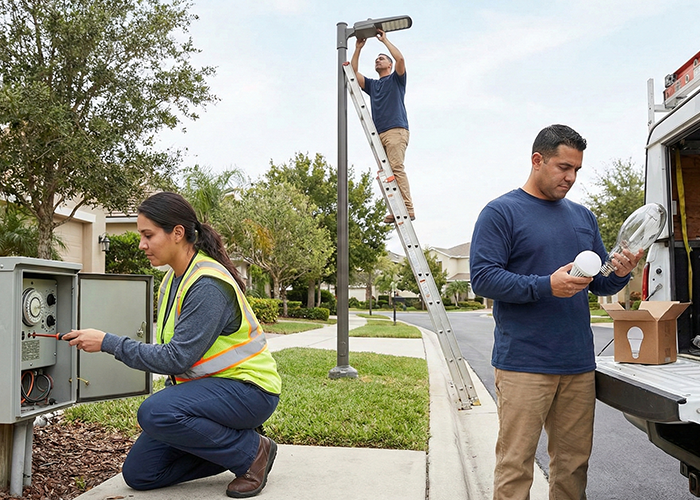
HOA street lights influence how residents move through the neighborhood after dark. Even coverage improves visibility without overwhelming drivers. Lighting maintenance for HOA boards ensures these fixtures remain reliable.

Outages can create uneven lighting that affects safety perception. Prompt repairs restore balance quickly. HOA light upkeep that includes street lighting supports both pedestrian and vehicle traffic.

Street lighting also shapes the community’s nighttime appearance. Consistent brightness contributes to a calm and orderly environment. Through steady lighting maintenance for HOA properties, streets remain functional and inviting.

Seasonal Adjustments and Timing

Lighting needs often shift with the seasons. Shorter days increase reliance on artificial light during evening hours. Lighting maintenance for HOA communities should account for these changes.

Timers may require adjustment as daylight hours shift. Regular reviews keep schedules aligned with real conditions. HOA light upkeep that adapts seasonally prevents unnecessary energy use.

Holiday decorations and events can also affect lighting needs. Temporary adjustments may be required. Through flexible lighting maintenance for HOA boards, seasonal changes are handled smoothly.

The Quiet Value of Well-Maintained Lighting

Lighting often goes unnoticed when it works well. That quiet reliability reflects effective planning and care. Lighting maintenance for HOA communities supports safety without drawing attention.

Residents feel more comfortable when shared spaces remain visible and secure. That comfort builds confidence in the association’s management. HOA light upkeep contributes to that sense of stability.

Over time, consistent lighting reinforces the overall quality of life within the community. Through thoughtful lighting maintenance for HOA properties, safety becomes part of everyday living rather than a constant concern.

A Brighter Path Forward

Strong lighting practices help communities feel secure without effort or stress. When HOA community lighting maintenance is consistent, residents enjoy safer evenings and clearer spaces. With thoughtful planning and steady HOA light upkeep, lighting becomes a quiet asset that supports the entire neighborhood.


Related Articles:
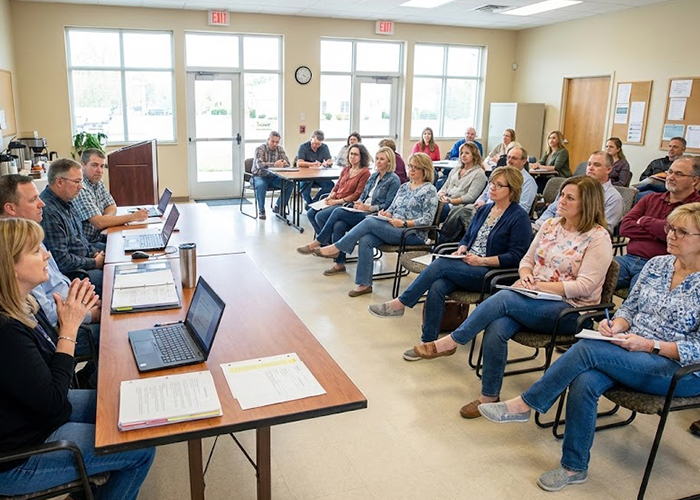
ADA Parking Compliance For HOAs: Accessible Community Spaces

Clear parking access helps everyone find the front door. It also keeps your community out of trouble. This guide focuses on ADA parking compliance for HOAs and gives simple steps to keep private lots usable and safe.


ADA Parking Compliance for HOAs: What the Law Says

The Americans with Disabilities Act is a federal civil rights law that prohibits disability discrimination. Titles II and III require accessible routes, entries, services, and parking where the public is served. The 2010 ADA Standards for Accessible Design set the technical rules for layout and signs.

How does that affect an HOA? If a common area serves the public, such as a sales or leasing office, a clubhouse rented to outside groups, or a community office that admits visitors, the ADA applies to the way that space is designed and run. Even when an HOA does not open facilities to the public, using ADA rules as a design standard makes parking safer and more inclusive for residents and guests.

Two ideas drive most parking decisions. First, people must be able to get from their vehicles to the entrance along an accessible route. Second, the space itself has to fit real wheelchairs, lifts, and mobility devices.

In practice, that means the right number of accessible spaces, the right van stalls, the right signs, and a route that is shortest, smooth, and nearly level. Keep those four points in mind as your team reviews any plan.


How Many Accessible Spaces You Need?

california building code accessible parking

The count is based on the total number of stalls in each parking facility. Small lots need one accessible stall. As the lot grows, the number increases in steps.

A simple rule of thumb helps. One accessible stall is required for 1 to 25 total stalls, two for 26 to 50, three for 51 to 75, and four for 76 to 100. Larger lots follow a percentage schedule, and at least one of every six accessible stalls must be a van stall. When your count lands on a threshold, round up and check the van ratio?


Van-Accessible Dimensions and Clearances

Van users need room for side lifts and ramps. The ADA allows two basic layouts for van stalls. You can stripe a space that is 132 inches wide with a 60-inch access aisle, or a 96-inch space with a 96-inch access aisle. Either option works if all other details meet the standard.

Vertical clearance matters as much as width. Provide a clear height of at least 98 inches at the stall and along the vehicle route to and from it. Check under carports, gates, and garage entries. A lift is not helpful if the route pinches down along the way. Use the phrase van-accessible dimensions in your notes and bids so the contractor knows you expect the ADA layouts and clearances.


Location, Slope, and the Accessible Route

tow policy signage

Place accessible stalls on the shortest accessible route to the accessible entrance. If several buildings share a lot, distribute spaces so each accessible entrance has an accessible stall nearby. People should not cross long distances or steep drive lanes just to reach the door.

Keep the surface nearly level. Both the stall and its access aisle should not exceed a gentle slope in any direction. The accessible route from the stall to the entrance should be firm, stable, and slip-resistant, without steps or abrupt changes in level. If a ramp is needed, use compliant slopes, landings, and handrails, and keep the path clear.


Signs for Accessible Parking

Signs make the rule visible. Each accessible stall needs a sign with the International Symbol of Accessibility. Van stalls add a second line that reads “Van Accessible.” Mount signs high enough so that a parked vehicle does not hide them. The ADA requires the bottom of the sign to sit at a minimum height above the ground surface so the message is readable from a distance.

Add one more operational aid. Tow policy signs at the lot entrance can support your enforcement program, which helps keep accessible stalls open for the people who need them. While tow rules come from other laws, a clear board at the entrance reduces conflict and confusion.


ADA Requirements for Striping and Marking

van-accessible dimensions

The ADA tells you how wide the space and the access aisle must be. It also defines where the aisle sits next to the stall and that the aisle and stall must be level and connected to an accessible route. The ADA does not prescribe paint color, crosshatch patterns, or curb colors. Many communities still use crosshatching and large “NO PARKING” letters in the access aisle as a management tool, and that practice can help, but it is not what makes a space compliant under the ADA.

Focus first on the measured widths, the route, the sign, and the van’s clear height. You can add striping details that fit your community’s look once the core rules are met.

Turning ADA Rules Into a Simple Layout Plan

Sometimes, ADA parking compliance for HOAs starts with a basic plan. Begin the process with a scaled sketch of the lot. Count the total stalls, then mark the required accessible stalls. Choose where van stalls should go and confirm the van route is free of low beams or pipes.

Next, draw each access aisle. Place aisles so users can deploy ramps without entering traffic lanes. Confirm that sidewalks, curb ramps, and door landings align with the access aisles. A good sketch answers most contractor questions before paint hits the ground.


Maintenance and Operations

california building code accessible parking

Compliance is not one and done. Paint fades and signs bend. Build a quick inspection loop into your quarterly walk. Take photos, note dates, and log fixes. Small issues are easy to correct when caught early.

Resident reports help. Encourage people to flag worn markings or loose signs. Respond quickly, then update the log. Over time, those notes become a map for the next restriping project.


Proper Staff Training

Your manager and front desk team can prevent many issues with a simple script. When a resident asks about accessible parking, give clear directions to the nearest stall. When a delivery company blocks an access aisle, call the site supervisor right away and ask them to move. Keep the tone polite, and record the contact.

For events, ask hosts to keep accessible stalls and aisles clear. Provide cones if crowding is likely. People want to do the right thing, especially when the request comes early and the reason is clear.


Common Layout Mistakes to Avoid

van-accessible dimensions

Aisles that are too narrow are common. So are aisles placed on the driver’s side when lifts deploy on the passenger side. Another frequent miss is a van stall that meets width rules but fails the 98-inch clear height along the route. Any of these can ruin an otherwise careful project.

The last common mistake is putting the accessible stall far from the entrance, then trying to fix it with extra signs. The ADA asks for the shortest accessible route. Put the stall where the route is shortest, then mark it well.


How to Phase Work Without Closing the Lot

You can upgrade in steps. Begin with the van stall. Confirm width, aisle, sign, and clear height. Then bring nearby car accessible stalls into compliance. Finally, improve the route with better curb ramps or smoother landings.

Tie work to planned maintenance where possible. If resealing or resurfacing is already on the calendar, schedule restriping and sign work at the same time. The combined project saves money and reduces downtime.


Readily Achievable Barrier Removal

tow policy signage

For places that serve the public, the ADA asks businesses to remove barriers when removal is readily achievable. That means it can be done without much difficulty or expense. Re-striping a lot or adding a sign often fits that test. Rebuilding a garage level may not.

If a large fix is needed, plan and budget for it. Document what you considered, what you did, and what you plan to do next. Good records show progress and help defend the schedule.


ADA-Friendly EV Charging Near Accessible Stalls

EV charging can be placed near accessible parking if clearances are maintained. Keep the charger and bollards out of the access aisle. Confirm the cable reaches without crossing the aisle. If the cable must cross, place it so it lies flat and does not create a trip hazard.

As demand grows, consider adding an accessible route to a future EV stall. That way, the next upgrade is simple and the lot stays flexible.


Accessibility for All

Good parking design is a service, not just a rule. When you follow ADA basics, people reach your doors with less stress. Keep the plan simple, measure twice, and review it often to sustain ADA parking compliance for HOAs.

Looking for professional support in managing ADA compliance for your HOA? Personalized Property Management offers HOA management services around Southern California. Call us at 760-325-9500 or email us at info@ppminternet.com for more information!


Related Articles:

HOA Newsletter Strategy: How To Plan Your Content Calendar

A well-planned HOA newsletter keeps neighbors informed, reduces confusion, and builds trust. With a clear calendar and the right metrics, you can improve each issue instead of guessing.


Why Plan the HOA Newsletter?

Community life moves fast. Board decisions, maintenance work, and seasonal reminders compete for attention. Without a plan, updates get lost, and residents tune out.

A simple structure will change that. When your HOA newsletter follows a steady rhythm, homeowners know what to expect and where to find it. That predictability lifts readership and cuts repeated questions to the office.

It also protects your time. A calendar and a short checklist stop last-minute scrambles and keep messages aligned with board priorities.


Build a Calendar

hoa news

Start with a three-month view. Map board and committee meetings, planned projects, and recurring services. Add holidays, pool schedules, and seasonal tasks that matter in Southern California.

Next, slot content types against dates. Reserve space for board actions, compliance reminders, event notes, and quick how-tos. Give each issue one lead topic, two supporting items, and one light feature, like a resident spotlight or a staff Q&A.

Keep it flexible. Leave a small space for late items, then lock the rest a week before sending. This balance keeps your HOA newsletter timely without being chaotic.


Set the Cadence

Cadence depends on community size and activity. Large communities with busy calendars may need a biweekly email. Smaller communities often succeed with a monthly send.

Local context matters. Fire season, heat waves, and water restrictions require quick reminders. During those times, send short, targeted updates between regular issues. Clear, calm notes help residents prepare and reduce rumor cycles.

Aim for consistency. Same day of the week, similar send time, familiar layout. Readers form habits when your pattern holds.


Plan by Season

hoa communications

Tie your calendar to the board cycle. Plan summaries after meetings, and set expectations for the next agenda without lobbying or debate.

Use seasonal patterns. In spring, share irrigation checks and landscape rules. In summer, focus on pool safety and guest policies. Fall is ideal for budget timelines and reserve study notes. Winter can cover storm readiness, roof checks, and holiday decoration guidelines.

Coordinate with vendors. If asphalt work is scheduled, map notices across three touches: early heads-up, specific timing, and day-of reminder.


Create Trusted Sections

Recurring sections help readers scan. Keep them consistent in name and order so people can find what they need fast.

  • Board Decisions at a Glance
  • This Week’s Projects and Closures
  • Safety and Preparedness Corner
  • Amenity Hours and Tips
  • Quick Compliance Reminders
  • Community Highlights or Volunteer Spotlight

Use short paragraphs and scannable headers. Aim for clarity over cleverness.


Design for Phones

hoa news

Most residents read on phones. Make sure your newsletter can be easily read using these devices. For this, you can use a single-column layout, large buttons, and short headlines. Keep images small and add alt text for accessibility.

For fonts, choose ones that are clean and legible. Contrast should be strong enough for bright outdoor screens. Test it on your own phone before you send.

If you hand out print copies, keep the same structure. A one-page front and back layout works well for lobbies and mailrooms.


Write and Edit Well

Plain language wins. Write as if you are explaining the issue to a friend across the fence. Use active verbs and direct calls to action.

After you have your content, edit them with care. Trim long sentences, swap jargon for everyday words, and verify dates and locations. You can also read them out loud to catch awkward phrases.

Additionally, keep in mind that one matters. Firm but friendly is the goal. Residents should feel informed, not scolded.

Use Media Wisely

hoa communications

Use images with purpose. A map of detours beats a paragraph. A photo of a repaired entryway shows progress better than a line of text.

Short clips work well for quick demos, like using the new gate app. Add captions for silent viewing and keep file sizes small.


Use Every Channel

Meet people where they are. Email is the backbone of most HOA communications. Your community portal adds permanence and a searchable archive.

For common areas, a tidy print version helps reach folks who prefer paper. Social posts can point back to the core message, not replace it. Keep your HOA newsletter as the official source of record.


Track the Right Metrics

hoa news

Metrics show what lands and what needs work. Focus on numbers that reflect attention and action. Track them the same way for each issue.

  • Open rate shows subject line clarity and sender trust
  • Click-through rate shows interest in details and links
  • Read time and scroll depth show content length fit
  • Unsubscribes and spam complaints show fatigue or relevance issues
  • Delivery rate checks list health and email setup

For print, add QR codes for sign-ups and surveys. Track scans to estimate reach.


Make a Dashboard

Pick one home for your numbers. Email platforms such as Constant Contact or Mailchimp provide opens, clicks, and list health. Your portal or website can track views and time on page. A simple spreadsheet ties it together.

Create a one-page dashboard with five items: open rate, click-through rate, top link, read time, and unsubscribe count. Add a short note on what you will change next issue.

Review after each send. Trends matter more than single points. Celebrate wins, then keep improving.


Set Benchmarks

hoa communications

Benchmarks vary by list size and community type, but targets help. For many HOAs, a 45 to 60 percent open rate is realistic when lists are clean and subject lines are clear. Click-through rates of 8 to 15 percent are common when content is useful and links are obvious.

Unsubscribes should be low, often under 0.5 percent per send. If that number rises, reduce frequency or tighten relevance. Keep subject lines clear and short, around 40 to 60 characters.

Aim for a read time of one to three minutes. If the scroll depth drops early, your content may be too long or the lead item may not match the subject.


Act on Results

Use a small playbook. If opens dip, test a clearer subject line next time. If clicks lag, move key links higher and use more direct button labels.

When one topic drives strong clicks, bring it back with a new angle. If a section gets little attention for three issues in a row, cut or refresh it.

Share a brief summary with the board. One paragraph on what worked and what you will try next keeps everyone aligned.


Mind Governance and Tone

hoa news

Your HOA newsletter should respect laws and community rules. Keep resident data secure and use email lists only for association business. Follow a clean opt-in process and an easy opt-out.

Be fair and neutral. Avoid endorsing contractors or services unless board-approved and properly disclosed. Use images you own or have permission to use.

When discussing violations or rule reminders, focus on the rule and process. Never name residents or hint at identities.


Handle Urgency

Emergencies do not wait for the next issue. Build a separate template for urgent alerts. Keep copy short, include who to contact, and list the next steps.

After the event, summarize actions taken and what comes next in the regular HOA newsletter. This reinforces trust and shows follow-through.


Reuse and Archive

hoa communications

Great content should work twice. Turn a long board recap into a short highlight for the next issue. Slice a safety article into a seasonal reminder six months later.

Keep a simple archive by category. Future editors will thank you, and residents can search past HOA news when they need details.


Subject Lines That Work

Subject lines work best when they promise a clear benefit. Keep them specific, short, and honest.

Try formats like these:

  • “Street repair map for May 12 to May 15”
  • “Pool guest rules before Memorial Day weekend”
  • “Board actions at a glance: April meeting”
  • “Irrigation checks this week, what to expect”

Avoid vague labels like “Monthly newsletter.” Help residents decide fast.


Design Basics

hoa news

White space helps the eye rest. Use short sections, generous margins, and clear subheads. Buttons should look like buttons, and links should be obvious.

Color can guide attention, but it should never fight with text legibility. Test dark text on a light background and reverse it only for short banners.

If you include a banner image, keep it small so the message loads fast. Place the key text early for readers who preview emails.


Stay on Schedule

Give each issue a simple workflow: pitch, draft, legal or board review when required, proof, and send. Assign one owner, even if several people contribute.

Deadlines keep the machine running. Collect items on Thursday, draft Friday, review Monday, then send Tuesday morning. Adjust to fit your board calendar and service schedules.

Keep a shared checklist. It should include dates, link tests, alt text, and contact numbers.


Ask Residents

hoa communications

Short surveys help you pick topics that matter. One or two questions can guide your next lead story or event plan.

Place a poll at the end of the HOA newsletter. Ask what residents want next month or how useful a section felt. Close the loop by sharing results.


Keep it Consistent

Your HOA newsletter should fit within your overall plan for HOA communications. Use the same voice, consistent branding, and shared facts across email, portal posts, and notices.

Store final versions in one folder, labeled by date and topic. This creates a reliable record and simplifies future audits or board transitions.


Train a Backup

hoa news

Turn your calendar and checklist into a short playbook. Include brand rules, tone guidelines, and who approves what. Add screenshots of your email tool.

Train a second person to step in when needed. With a backup, your newsletter does not stall during vacations or emergencies.


Keep it Human

Data helps you improve, but people read stories. Feature volunteers, celebrate small wins, and say thank you after big projects. A neighborly voice earns attention.

Close tough notes with a helpful next step. When rules are clear and the path is simple, compliance improves without drama.


Ready for the Next Issue

With a steady calendar and focused metrics, your HOA newsletter becomes a reliable service, not just another email. Keep it simple, keep it useful, and iterate with each issue.

Need professional expertise in planning and creating your community newsletter? Personalized Property Management offers HOA management services around Southern California. Call us at 760-325-9500 or email us at info@ppminternet.com for more information!


Related Articles: