
A thoughtful HOA board survey can bring clear, candid input straight from your homeowners. With simple planning and plain language, you can turn those responses into actions that improve daily life across your Southern California community.
What is an HOA Board Survey?

An HOA board survey collects resident input in a structured way, so you can see trends and act on them. It helps the board check what is working, what feels unfair, and what needs attention next. In short, it turns opinions into useful data that supports fair, transparent decisions.
When Should You Run It?
Most boards do well with a recurring rhythm. A short pulse survey each spring can guide the budget season that follows. A fuller check-in every year or two gives a deeper view of projects, reserves, amenities, and service quality.
Timing also matters after big milestones. If you just wrapped a roofing project, finish line feedback can confirm what went well and what to fix before the next phase. The same applies after rule revisions or major vendor changes.
Creating HOA Board Survey Questions

It’s easy to write questions about things your HOA would want to know. However, to get a good response, you need a survey that considers your community’s members.
Here’s how to create survey questions that work for your community.
Set Clear Goals Before You Write Questions
Clear goals keep a survey tight and easy to finish. Decide what you need to learn now, and what can wait for the next round. That way, questions stay focused and owners stay engaged.
For example, one goal could be to measure satisfaction with landscape care. Another could be to spot safety concerns in common areas. Since every question should tie back to a goal, the final set is easier to analyze and explain.
Choose the Right Format
Many associations use a community feedback form that owners can complete online or on paper. Online tools are faster to tally and easier to keep anonymous. Paper copies still help residents who prefer a physical form or do not check email often.
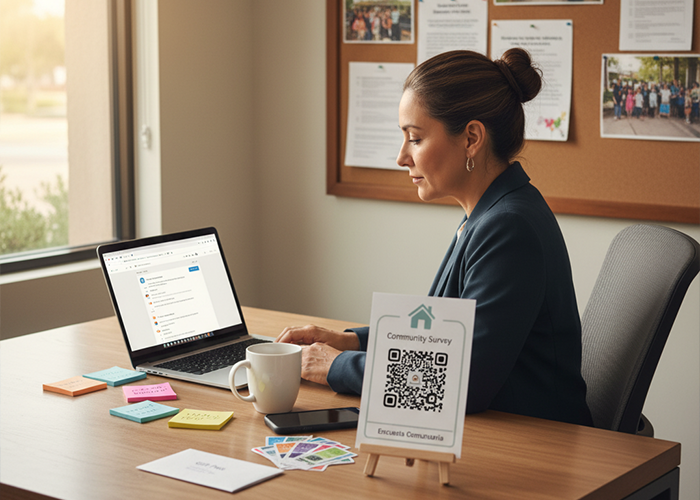
Hybrid delivery reaches more people. Place paper forms at the clubhouse, offer a drop box, and provide a QR code for the digital version. Clear instructions and a short deadline help the process move along without confusion.
Make Them Easy to Answer
Clarity wins. Use short, plain sentences and limit jargon. Aim for a reading level that feels simple to skim on a phone. Owners should not need to look up terms to give a fair answer.
Vary your formats to keep things moving. Try a mix of yes or no, one-to-five scales, and one or two open boxes for comments. Keep each prompt about one topic so the response is clear.
Helpful Question Styles
- Agreement scale: “Common areas are clean and well kept.” Strongly disagree to strongly agree
- Frequency: “How often do you use the pool in summer?” never, sometimes, often
- Priority ranking: “Rank the top three projects for next year”
- Open response: “What one change would improve your day-to-day experience?”
Cover the Topics Members Care About
Owners want to see the link between dues and daily life. Include maintenance, amenities, rules, safety, and communication. Financial topics deserve a spot too, since fees and reserves shape the community’s future.
Consider short blocks like these:
- Maintenance and vendors: timeliness, quality, communication with crews
- Amenities and access: pool, gym, clubhouse, parking, gate systems
- Governance and rules: clarity, fairness, consistency in enforcement
- Communications: email, text alerts, website, meeting notices
- Budget and reserves: value for money, clarity of cost drivers
How to Boost Response Rates Without Fatigue
Short surveys draw more replies. Aim for five to ten minutes. Put the most important items at the start, in case a respondent stops early.
Friendly reminders work. Send one notice at launch, one halfway through, and one near the deadline. In a diverse community, a brief Spanish version or a bilingual cover note can help more owners take part. If your community has many renters, invite them too if your governing documents allow input on relevant topics such as noise and parking.
Small incentives can help. A simple raffle gift card or a one-time guest pass for an amenity can make a difference. The reward should be modest and given at random to keep the focus on honest input.
Why Have an Owner Satisfaction Survey?
A periodic owner satisfaction survey gives you a high-level view of trust, service, and value. Keep it consistent from year to year so you can compare results. A stable set of core questions makes trends easy to see.
You can still add a few rotating topics. For instance, if insurance costs rose this year, add a block that asks how owners prefer to receive updates about coverage, deductibles, and risk-reduction steps. The core stays the same, and the rotating questions keep the survey timely.
HOA Board Survey: Tips to Keep in Mind

When creating and conducting an HOA survey, try to keep these best practices in mind:
Draft an HOA Resident Survey for Daily Experience
The HOA resident survey is where daily life shows up. Ask about noise, parking flow, pet waste, lighting, and after-hours response. Practical matters shape how people feel about the community.
Invite comments about specific areas. “Which part of the clubhouse needs attention?” prompts useful details. Photos should not be requested through the survey tool unless your system can safely accept files; otherwise, give an email for follow-ups.
Keep It Straightforward
A community feedback form is a shorter, always-open option for owners who want to share a quick note between formal surveys. Place it on your website and keep a stack of paper cards at the office. Route submissions to the manager and board secretary so nothing is missed.
Set expectations up front. Let people know when responses are reviewed and how long follow-ups may take. Urgent items, like safety hazards, should be routed to a dedicated line rather than the form.
Avoid Bias and Confusion
Neutral wording protects the quality of your data. Leading phrases can push people toward a certain answer without meaning to. Double questions cause the same problem.
Try this shift:
- Instead of “How satisfied are you with our excellent landscaping team?”
Use “How satisfied are you with landscape care this year?” - Instead of “Do you like and support the new parking decals?”
Use “How clear are the new parking decal rules?”
Keep answer choices balanced and consistent. If you use one-to-five scales, define the ends the same way throughout.
Collect and Analyze Results
Close the survey on time and export the data. Remove names and emails before sharing results with the board. Group answers by topic and look for patterns, not one-off comments.
Start with top-line numbers. Then study open comments and tag them by theme. It is common to see a few frequent requests rise to the top.
When possible, segment results to spot needs. Owners near the pool may have different noise concerns than those near the gate. Townhome clusters may face different parking issues than single-family streets.
Share Findings With the Community and Close the Loop
Owners took the time to respond. They should see what was heard and what will be done. A one-page summary, a few charts, and three to five action items show respect for their effort.
Be clear about timing. Some changes can happen fast. Others must be worked into the next budget or bid cycle. Even a short timeline helps set fair expectations.
Turn Feedback Into Projects and Policy Updates
Survey trends should link to board agendas. If many owners report dim walkway lights, schedule a lighting audit and price options. If dog stations are empty on weekends, adjust service schedules and post the change.
Policy tweaks can be tested, too. If enforcement feels uneven, publish a step-by-step matrix that shows the same path for every violation. A simple guide reduces stress for both residents and volunteer boards.
Communicate Results With Simple, Friendly Tools
Not everyone reads long emails. Mix your channels. Send a brief email, post to the bulletin board, and add a short note in the next billing insert. Consider a small open house where owners can see the results and ask questions.
Plain visuals help. A bar chart that shows the top three priorities is easier to digest than a wall of text. A short FAQ on the website can answer common questions about what comes next.
Work With Your Manager or a Neutral Third Party
A managing agent can set up and run the HOA board survey so responses remain confidential. Neutral handling often increases honesty. If your community is large or the topics are sensitive, a third-party vendor can host the survey and provide a clear, independent report.
Costs should be kept in scale with the task. Ask for a flat fee, a short timeline, and a data file you can keep. Reports that use simple language are easier to share with residents.
Track Your Data in the Long Run
Surveys are most useful when repeated over time. Track a small set of core metrics, like overall satisfaction, sense of fairness, or quality of repairs. When the board reports a year later, you can show real movement.
Keep the habit light. A short yearly pulse plus a bigger survey every other year is usually enough. Owners learn that their voice matters, and participation often grows..
Staying in the Loop
Run your HOA board survey with clear goals, short questions, and a fair process. Share what you heard, act on a few priorities, and measure again next year. When the loop is closed, owners feel heard and the community grows stronger.
Related Articles:
- How To Improve Communication In HOA Community
- HOA Website Cost: Is It Worth Spending The Budget On?
- 13 HOA Committees Your Community Should Have