Is Installing Speed Bumps In HOAs Legal And Beneficial?

Speed bumps in HOAs may be a logical solution to address speeding in residential neighborhoods, which can be dangerous. But is this option legal for HOAs to pursue? And even if it is, is it truly the best way to calm traffic?

Understanding the Problem: Speeding in HOA Neighborhoods

HOA communities, particularly those with families and pedestrians, often experience concerns over speeding. Complaints from homeowners about fast-moving cars are among the most common issues reported to management companies and HOA boards.

While warning signs and community newsletters can help raise awareness, they don’t always result in actual change. That’s why many boards start to consider physical deterrents like speed bumps in HOAs. These traffic calming devices force drivers to slow down, whether they want to or not.

Are Speed Bumps Legal in California?

Can an HOA install speed bumps in California? Installing speed bumps isn’t as simple as placing asphalt across a roadway. There are specific rules and standards, particularly for public roads, that HOAs and municipalities must follow. Even on private roads, best practices guided by state-level standards still apply.

California Manual on Uniform Traffic Control Devices (CA MUTCD)

The CA MUTCD, maintained by the California Department of Transportation (Caltrans), governs the use of traffic control devices across the state. It provides detailed criteria for the placement, design, and signage of speed control measures, including speed bumps and speed humps.

Key Guidelines from CA MUTCD:

  • Speed bumps are not recommended for use on public streets, especially collector or arterial roads.
  • They may be used in low-speed, low-traffic environments such as private roads or parking lots.
  • The manual recommends speed humps instead of traditional bumps for residential areas because humps allow better emergency access and smoother traffic flow.
  • When traffic calming devices are used, appropriate warning signage must be installed (e.g., “BUMP” or “HUMP” signs with advisory speed plaques).
  • Devices must be painted or marked for visibility, typically with white or yellow reflective paint and chevrons.

Although CA MUTCD primarily governs public roadways, it serves as a best-practices standard that even private communities should follow to avoid liability and ensure safety.

Davis-Stirling Act Considerations for Speed Bumps in HOAs

The Davis-Stirling Common Interest Development Act, which governs most HOAs in California, doesn’t specifically address speed bumps. However, it requires boards to act in good faith, in the best interest of the community, and with reasonable care.

This means:

  • Boards must follow proper procedures, including board votes and notifications to potential homeowners.
  • Modifications to common areas (including roads) may require homeowner approval if stipulated in the HOA’s governing documents.
  • Boards must document decisions and demonstrate that they evaluated safety, costs, and legal compliance.

Public vs. Private Road Jurisdiction

The legality of installing speed bumps in HOAs hinges largely on road ownership:

  • Public Roads: These are owned and maintained by a city or county. HOAs cannot install speed bumps on these roads. Instead, they must petition the local agency, usually the Public Works Department or Traffic Engineering Division, to conduct a traffic study. Approval is rare, especially for speed bumps; however, other measures, such as speed humps or signage, may be considered.
  • Private Roads: If the HOA owns and maintains the roads, it typically has the authority to install traffic calming devices. Still, they should follow standards like those in the CA MUTCD and consult professionals to avoid negligence claims.

California Fire Code Compliance

car on a speed bump | speed bumps in HOAs

California’s Fire Code (and local interpretations of it) prohibit traffic-calming devices that impede emergency vehicle access. Fire departments often require a minimum vertical clearance and response-time adherence.

Speed bumps may delay the arrival of fire trucks, ambulances, or police vehicles. As a result, fire departments often oppose their use, especially taller or abrupt bumps. Some jurisdictions require HOAs to:

  • Get fire marshal approval before installing any device.
  • Use fire department-approved designs (e.g., speed cushions, which are divided to allow wide emergency vehicle axles to pass through).
  • Demonstrate that emergency response times will not be significantly impacted.

Liability and Case Law

California courts have not extensively litigated HOA speed bump liability, but general premises liability law applies. HOAs are considered responsible for maintaining safe common areas. Improper installation of a speed bump can lead to liability under California Civil Code § 1714, which deals with property owner negligence.

For instance, an improperly designed or unmarked bump that damages a car or causes a bicycle accident could expose the HOA to lawsuits.

Local Ordinances and Permits on Speed Bumps in HOAs

In addition to statewide standards, cities and counties in California often have their own public works codes and ordinances that regulate traffic calming. Common local requirements include:

  • A minimum number of homeowner signatures or petition support is required to initiate traffic studies.
  • Required speed or volume thresholds (e.g., average speed above 25 mph) to justify physical calming measures.
  • Noise or emergency access impact assessments.

Speed Bumps vs. Speed Humps: What’s the Difference?

While many people use these terms interchangeably, speed bumps and speed humps serve slightly different purposes and are designed differently.

FeatureSpeed BumpsSpeed Humps
Height3 to 6 inches3 to 4 inches
Width1 to 3 feet10 to 14 feet
Speed ReductionAbrupt, 2–10 mphGradual, 10–20 mph
ApplicationParking lots, alleysResidential streets
Emergency Vehicle ImpactHigh disruptionMinimal disruption

Speed humps are generally preferred for residential streets because they provide smoother transitions and don’t obstruct emergency response times as severely as traditional speed bumps.

Pros and Cons of Installing Speed Bumps in HOAs

Many HOA boards find real value in these traffic calming measures. However, they also come with numerous issues and challenges. Here are the benefits and drawbacks of installing speed bumps in your HOA community.

Pros

1. Enhanced Safety

The primary reason for installing speed bumps in HOAs is increased safety. By forcing drivers to slow down, these devices help protect children, pedestrians, and pets. Accidents are less likely to occur, and drivers become more aware of their surroundings.

2. Reduced Cut-Through Traffic

Speed bumps can deter non-residents from using HOA streets as shortcuts. When alternate routes are faster and more convenient, through-traffic tends to avoid the neighborhood.

3. Lower Noise and Pollution

Slower speeds often mean reduced engine noise and emissions. This is especially beneficial for densely populated communities where road noise can become a nuisance.

4. Liability Mitigation

When homeowners repeatedly complain about traffic dangers and the board fails to act, the HOA may be exposed to legal risk. Demonstrating proactive safety efforts, such as the installation of traffic calming devices, can show that the board is fulfilling its duty of care.

Cons
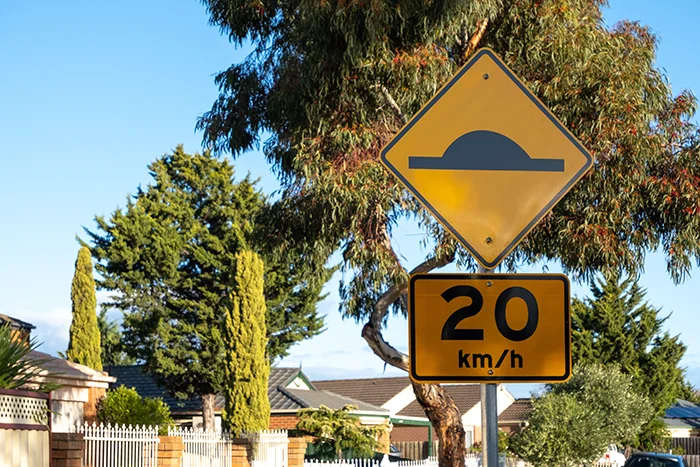
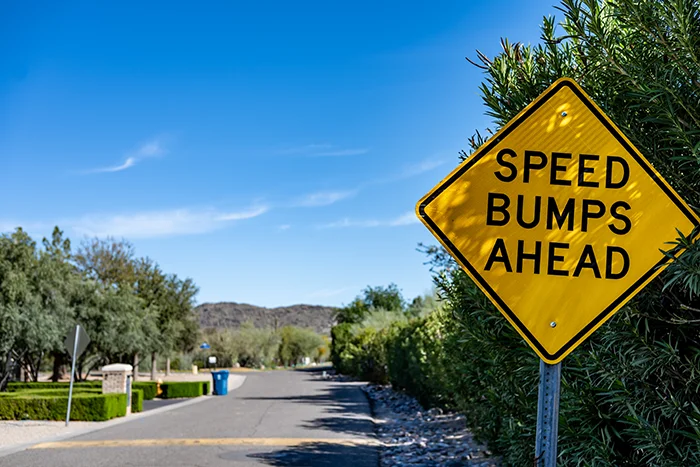
speed bump sign | speed bumps in HOAs

1. Legal and Financial Liability

Installing speed bumps without proper procedures, permits, or compliance can expose the HOA to legal claims. If a car is damaged or someone is injured due to poor design or lack of visibility, the HOA could be held responsible.

2. Emergency Access Concerns

Fire departments and EMS providers often object to speed bumps that obstruct response time. HOAs should always coordinate with emergency services to ensure compliance and accessibility.

3. Homeowner Pushback

Not every resident welcomes speed bumps. Complaints may include increased noise, vehicle damage, discomfort, or reduced property values. A divided community can lead to tension or even legal disputes.

4. Ongoing Maintenance Costs

Speed bumps need to be maintained. Paint fades, asphalt wears down, and damage occurs over time. Budgeting for routine upkeep is essential to avoid creating new hazards.

Alternatives to Consider for Speed Bumps in HOAs

If speed bumps prove controversial or unsuitable, HOAs can explore other traffic calming devices instead:

  • Speed Tables: These are longer and flatter than speed humps and can double as crosswalks.
  • Chicanes: Landscaping or curb extensions that create a winding road pattern to slow drivers.
  • Radar Speed Signs: Electronic signs that display current driver speed in real-time.
  • Mini Roundabouts: Promote continuous movement while slowing speed.
  • Lane Narrowing or Striping: Visually narrows roads to make drivers feel the need to slow down.

These alternatives can be effective and less intrusive depending on the community’s layout and traffic volume.

Best Practices for Installing Speed Bumps in HOAs

To successfully implement speed bumps or any other calming measure, HOA boards should follow a transparent and structured process:

1. Conduct a Traffic and Safety Study

Bring in a licensed traffic engineer to assess problem areas, measure speed and volume, and make recommendations. This protects the board from liability and provides a data-driven foundation.

2. Gather Community Feedback

Hold meetings, conduct surveys, and maintain open communication. The more informed and involved residents are, the less likely the board is to face resistance or backlash.

3. Consult Legal Counsel

Before final decisions, consult an attorney familiar with HOA law and local regulations. They can help interpret your governing documents and assess potential liability.

4. Coordinate with Emergency Services

Reach out to local police, fire departments, and EMS to ensure compliance and avoid hindering life-saving services.

5. Implement with Professionals

Never DIY a speed bump. Use licensed contractors, follow engineering specifications, and ensure proper signage and road markings are installed.

6. Review and Maintain

Monitor how effective the speed bumps are over time. Regularly repaint, repair, and review feedback to ensure ongoing safety and compliance.

Slowing Down, The Smart Way

Speed bumps in HOAs can be a valuable traffic control solution, but only when installed legally, safely, and with community buy-in. With careful planning and proper execution, your HOA can create a safer and more peaceful neighborhood that residents are proud to call home.

Need assistance in handling your day-to-day HOA operations? Personalized Property Management offers HOA and property management services around Southern California. Call us at 760-325-9500 or email us at info@ppminternet.com for more information!

Related Articles

Resolving HOA Disputes In California The Right Way

HOA disputes are more common than many realize, but resolving them doesn’t have to be messy or hostile. With the right approach, tools, and understanding of California law, HOA boards and residents can address problems constructively and maintain a peaceful neighborhood environment.

HOA Disputes: Common Scenarios

Every HOA faces conflict at some point. Some disagreements are minor and easily resolved, while others escalate into legal issues or community-wide frustrations. Common sources of disputes with HOAs include:

1. Architectural Modifications

Homeowners may wish to alter their property in different ways, such as painting the house, installing solar panels, or adding a new fence. If these changes violate the HOA’s architectural guidelines or approval process, conflict can arise. Disagreements over what’s allowed can lead to prolonged HOA disputes.

2. Rule Violations

Rules and regulations in the CC&Rs exist to maintain community standards. However, when a homeowner feels unfairly targeted for a rule violation or if they believe another resident is getting preferential treatment, it can lead to tension.

3. Maintenance Responsibilities

Conflicts often arise over who is responsible for maintaining certain areas. This is especially true in communities with shared structures or limited common elements. Clear boundaries and expectations are essential.

4. Fee and Assessment Disputes

Special assessments, late fees, or regular dues can cause friction if homeowners feel charges are unreasonable or improperly applied. Financial disagreements can quickly escalate if not addressed promptly.

5. Board Conduct

Sometimes, homeowners feel that board members are acting unfairly, withholding information, or violating fiduciary duties. Accusations of mismanagement, favoritism, or lack of transparency can erode trust and fuel HOA conflict resolution needs.

HOA Dispute Resolution in California

California has specific laws governing HOA dispute resolution, primarily found in the Davis-Stirling Common Interest Development Act. Two key processes outlined by law are Internal Dispute Resolution (IDR) and Alternative Dispute Resolution (ADR).

Internal Dispute Resolution (IDR)

IDR is an informal process meant to resolve issues before they escalate. According to California Civil Code §5910, every association must offer a fair, reasonable, and expeditious procedure for resolving HOA disputes internally.

  • Either party (the board or a homeowner) can initiate IDR.
  • The meeting is typically conducted between a homeowner and one or two board representatives.
  • Attorneys generally don’t participate.
  • Any agreement reached must be documented and signed by both parties.

This step is crucial and legally required before taking certain disputes to court or mediation.

Alternative Dispute Resolution (ADR)

When IDR fails or is bypassed, ADR is the next legal requirement before pursuing litigation. Under California Civil Code §§5925–5965, HOAs and homeowners must attempt ADR, such as mediation or arbitration, before filing a lawsuit related to enforcement of the governing documents.

  • Mediation involves a neutral third party helping the parties reach a voluntary agreement.
  • Arbitration can be binding or non-binding and is more formal.
  • Parties must serve each other with a written “Request for Resolution.”
  • Failure to attempt ADR before litigation may result in the court refusing to hear the case or awarding legal costs to the other side.

State Laws to Consider

California has its own nuances that influence how HOA dispute resolution is handled:

1. Solar Panel Disputes

Under California Civil Code §714, HOAs cannot unreasonably restrict solar energy systems. Disputes over solar installations must carefully balance aesthetic concerns with legal rights.

2. ADUs and Housing Law

Accessory Dwelling Units (ADUs) have legal protections under state law. HOAs must allow certain types of ADUs even if older CC&Rs appear to prohibit them, leading to potential conflicts with long-time residents.

3. Disability Accommodations

The Fair Housing Act and California’s Fair Employment and Housing Act require reasonable accommodations for disabilities. Boards must tread carefully and avoid liability when disputes arise over parking spaces, service animals, or structural modifications.

4. SB 323 Board Election Rules

Senate Bill 323 introduced specific procedural rules for board elections. Disputes over candidate eligibility or election integrity must follow these strict timelines and processes or risk invalidation.

Sure! Here’s a more natural, humanized rewrite of your content in American English, keeping the points clear and practical for HOA boards:

HOA Dispute Resolution: Smart Ways to Handle Conflict

two angry people | hoa disputes

California law offers a foundation for resolving HOA disputes, but the way your board handles conflict can make all the difference. Here are some best practices to help resolve issues fairly and build trust in the community.

1. Communicate Early and Clearly

Many HOA disputes start with simple misunderstandings. That’s why it’s important to keep communication respectful, timely, and well-documented.

Make it a habit to share reminders about rules and policies through newsletters or community updates. When homeowners raise concerns, respond promptly and let them know what to expect in terms of follow-up. Avoid using accusatory or emotional language. Keeping things professional helps prevent escalation.

2. Keep the Process Transparent

Homeowners don’t want to feel ignored or left in the dark. A transparent process shows that the board is fair and accountable.

Post detailed meeting minutes and make sure they’re easy to access. When beginning an Internal Dispute Resolution (IDR), use written notices and clearly explain how decisions, like fines or denials, are made. Transparency builds credibility.

3. Document Everything

If a disagreement grows into something more serious, proper documentation protects everyone involved.

Hold on to emails, letters, and notes from meetings or phone calls. Send formal notices when making decisions and keep copies. If a resolution is reached during IDR or Alternative Dispute Resolution (ADR), have both parties sign the agreement so there’s no confusion later.

4. Be Consistent with Enforcement

Nothing frustrates homeowners more than feeling like rules only apply to some people. Consistent enforcement is essential.

Apply all rules equally. There should be no special treatment for board members or their friends. Stick to written policies to help guide your decisions and avoid claims of favoritism or unfairness.

5. Try Mediation Before Taking Legal Action

Going to court should be the last step, not the first. Mediation is usually faster, less expensive, and less combative.

Choose a mediator who understands HOA issues or property law. Let homeowners bring someone to support them if they wish. The goal is to find a solution that works for everyone, not to win an argument.

When Should the Board Contact a Lawyer?

Even though IDR and ADR are meant to be informal, there are situations where legal advice is important. Your board should consider reaching out to an attorney if:

  • The dispute involves discrimination, harassment, or safety concerns.
  • There’s confusion or disagreement over the interpretation of governing documents.
  • Someone is accusing the board of breaching its fiduciary duty.
  • You think the issue could end up in court.

Likewise, homeowners can benefit from seeking their own counsel, especially when navigating complicated legal language or when facing enforcement actions that seem unjustified.

How to Prevent Future HOA Disputes

Prevention is more effective and far less stressful than resolution. Here are proactive steps HOAs can take to avoid unnecessary conflict:

1. Provide Regular Education

Educate both board members and residents on their rights and responsibilities.

  • Offer new homeowner orientation sessions.
  • Send seasonal rule reminders.
  • Encourage participation in community meetings.

2. Review and Update Governing Documents

Many HOA disputes stem from outdated or unclear CC&Rs.

  • Review rules every few years with a legal professional.
  • Ensure language is easy to understand.
  • Update policies to reflect changes in state law or community needs.

3. Build a Culture of Community

Residents are less likely to become combative when they feel a sense of belonging.

  • Host social events to build rapport.
  • Encourage volunteerism.
  • Create forums where concerns can be voiced constructively.

4. Train Board Members in Conflict Resolution

Not all board members come with people-management experience. A little training goes a long way.

  • Offer workshops or online training on dispute resolution.
  • Encourage active listening and empathy.
  • Role-play common scenarios to develop confidence.

Role of HOA Management Companies in Dispute Resolution

Professional HOA management firms can provide critical support in HOA conflict resolution, especially for self-managed or volunteer boards. Their role includes:

  • Acting as a neutral third party in communications.
  • Ensuring compliance with legal timelines and documentation.
  • Recommending IDR or ADR professionals.
  • Offering guidance based on experience with similar situations.

By leaning on experts, boards can avoid common missteps and preserve community harmony.

Creative Resolution Strategies for Difficult Cases

stoppping two hands | hoa disputes

Some HOA disputes resist traditional processes. In those cases, it’s worth getting creative:

1. Use a Community Mediator

Some cities or counties offer free or low-cost community mediation services. These mediators are trained in de-escalation and can help resolve emotionally charged issues.

2. Create an Appeals Panel

Some associations create a committee, separate from the board, to hear appeals on violation notices or fines. This can improve the perception of fairness.

3. Implement a Cooling-Off Period

If emotions are running high, both parties might agree to pause formal resolution efforts for a short time. This allows space to de-escalate and come back with fresh perspectives.

4. Explore Win-Win Solutions

Can the HOA modify a rule slightly? Can the homeowner offer a compromise? Flexibility, when possible, leads to more sustainable outcomes.

Disputes Don’t Have to Divide

HOA disputes are a natural part of community life, but they don’t have to create lasting division. By using the tools provided by California law, practicing good communication, and embracing a fair and transparent process, associations can resolve conflict while building trust and cooperation. 

Looking for further support for your HOA community? Personalized Property Management offers HOA management services around Southern California. Call us at 760-325-9500 or email us at info@ppminternet.com for more information!

Related Articles:

HOA Landscaping Rules In California HOA Communities

Landscaping can be a surprisingly heated topic in HOA communities across California. From neatly trimmed lawns to eco-friendly drought-tolerant plants, what a yard looks like often matters just as much as what’s behind the front door. For HOA board members, understanding California’s legal landscape is essential for creating fair, enforceable, and sustainable landscaping rules.

The Basics of HOA Landscaping Oversight

Landscaping plays a big role in defining a community’s curb appeal and property values. In an HOA setting, rules about landscaping help ensure consistency and preserve the community’s visual identity. But they also have to stay within the bounds of California law.

Under the Davis-Stirling Common Interest Development Act, HOAs have the authority to regulate landscaping in common areas and sometimes on private property, depending on how the governing documents are written. These rules typically address:

  • What types of plants and materials are allowed
  • Where landscaping features can be placed
  • Irrigation and watering requirements
  • Lawn maintenance expectations
  • Rules around artificial turf or drought-friendly landscaping

While it might seem straightforward, there are legal limits. Homeowners associations can’t overreach into decisions that are protected by law, especially when it comes to water conservation and environmental compliance.

Water Conservation and Civil Code Protections

California’s long-standing battle with drought has made water conservation more than just a good idea—it’s now a legal right for homeowners. Civil Code §4735, amended in recent years to reflect California’s water-conscious priorities, restricts HOAs from enforcing landscaping rules that interfere with a homeowner’s efforts to conserve water.

Here’s what that means in practice:

  • HOAs cannot prohibit artificial turf in backyards or front yards.
  • Residents are allowed to replace grass with drought-tolerant landscaping, and HOAs must permit these changes.
  • Fines for reducing or stopping lawn watering during drought periods are not allowed if the area is under official water use restrictions.
  • Landscaping modifications that align with local or state water-efficient landscaping ordinances cannot be disallowed by an HOA.

This is a big deal, especially in communities where green lawns were once the standard. HOA landscaping in California has had to evolve—boards must now create guidelines that respect both aesthetic values and homeowners’ legal right to install sustainable landscaping.

HOA Landscaping Guidelines and Community Design

A well-maintained landscape contributes to a pleasant community feel, but not every design choice is up to individual residents. That’s where HOA landscaping guidelines come in. These documents help preserve harmony by setting standards for things like:

  • Color and type of mulch or rocks
  • Size and species of trees or shrubs
  • Lawn replacement materials (e.g., decomposed granite, bark, or native grasses)
  • Locations of planter beds or trellises
  • Use of potted plants, fountains, or yard ornaments

But it’s important to note: these guidelines must also be reasonable. A board can’t enforce subjective aesthetic preferences or adopt rules that would make compliance with water conservation laws impossible. If your HOA’s landscaping guidelines haven’t been updated in a few years, it’s a good idea to review them with legal counsel or a professional management company.

Architectural Review and the Application Process

Most HOAs require homeowners to submit a request before making major landscaping changes, especially in front yards or areas visible from the street. The Davis-Stirling Act requires this architectural review process to be:

  • Consistent and fair
  • Completed within a reasonable timeframe (generally 45 days)
  • Based on written guidelines
  • Documented with clear approval or denial letters

HOAs that don’t respond to an application within the required period may find that the homeowner’s request is automatically approved by default. This is one area where delays or disorganized review processes can lead to costly problems down the line.

For boards, it’s critical to keep track of application timelines, document all decisions, and communicate clearly with homeowners throughout the process. This not only keeps the association in compliance, it also helps prevent unnecessary friction.

Who Handles What? Understanding Maintenance Obligations

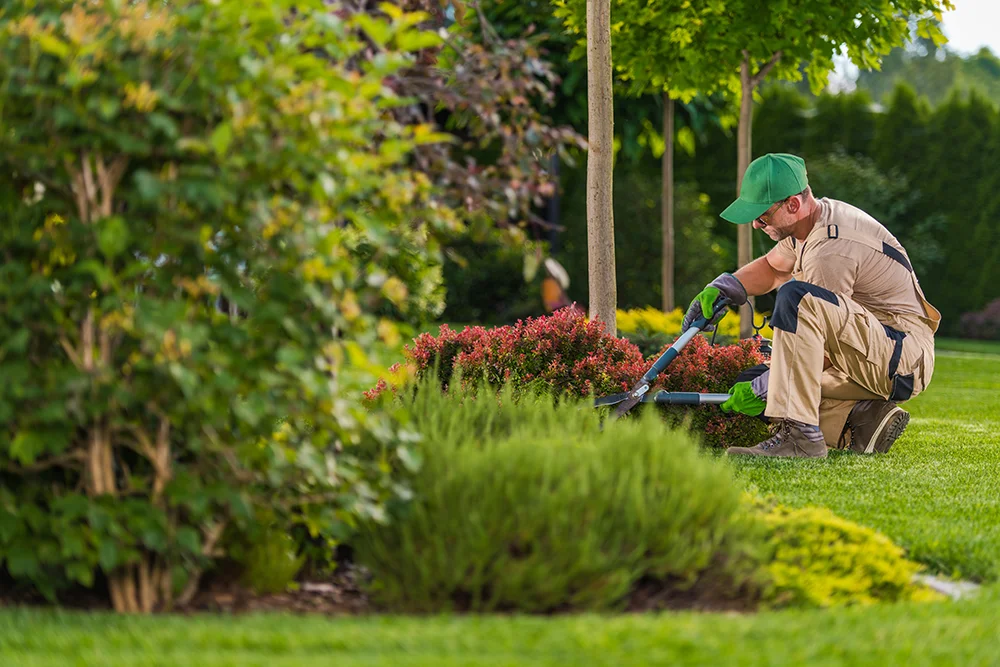
landscape expert | hoa landscaping

Landscaping upkeep is often split between the HOA and homeowners. According to Civil Code §4775:

  • The HOA is responsible for the repair, replacement, and maintenance of common areas.
  • The homeowner is responsible for maintaining their separate interest (their own lot or unit; including vacant lots) and exclusive use common areas (like a patio or front lawn).

However, some HOAs may shift responsibilities through their CC&Rs. For example, the HOA might take care of front lawns or shared driveways, even if those areas are technically part of individual lots. That’s why it’s critical for boards to define maintenance roles in their governing documents clearly. If residents are unclear about who trims which tree or waters which part of the lawn, disputes are likely to happen.

In master-planned communities, it’s not uncommon for the HOA to manage large-scale landscaping, including medians, trails, and parks, while homeowners handle their planting beds. In smaller communities or townhome associations, the HOA may provide full-service landscaping across all exterior spaces.

Common Violations and How to Handle Them

HOA lawn maintenance rules aren’t just there for appearances—they’re a reflection of community standards. When a homeowner falls short of those standards, such as letting the grass die or leaving tree branches to overhang a neighbour’s fence, the board may need to step in.

But enforcement needs to follow proper procedure:

  • Start with a courtesy reminder or friendly notice
  • Move to a formal violation letter, if necessary
  • Allow time for the homeowner to fix the issue
  • Impose fines only if allowed in your governing documents and after a hearing

Boards should avoid heavy-handed tactics or singling out specific residents. Not only does that create tension, but it may also open the association to legal claims of selective enforcement.

Updating HOA Landscaping Rules

If your HOA is still operating under the same landscaping rules it adopted in the 1990s, it’s probably time for an update. California’s climate and homeowner expectations have shifted. What once made sense—like strict lawn requirements or ornamental plant lists—may now conflict with sustainability goals or state laws protecting water conservation efforts.

Before revising your rules, assess whether they accommodate artificial turf, drought-tolerant materials, or modern irrigation systems. Take a fresh look at your approved plant lists and architectural review procedures to make sure they reflect current laws and practical needs.

Consider these questions:

  • Do your rules accommodate artificial turf or water-efficient irrigation systems?
  • Are the plant lists outdated or incompatible with today’s climate concerns?
  • Do your guidelines support residents who want native or pollinator-friendly gardens?
  • Are architectural review procedures clearly documented and legally compliant?

Work with your community manager or HOA attorney to review and revise your HOA landscaping rules. Focus on flexibility, sustainability, and clarity. Good rules don’t just enforce—they empower residents to make smart, compliant decisions.

Encouraging Better Landscape Design

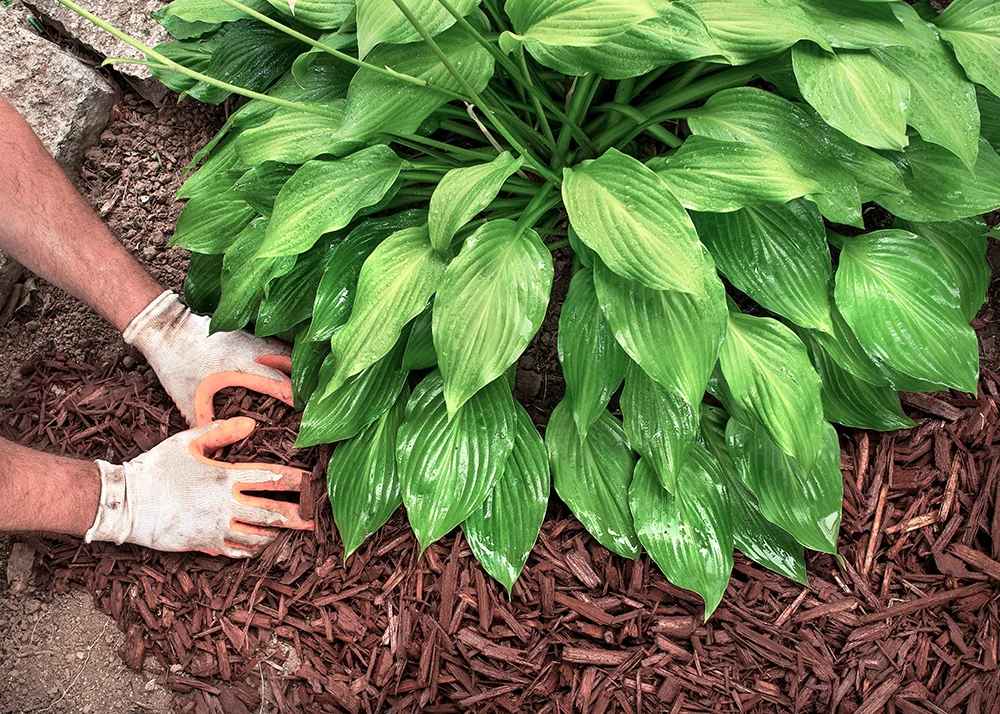
landscape plant | hoa landscaping

Good HOA landscape design does more than make a yard pretty. It contributes to healthier ecosystems, lower water bills, and stronger property values. Some HOAs now offer sample plans or landscape design resources to help homeowners make informed choices. Others host workshops on native planting or provide rebates for removing turf.

If your HOA is committed to environmental leadership, you might also:

  • Partner with local water agencies for conservation programs
  • Establish a landscaping committee to oversee updates and compliance
  • Recognize homeowners who implement sustainable designs

These types of proactive programs show that the board isn’t just enforcing rules—it’s helping shape a better community.

How to Navigate Pushback and Disputes

Every HOA board will, at some point, face disagreement over landscaping. Maybe a homeowner installs a rock garden that doesn’t match the rest of the street. Or someone wants to replace their front lawn with succulents, and a neighbor complains. These are common scenarios.

When conflict arises:

  • Don’t rush into a violation notice. Open a conversation.
  • Review the governing documents and legal obligations.
  • Seek a compromise where possible.
  • Use dispute resolution services if things escalate.

Boards that maintain open channels of communication are less likely to face prolonged or hostile disputes.

The Future of HOA Landscaping in California

California’s climate realities aren’t going away. As heat, drought, and water restrictions become more common, HOAs will need to adapt continually. Forward-thinking associations are already doing this by updating their HOA landscaping guidelines to prioritize sustainability and ease of care.

Expect to see more communities embrace:

  • Drip irrigation systems
  • Native grasses and pollinator plants
  • Landscape zoning for different water needs
  • Reduced lawn areas

And perhaps most importantly, expect homeowners to become more vocal about their rights. Boards that stay informed, updated, and open to change will be best positioned to keep the peace and protect property values.

Where the Grass Is Greener by Design

In California, landscaping should always consider policies, drought, sustainability, and community values. As HOA board members, your understanding needs to go beyond managing turf and trees. You’re shaping the community’s first impression, protecting shared investments, and leading the way into a more sustainable future—one yard at a time.

Do you need help in managing your HOA community? Personalized Property Management offers HOA and property management services around Southern California. Call us at 760-325-9500 or email us at info@ppminternet.com for more information!

Related Articles:

What Is The VA Loan in California? How Can It Help Home Buyers?

Buying a home in California isn’t easy, more so for veterans trying to break into a market known for steep prices and tight competition. That’s why the VA loan program stands out, as it’s designed to give those who’ve served an edge when it comes to securing a home. But not every home qualifies, and the process can get tricky in HOA communities.

What is a VA Loan Exactly?

A VA loan is a mortgage backed by the U.S. Department of Veterans Affairs. It’s meant for veterans, service members in active duty, specific members of the National Guard and Reserves, and some surviving spouses. What makes it special is that you can buy a home without putting any money down—and without having to pay private mortgage insurance (PMI).

Instead of lending directly, the VA guarantees a portion of the loan. This backing gives lenders more confidence and often leads to better terms for you as the borrower. That’s a big deal in a state like California, where the cost of entry into the housing market is high.

Why Do VA Loans Matter So Much in California?

In most parts of the country, skipping the down payment is a helpful perk. In California? It’s a game-changer. Median home prices often hover well above $700,000, and in many areas, they’re even higher. For someone using a conventional loan, that means needing to save six figures just for a down payment.

With a VA loan, you can buy without putting anything down and still skip the monthly cost of PMI. Your savings from it add up fast, especially when you’re also budgeting for HOA dues, Mello-Roos taxes, or other community fees.

The VA loan also allows eligible buyers to borrow large amounts, sometimes exceeding $1 million, as long as they qualify based on their income and credit. No extra hoops. No jumbo loan down payments. Just the same no-money-down benefit, even on higher-priced homes.

What Sets the VA Loan Apart From Others?

Here’s why so many California veterans rely on it:

  • No down payment – Needing to have money for a down payment is often the biggest barrier to entry. Luckily, this loan removes it.
  • No PMI – Most low-down-payment loans require PMI, which can easily be a few hundred dollars a month. With a VA loan, you skip it entirely.
  • Competitive interest rates – Because of the VA backing, lenders often offer better-than-average rates.
  • Flexible credit requirements – When applying for this type of loan, you don’t need perfect credit to qualify.
  • Limited closing costs – The VA puts caps on what lenders can charge.
  • Reusable benefit – You’re not limited to just one VA loan in your lifetime. You can use it again if you meet the guidelines.

To put it simply, applying for a VA loan isn’t designed to be a backup option. Instead, it’s one of the best loan products out there.

How It Works in California

talking to an expert | what is va loan

The loan itself works the same no matter where you live, but California’s housing market adds a few wrinkles.

One of the biggest? High home prices. In counties like Los Angeles, Orange, and Santa Clara, standard homes often exceed conventional loan limits. But with a VA loan and full entitlement, that’s not a problem. You can borrow above those limits without needing a down payment, as long as the lender approves you for the full amount.

Then there are the state-level perks. In California, you can also find the following offers:

  • CalVet Home Loans – A separate program through the California Department of Veterans Affairs. You can’t use both loans on the same property, but it’s another solid option for eligible buyers.
  • Property tax exemptions – Disabled veterans may qualify for significant tax relief, depending on their income and disability rating.

And don’t forget to factor in HOA dues and local assessments. These are common in California and can affect your loan approval since they’re counted in your debt-to-income ratio.

Using a VA Loan in the Coachella Valley

The Coachella Valley is a popular landing spot for veterans, especially retirees. With sunshine, golf courses, and a slower pace of life, it’s easy to see the appeal. But the area is also full of HOA-managed communities, which bring their own set of rules.

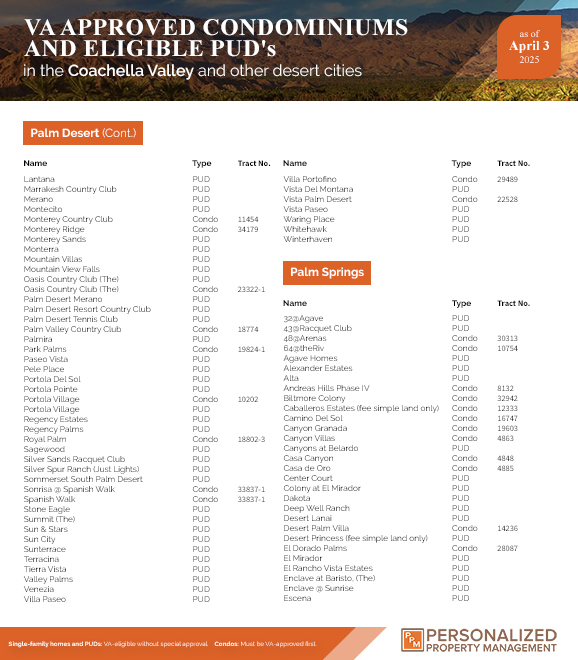
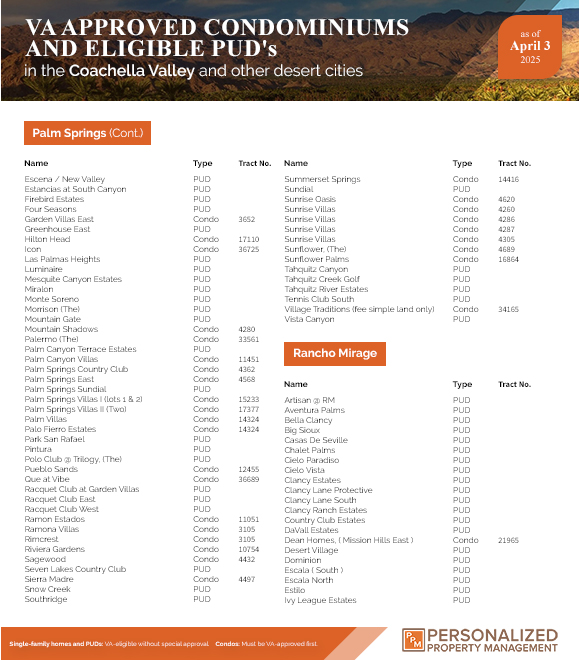
Most single-family homes and townhomes are eligible under VA guidelines, but many condos aren’t—unless the VA has officially approved the development. If you’re looking at a condo, you’ll want to check that list early. It can be the difference between a smooth loan and a dead end.

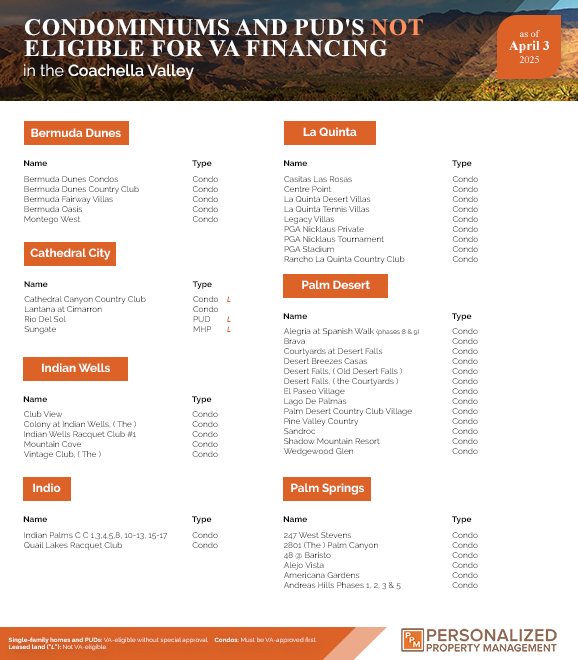
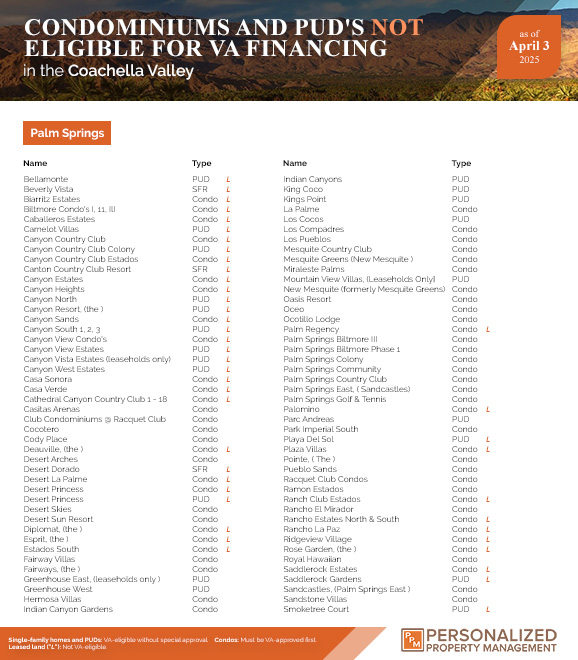
Also, properties on leased land are common in this region. Unfortunately, homes on leased land are usually not eligible for VA loans, which could limit your options in some neighborhoods.

That said, plenty of communities in the Coachella Valley are a good fit for VA financing. The key is knowing where to look—and working with people who know how the process works.

What is VA Loan vs. VA Mortgage?

They’re the same thing. Some lenders or websites might call it a VA mortgage, others a VA home loan. It all refers to the same government-backed loan program.

Whether you’re reading a loan estimate or a listing online, don’t overthink the wording—just make sure it’s a VA loan product and that the lender is VA-approved.

What Kinds of Homes Can You Buy?

Here’s where things get a little more specific. The VA has rules about what types of homes you can buy, and those rules are especially important in California, where condos, HOAs, and alternative property types are common.

Primary Residence Only

This isn’t for investment properties or vacation homes. You have to live in the home as your primary residence.

Single-Family Homes

The simplest option. These homes usually meet all VA requirements and don’t need extra approvals.

Condos

Here’s the catch: the entire condo development must be VA-approved. If it’s not, your lender can sometimes help apply for approval, but that takes time and isn’t guaranteed. Always check the VA’s condo list before falling in love with a unit.

Planned Unit Developments (PUDs)

These are communities with shared amenities and HOA oversight, like townhomes or gated neighborhoods. Most are VA-eligible, assuming the unit itself meets basic property guidelines.

Manufactured Homes

They’re allowed, but they have to be permanently attached to a foundation, meet HUD standards, and be considered real property. Not all lenders finance them, even if the VA allows it.

Multi-Unit Properties

VA loans can be used for duplexes, triplexes, or four-unit homes, as long as you live in one of the units full time.

Leased Land

This one’s tough. If the home sits on land you don’t own (common in resort communities or mobile home parks), it’s usually not eligible for a VA loan.

Bottom line: not every home is eligible for a VA loan. Before making an offer, ask your agent and lender to verify the property’s eligibility.

Applying for a VA Loan in California

You don’t need to be a loan expert, but it helps to understand the basics before you dive in. Here’s a breakdown of how to get started.

Step 1: Check Eligibility

Start by confirming you qualify. That usually means 90 days of wartime service, 181 days during peacetime, or six years in the Guard or Reserves. Surviving spouses may also qualify. Once you’re eligible, get your Certificate of Eligibility (COE) online or through your lender.

Step 2: Get Preapproved

The next step is preapproval. This is when the lender reviews your credit, income, and debts to figure out what you can afford. It’s also when you’ll learn how HOA dues or property taxes might impact your loan.

Step 3: Find the Right Property

You then need to look for the right property based on your needs and preferences. Work with an agent who knows the local VA landscape. They can help you avoid ineligible properties, especially important in areas with lots of HOAs or leased land.

Step 4: Appraisal and Underwriting

A VA-approved appraiser checks the value and condition of the home. Underwriters then review your full file to ensure everything meets guidelines.

Step 5: Close the Loan

Sign the paperwork, get the keys, and move in. You’ll need to occupy the home within 60 days (extensions available if you’re deployed).

A Quick Note 

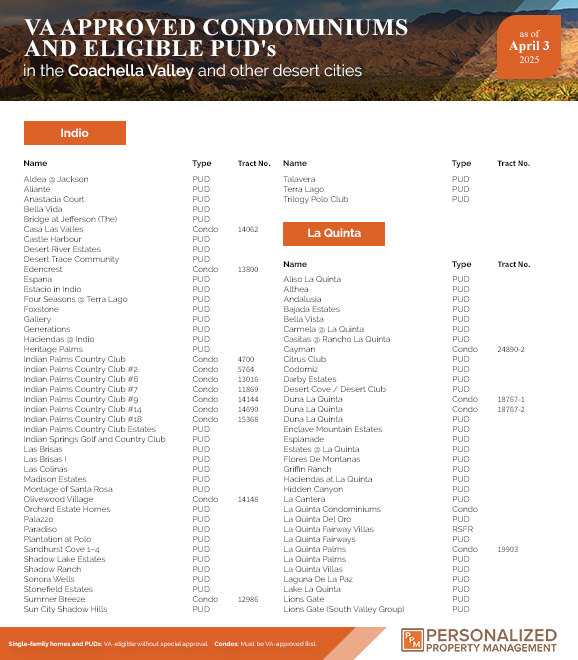
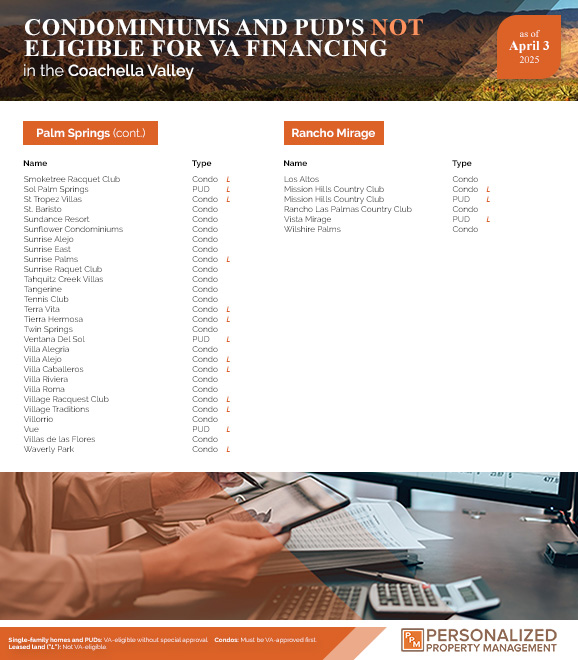
To make things easier for local buyers, Personalized Property Management put together a simple guide that outlines which properties in our managed communities are compatible with VA loans. It includes a clear legend and was last updated on April 3, 2025. If you’re looking at one of our communities and want help confirming eligibility, reach out.

VA Approved and Eligible Condominiums and PUDs in Coachella Valley

VA approved Condominiums and eligible PUDs in the Coachella Valley

Not VA Eligible Condominiums and PUDs in Coachella Valley

Not Eligible VA Condominiums and PUDs in the Coachella Valley

Navigating VA Loans in California

The VA loan can make a real difference, especially in a place like California, where every dollar counts. You’ve earned the benefit. Now it’s just a matter of using it wisely.

Do you need help in managing your property? Personalized Property Management offers HOA and property management services around Southern California. Call us at 760-325-9500 or email us at info@ppminternet.com for more information!

Related Articles:

How To Request HOA Documents In California

Person with stacks of documents | request for HOA documents

Understanding how to request HOA documents is an important part of living in a common interest development in California. If you’re a homeowner, a buyer doing due diligence, or a board member, knowing your rights and the proper steps to take is crucial.

Your Legal Right to Access HOA Records

California law gives homeowners the right to inspect and copy HOA records. This right is granted under the Davis-Stirling Common Interest Development Act, which outlines what you can access, how to request it, and the timeline for delivery. The right to request HOA documents ensures transparency and accountability within the association.

In California, Civil Code Sections 5200 to 5240 detail what records are subject to inspection. These include financial reports, board meeting minutes, and association governing documents. However, certain records, like legal advice or personal information of other members, may be withheld to protect privacy or legal privilege.

What Documents Can I Request From my HOA?

Understanding the types of documents you’re entitled to can help you make a more effective request for homeowners association records. The Davis-Stirling Act separates documents into two main categories: “enhanced association records” and general records.

General records available upon request include:

  • Agendas and minutes from board meetings (excluding executive sessions)
  • Financial statements and budget reports
  • Governing documents such as the CC&Rs, bylaws, and operating rules
  • Contracts the association has entered into
  • Insurance policies
  • A record of assessments and fines levied on the requesting member’s property

Enhanced records, which are subject to additional rules, may include:

  • Membership lists (with opt-out options)
  • Accounts receivable reports
  • Check registers
  • General ledgers and journals
  • Vendor invoices

These documents are not automatically mailed or emailed—you must formally submit a request for HOA documents to access them.

How to Make a Request for HOA Documents in California

Submitting a formal request for HOA documents in California isn’t complicated, but it must follow certain procedures to ensure your rights are protected and your request is valid. First and foremost, the request should be in writing. You can deliver it via mail, email (if accepted by the association), or in person.

There is no official form required, but using a clear and professional format will help. A well-drafted HOA request letter should include your name, address within the association, the specific documents you wish to inspect or copy, and your preferred method of receiving the records. Include dates if you’re requesting documents from a specific time period.

Associations are required to respond within a certain time frame depending on the document type. For most general records, the HOA must make them available for inspection within a reasonable time, typically within 10 business days. For enhanced association records, the association must comply within 30 calendar days.

What to Include in an HOA Request Letter

Writing an effective HOA document request starts with including the right details. While there’s no legal requirement to use a specific format, your letter should be clear, polite, and complete. A well-structured request can help the board or management company respond faster and more accurately.

Here’s what to include in your HOA request letter:

  • Your full name and property address: This confirms your identity as a member of the association and your eligibility to request records.
  • Date of the request: Always date your letter so there’s a clear record of when the clock starts on the HOA’s response timeline.
  • Contact information: Include your email address and phone number in case the HOA needs to follow up or confirm details.
  • A specific list of documents requested: Clearly identify what you want to inspect or receive copies of. Be as specific as possible, including dates or types of documents (e.g., “Board meeting minutes from January through March 2024”).
  • Preferred method of delivery: State whether you want to inspect the documents in person, receive digital copies by email, or have physical copies mailed to you.
  • A statement referencing your rights: Mention that your request is made in accordance with California Civil Code Sections 5200-5240, which governs HOA record access.

Including these points makes your letter complete, compliant, and easier for the board or management team to process efficiently.

Are HOA Documents Public Record?

A common question is whether these records are public. The answer is no—HOA records are not public records in the same way that city or county records are. They are private documents, available only to members of the association or to other authorized parties such as escrow agents during a home sale.

Even though they’re not public, members do have a statutory right to access them under specific conditions. For example, someone outside the community, such as a neighbor or prospective buyer, cannot simply walk in and ask for records. However, a seller in an escrow transaction is required to provide certain HOA documents to the buyer, such as covenants, conditions, and restrictions (CC&Rs), bylaws, and financial statements.

Access to Association Records: Who Can Make the Request?

Woman with file and document binders | request HOA documents

Only specific individuals have access to association records. In most cases, access is limited to:

  • Current homeowners within the HOA
  • Authorized representatives, such as attorneys or escrow agents
  • Prospective buyers, through disclosures provided during escrow

Tenants and general members of the public typically do not have inspection rights. However, if a tenant is also a co-owner or has been designated in writing by the homeowner, they may be able to submit a request for HOA documents.

HOA Member Record Inspection Rights

Homeowners have broad inspection rights, but there are limits. As part of your HOA member record inspection rights, you can inspect records at a designated location (such as the management company’s office) or request copies.

Associations are allowed to charge for the actual cost of copying and mailing records, but not for staff time spent retrieving them. You cannot be charged a fee to inspect records in person. Additionally, the HOA must maintain these records for specific periods. For instance, board meeting minutes must be retained for at least seven years.

Keep in mind that your inspection rights apply to documents related to the business of the HOA, not personal information. For example, you cannot request a list of email addresses or phone numbers of other homeowners, nor can you demand to see correspondence involving legal disputes.

What Happens If the HOA Denies Your Request?

While most associations comply with a valid request for HOA documents, there are situations where access is improperly denied. If this happens, you have legal options.

First, follow up in writing to clarify your original request. It’s possible the denial was based on a misunderstanding or incomplete information. If that doesn’t resolve the issue, California Civil Code allows you to pursue enforcement through the courts. You may file a complaint in small claims court or seek mediation or arbitration.

If a court finds that the HOA willfully violated your rights to inspect records, the association may be required to pay civil penalties of up to $500 per violation, as well as your attorney’s fees.

When to Submit a Document Request

There are several reasons why a homeowner might request HOA documents. You may want to review the board minutes before a vote on a major issue. You might be concerned about how HOA dues are being spent. Or, you could be gathering information before a home sale.

It’s important to time your request wisely. If you’re trying to review the annual budget before the next fiscal year starts, submit your request early. If you’re in escrow, coordinate with your real estate agent or escrow officer to ensure required documents are disclosed on time.

Best Practices for HOAs Handling Document Requests

For HOA boards and managers, responding to a request for homeowners association records should be handled professionally and promptly. Boards should have a designated person or team—usually the management company—to log and track all document requests.

It’s also wise to establish written procedures for handling requests, including standard response templates and document retention policies. Keeping digital records in an organized format will help the association stay compliant and avoid costly mistakes.

Failure to comply with document requests not only undermines trust but also exposes the association to legal risk. Educating homeowners on their rights and responsibilities helps reduce friction and promotes transparency in the community.

Common Misunderstandings About HOA Document Requests

Stack of documents placed on a desk | request for hoa documents

Misunderstandings around HOA record access are common, even among long-time homeowners. Here are a few to be aware of:

  • “Everything should be sent to me automatically.”
    Aside from required annual disclosures, most records must be formally requested—they’re not sent out by default.
  • “I can access any document I want.”
    You have the right to many records, but not to personal homeowner info, legal communications, or internal board emails.
  • “They have to respond right away.”
    HOAs have up to 10 business days for general records and 30 calendar days for enhanced records.
  • “I’ll sue if they don’t reply.”
    Legal action is an option, but it’s best to follow up in writing or try mediation first.
  • “Tenants can request documents, too.”
    Only members (usually property owners) have inspection rights, unless a tenant is formally authorized.
  • “They can charge high fees.”
    Associations can only charge for the actual costs of copying and mailing, not for staff time or overhead.

Clearing up these myths helps avoid frustration and ensures your request for HOA documents stays on track.

Homeowners’ Right to Know

HOA documents are a powerful tool in maintaining trust and accountability in your association. Use it wisely, follow the proper procedures, and remember that both homeowners and HOA boards benefit from open access to association records. 

Are you looking for additional support for your HOA community? Personalized Property Management offers HOA management services around Southern California. Call us at 760-325-9500 or email us at info@ppminternet.com for more information!

Related Articles:

How Can Your HOA Benefit From A HOA Performance Review

Feedback Concept. The meeting at the white office table. | hoa performance review

A routine HOA performance review can easily add to how well associations serve their communities. For one, having a structured review, including board operation assessments and goal setting, can help your community achieve significant improvements.

What is an HOA Performance Review?

Think of it as a health check for your homeowners association. It’s a structured look at how well the board and management are carrying out their responsibilities. This means reviewing everything from finances and vendor contracts to community rules and resident feedback. The goal? To better understand what’s being handled well and where improvements can be made.

Beyond the checklist, it also opens the door to greater transparency and better planning. By taking a close look at how things are run, the board can foster stronger connections with residents and make more informed decisions for the future.

Why Your HOA Should Conduct Regular Reviews

You don’t need to wait for problems to pop up to conduct a review. Regular reviews often uncover minor issues before they snowball into bigger headaches. Here’s what a good review process can offer:

1. It Promotes Accountability

When board members and managers know their work will be evaluated, it encourages everyone to stay on top of their roles. It also creates a more level playing field, as everyone is held to the same standards.

2. It Builds Trust Through Transparency

Sharing review results with residents shows that the board isn’t operating behind closed doors. It helps homeowners feel more involved and reassured that leadership is committed to doing what’s best for the community.

3. It Highlights What Needs Fixing

Even the best-run HOAs have blind spots. A performance review might uncover outdated processes or communication gaps you didn’t even realise were there. Addressing those sooner rather than later can save a lot of time and frustration.

4. It Helps With Future Planning

When you know what’s working and what isn’t, it becomes much easier to set realistic goals. Whether you’re preparing a new budget or planning capital improvements, performance reviews provide a helpful starting point.

5. It Strengthens Community Relationships

When residents see that leadership takes feedback seriously and is open to evaluation, it sets a positive tone. It shows that the board cares, and it can inspire more homeowners to get involved, attend meetings, or even consider running for a seat.

6. Improve Decision-Making

With data and observations collected from a review, boards are better equipped to make thoughtful decisions. Instead of relying on assumptions or outdated habits, they can use facts to guide their actions. This leads to more efficient operations and better outcomes for the community.

7. Encourage Constructive Feedback

Regular reviews open the door for honest conversations among board members and between the board and management. By creating a safe space for feedback, the HOA cultivates a culture of continuous improvement and collaboration.

HOA Board Performance Review: Taking a Look Inward

A key part of any HOA performance review is taking an honest look at how the board functions. Board members often come from different backgrounds, and not everyone has experience running a community. That’s okay, but checking in on things like meeting productivity, financial oversight, and communication with residents helps keep everyone on track.

A board review might include questions like:

  • Are we making informed, timely decisions?
  • Do our meetings stay focused and productive?
  • Are we following our community’s governing documents?
  • Are we listening to residents and responding with respect?

These self-assessments don’t need to be complicated. Something as simple as an anonymous survey or a facilitated group conversation can reveal valuable insights. Even a high-functioning board can benefit from stepping back and reassessing how it operates.

HOA Board Self-Assessment: Creating a Culture of Accountability

Board member leading a meeting in the boardroom | HOA performance review

A board self-assessment is a specific type of HOA performance review focused entirely on board operations. It encourages members to reflect individually and collectively on how well they fulfill their duties. This includes reviewing the board’s understanding of legal obligations, conflict management, and adherence to community values.

Self-assessments often lead to more open communication among board members. When people are encouraged to be honest about their performance, it can create a stronger sense of accountability and foster teamwork. In turn, this helps boards make more thoughtful decisions and improves leadership over time.

It is helpful to conduct these assessments at least once a year, especially before elections or during strategic planning. This ensures that the current board sets the tone for incoming members and maintains continuity across leadership transitions.

Evaluate HOA Manager: Reviewing Your Professional Partners

Most communities rely on an HOA manager or management company to handle daily operations. A performance review should also include this professional partner. It’s important to know whether they’re delivering on expectations and supporting the community effectively.

Key areas to evaluate might include:

  • How well do they communicate with residents and the board?
  • Are they staying on top of vendor contracts and keeping up with maintenance schedules?
  • Is the financial reporting clear and on time?
  • Do they demonstrate knowledge of HOA laws and your governing documents?
  • How well do they handle resident concerns or disputes?

Like board reviews, this shouldn’t feel like a punishment—it’s about making sure the partnership is strong and everyone is aligned.

HOA Review: Setting Goals and Tracking Progress

A performance review is not only about looking backward. It also lays the groundwork for future planning. An HOA review can identify specific goals, such as improving communication, refining rule enforcement, or updating outdated policies.

Tracking these goals over time provides a sense of progress. It allows the board to revisit earlier decisions and evaluate whether actions taken were practical. It also offers a way to document achievements that your HOA can share with the community or can serve as a reference during leadership transitions.

Some HOAs choose to publish an annual performance report that summarizes the results of their reviews and outlines next steps. Many residents value this kind of transparency, and it may even lead to increased community engagement.

Making Performance Reviews Part of Your HOA Culture

To get the most out of HOA performance reviews, it helps to incorporate them into your annual calendar. Treat reviews as part of your standard operating procedures, not just something to do in response to problems.

Some associations include performance reviews as part of their annual planning meetings. Others tie them to budget season or board elections. The most important thing is consistency. When you regularly conduct reviews, they become less intimidating and more useful.

It can also be helpful to work with a third-party facilitator or management professional to guide the review process. An outside perspective may bring valuable insight, especially when dealing with sensitive topics or interpersonal dynamics.

Keep in mind that reviews should be well-documented. Whether you use checklists, surveys, or discussion notes, maintaining records of your evaluations helps ensure follow-through. It also creates a paper trail that can be helpful if legal or financial issues ever arise.

The Right Time for a Review

Focused woman analyst working with documents and a laptop | hoa performance review

There’s no set-in-stone rule for when to conduct an HOA performance review, but some moments make more sense than others.

After a major project, such as a roof replacement or amenity upgrade, is a smart time to review how things were managed. It’s a chance to learn from experience and improve for next time.

During budget planning, a review can help you prioritize spending and identify areas that need more attention or better funding.

Board transitions are another good time. Whether it’s right before or just after an election, reviews help new members understand how the HOA has been operating.

You might also consider a review if:

  • You’ve recently hired a new manager or changed management companies.
  • Residents have raised concerns or submitted repeated complaints.

Even without a significant event, setting a routine annual review is good practice. It keeps the board aligned, accountable, and responsive to the evolving needs of your community.

Encouraging Resident Involvement

Residents don’t need to join in every part of the review directly, but they should be kept informed. Transparency increases trust. Letting homeowners know that the board and managers have standards to meet reassures them that leadership is committed to quality.

Some boards opt to include resident surveys or town hall meetings as part of their performance review process. These tools allow community members to express concerns, offer praise, and share ideas. While resident feedback shouldn’t be the only measure of performance, it provides essential context for understanding how leadership decisions impact everyday life in the community.

Looking Back to Move Forward

A well-executed HOA performance review isn’t just a formality—it’s a valuable tool for improvement, planning, and connection. By making performance reviews part of your regular operations, your HOA can stay responsive, efficient, and aligned with the needs of your residents.

If you want to stay on top of your HOA’s benchmarks and metrics, Personalized Property Management offers HOA management services around Southern California. Call us at 760-325-9500 or email us at info@ppminternet.com for more information!

Related Articles:

Understanding HOA Treasurer Duties And Best Practices

board member checking bills | hoa treasurer duties

From overseeing budgets to preparing reports, HOA treasurer duties require attention to detail, transparency, and trustworthiness. But what does it exactly entail?

What is the HOA Treasurer’s Role?

Every HOA board is composed of elected members, and one of the most vital positions is that of treasurer. This officer is the financial steward of the association and is responsible for ensuring that the community’s money is handled responsibly and transparently.

The HOA treasurer job description can vary based on the size of the community, the complexity of the budget, and whether a management company is involved. However, the essence of the role remains the same: managing and reporting on the HOA’s financial health.

In many communities, the treasurer works closely with the management company’s accounting team. Still, even when professionals handle the day-to-day bookkeeping, the treasurer is ultimately accountable to the board and residents for the HOA’s financial integrity.

Core HOA Treasurer Duties

Understanding HOA treasurer duties starts with getting familiar with the primary financial responsibilities of the position. Here are the core tasks treasurers are expected to perform:

1. Managing the Budget

The treasurer helps create, monitor, and enforce the annual budget. This includes estimating expenses, anticipating revenue (usually through assessments), and adjusting for inflation or rising costs.

Each year, the treasurer typically begins working on a draft budget in advance of the fiscal year. This draft is then reviewed and refined in coordination with the board and, when applicable, the management company.

Once approved, the treasurer monitors actual spending against the budget and flags any significant variances. This budget oversight helps keep the community on solid financial ground.

2. Overseeing Income and Expenses

Business graphs and charts on table | hoa treasurer duties

Tracking money coming in and going out is a key part of the HOA treasurer’s responsibilities. Treasurers ensure that assessments are being collected on time and that vendors are paid appropriately.

Even when accounting systems or professional management teams are involved, treasurers review financial statements regularly. This includes evaluating line items such as maintenance fees, landscaping contracts, reserve contributions, and utility costs.

Unexpected costs, like emergency repairs, also fall under the treasurer’s watch. It’s their job to advise the board on how best to cover these expenses, whether from operating funds or reserves.

3. Reserve Fund Planning

HOAs are expected to maintain reserves for future capital expenses, such as roof replacements, repaving streets, or upgrading common areas. The treasurer helps assess how much should be saved each year and ensures reserve contributions are being made according to the plan.

A reserve study, typically conducted by a professional, provides a roadmap. The treasurer uses this study to guide reserve allocations and communicates funding needs to the board.

Proper reserve management protects the community from financial surprises and reduces the risk of needing special assessments.

4. Producing the HOA Treasurer Report

One of the most visible and essential parts of the role is creating and presenting the HOA treasurer report. This report gives the board and community members insight into the association’s financial condition.

Typically, the treasurer prepares monthly or quarterly reports, which may include:

  • Balance sheets
  • Income and expense statements
  • Year-to-date budget comparisons
  • Reserve account status
  • Past-due assessments

These reports are often presented at board meetings and included in meeting minutes or homeowner newsletters. A well-prepared treasurer’s report promotes transparency and fosters trust within the community.

5. Maintaining Financial Records

Proper documentation is essential for every homeowners’ association. The treasurer ensures that financial records are accurate, well-organized, and compliant with local and federal regulations.

This includes saving invoices, contracts, bank statements, tax filings, and audit results. Many communities also use accounting software to store and access this information securely.

Accurate records not only help with day-to-day management but are also necessary in the event of a financial review, audit, or legal issue.

Supporting Roles and Collaboration

The treasurer doesn’t work in isolation. A strong working relationship with the property manager, accountant, and other board members is key to success.

For example, when homeowners have questions about their assessments, the manager may handle the interaction. Still, the treasurer is involved behind the scenes, ensuring policies are clear and fees are applied consistently.

The treasurer may also collaborate with the board president and secretary to develop clear financial policies or help the architectural review committee understand how proposed projects affect the budget.

When boards work as a team, the treasurer’s workload becomes more manageable, and the association benefits from better decision-making.

Best Practices for HOA Treasurers

Even seasoned treasurers can benefit from reviewing key best practices. The following tips help ensure accurate financial management and good governance.

Understand the CC&Rs and Bylaws

The HOA’s governing documents often outline specific financial procedures or spending limits. As treasurer, it is essential to be familiar with these requirements, including the process for approving budgets and determining whether member votes are required for specific expenditures.

Missteps in this area can lead to disputes, delays, or even legal complications.

Stay Transparent and Communicate Clearly

Homeowners want to know how their money is being spent. Providing regular, easy-to-understand updates builds confidence and helps avoid rumours or dissatisfaction.

It’s wise to keep financial terms simple and provide context for any budget variances or special projects.

Follow a Consistent Reporting Schedule

Whether monthly or quarterly, reports should follow a reliable schedule. When homeowners and board members know when to expect updates, it reinforces accountability and helps with long-term planning.

Sticking to a reporting routine also helps the treasurer stay organised and on top of changes.

Monitor Delinquencies Promptly

Part of the HOA treasurer’s responsibilities includes staying aware of overdue payments. While enforcement is usually handled by the manager or collections agency, the treasurer should review delinquency reports regularly.

Timely monitoring allows the board to address issues early and prevent significant revenue gaps.

Prepare for Annual Audits or Reviews

five people meeting at a board room | hoa treasurer duties

Many associations undergo an annual financial review or audit by a certified public accountant (CPA). The treasurer helps prepare for this process by gathering documents, answering questions, and working with the auditor or management company.

Even if an audit isn’t legally required, regular reviews can uncover issues before they become serious problems and reassure homeowners that the board is acting responsibly.

Common Challenges HOA Treasurers Face

Being a treasurer is a rewarding but demanding role. Several challenges can arise, particularly in communities with limited participation or high volunteer turnover.

One common issue is the lack of clear financial records from past boards. In these cases, the treasurer may need to spend extra time reconstructing budgets, finding old invoices, or updating reserve forecasts.

Another challenge is balancing the budget when unexpected repairs arise. For example, a failed irrigation system or roof leak might cost more than the reserve balance allows. The treasurer must work with the board to evaluate options, such as deferring other expenses, negotiating vendor terms, or seeking owner approval for a special assessment.

Treasure also needs to keep up with changes in tax laws, accounting standards, and HOA statutes that affect financial governance.

Transitioning the Role Smoothly

When a new treasurer is elected or appointed, the transition process should be as smooth as possible. Outgoing treasurers can help by:

  • Organizing and sharing electronic and hard-copy records
  • Providing an overview of current budgets, vendor contracts, and bank accounts
  • Explaining ongoing projects or upcoming payments
  • Introducing the new treasurer to the property manager or accountant

This handoff ensures continuity and helps the new treasurer feel more confident stepping into the role.

Tools That Make the Job Easier

Today’s treasurers aren’t stuck with spreadsheets and paper files. Various tools and platforms can simplify and streamline financial tracking.

HOA management software often includes accounting modules with features like:

  • Automated invoicing and assessment collection
  • Expense tracking
  • Real-time financial reporting
  • Reserve tracking
  • Delinquency management

When used consistently, these tools reduce manual errors, allowing treasurers to focus on strategy rather than data entry.

Creative Solutions for Small HOAs

In smaller communities, treasurers may not have the luxury of professional management. In those cases, finding practical and affordable solutions is essential.

Free or low-cost accounting software, such as QuickBooks or Wave, or spreadsheet templates designed explicitly for HOAs can provide a structured approach. These tools may not be as comprehensive as management platforms, but they can effectively meet basic needs.

Board members should also consider sharing responsibilities or rotating tasks. For example, one member might handle bank deposits while another oversees bill payments. Clear documentation is essential when splitting duties to avoid confusion or missed deadlines.

When to Seek Professional Help

Some treasurers, especially in larger or more complex associations, eventually realise that professional support is necessary. A CPA can help with budgeting, audits, or tax filings. Bookkeepers can manage day-to-day entries and reconciliations.

Even in self-managed HOAs, hiring part-time financial support can relieve pressure on the treasurer and improve accuracy.

In Southern California, where state laws and reserve funding regulations can be especially nuanced, having expert guidance is often a wise investment.

Closing the Ledger

A well-functioning HOA depends on sound financial management, and that begins with an informed and engaged treasurer. By understanding the full scope of HOA treasurer duties, embracing best practices, and using available tools, you can help your community remain fiscally secure and well-prepared for the future.

Looking for further support for your HOA community? Personalized Property Management offers HOA management services around Southern California. Call us at 760-325-9500 or email us at info@ppminternet.com for more information!

Related Articles:

HOA Secretary Duties: More Than Just Taking Minutes

businesswoman showing clipboard to client during meeting | hoa secretary

Every homeowners association depends on a reliable board to keep things running smoothly. Among the key roles, the HOA secretary holds a position that often gets overlooked—but it’s one of the most essential for keeping the association legally compliant, organized, and transparent.

Understanding the HOA Secretary Job Description

At first glance, the HOA secretary job description might seem simple: attend meetings, take minutes, file documents. But in reality, the scope of HOA secretary duties goes well beyond basic clerical work. Secretaries play a vital role in ensuring that the association operates efficiently and follows state laws and the HOA’s governing documents.

In many California communities, especially those in Southern California, where HOA regulations can be complex, the secretary serves as the official custodian of records and a central point of communication for both board members and homeowners. Accuracy, discretion, and organization are essential qualities for this position.

The Core HOA Board Secretary Duties

Let’s break down the most critical HOA board secretary duties to understand why this role carries so much responsibility.

1. Preparing and Maintaining Official Records

woman looking through files | hoa secretary duties

One of the most important duties of the HOA secretary role is maintaining the association’s official documents. This includes:

  • Meeting minutes: These are the formal, written records of all board and membership meetings, documenting discussions, motions, and decisions.
  • Governing documents, such as bylaws, CC&Rs, and articles of incorporation, define the HOA’s rules, structure, and powers. The secretary ensures that the latest versions are properly stored and referenced.

  • Membership rosters: A current list of homeowners, including contact details and voting eligibility, which is essential for elections and notices.
  • Board resolutions: Formal decisions adopted by the board that need to be filed and referenced in future governance.
  • Election records: These include ballots, voter lists, and certification documents to verify compliance with legal and procedural standards.

The secretary ensures that these records are updated, properly stored, and accessible to board members and, where appropriate, homeowners. In California, HOAs are subject to the Davis-Stirling Act, which outlines specific requirements for recordkeeping and member access. A secretary’s oversight helps keep the board in compliance.

2. Managing Meeting Minutes

Taking minutes is a well-known responsibility, but it’s more involved than just jotting down notes. Meeting minutes are legal documents. They serve as the official record of what the board discussed and decided, and can be requested by homeowners or even examined in legal disputes.

A good secretary prepares by reviewing the agenda in advance, noting expected motions, and staying alert during discussions to clearly and concisely capture the decisions. After the meeting, the minutes are reviewed, cleaned up, and stored for future reference.

3. Distributing Notices and Agendas

Another key responsibility of the HOA secretary is ensuring that meeting notices are sent out on time and that agendas are made available to members in accordance with the law. In California, most HOAs are required to give at least four days’ notice for regular meetings and two days for executive sessions.

The secretary is usually the one who drafts and distributes these communications. Timeliness and accuracy are crucial here—mistakes can invalidate board actions or lead to legal challenges.

4. Overseeing Association Correspondence

The secretary often acts as the board’s liaison for official correspondence. This could include responding to homeowner inquiries, distributing updates, or managing communication with vendors, attorneys, and property managers.

While the board may rely on a management company to handle day-to-day homeowner requests, the secretary often reviews and signs off on letters related to board decisions or formal notices. Clear, professional communication is essential to maintaining trust and transparency.

5. Supporting Elections and Voting Processes

We are here to help text on notepad cover | hoa secretary duties

Board elections must be conducted fairly and in accordance with the HOA’s bylaws and California Civil Code. The homeowners association secretary’s duties during election season are critical to ensuring everything goes smoothly. These responsibilities may include:

  • Certifying voter eligibility
  • Overseeing the distribution and collection of ballots
  • Coordinating with inspectors of elections
  • Verifying quorum
  • Documenting results

Even though third-party inspectors are required in many cases, the secretary still plays a hands-on role in organizing the process and maintaining the integrity of the records.

Beyond the Basics: Additional HOA Secretary Responsibilities

While the duties listed above are standard, many HOAs—predominantly self-managed associations—lean on the secretary for even more.

1. Policy and Procedure Updates

The secretary may take the lead on reviewing and recommending updates to association policies, particularly those that affect documentation, communication, and transparency. When laws change, someone needs to verify whether the board’s current processes still comply, and that task often falls to the secretary.

2. Archiving and Transitioning Records

When new board members are elected, the secretary helps manage the transition. That includes ensuring that incoming members receive all necessary documents, handing over records, and maintaining continuity. The smooth handoff of documentation can affect how quickly a new board can get up to speed.

Long-term archiving is also critical. Not all records can be kept indefinitely, and the secretary must know what to retain, what to discard, and when to do so. In a Southern California HOA, where management transitions are frequent, proper archiving is crucial for preserving institutional knowledge.

3. Supporting the President and Other Board Members

The secretary often works closely with the board president, helping to prepare for meetings, compile reports, and distribute information. They may also assist other board members in tasks that require coordination or documentation. This makes the secretary a kind of internal project manager, especially in smaller associations.

4. Working with the HOA Manager

two hoa board members talking | hoa secretary

If the HOA works with a management company, the secretary serves as a liaison between the board and the manager regarding documentation and communication. The management team might handle a large portion of the administrative load. However, the secretary still has the legal responsibility to ensure tasks are completed according to the association’s rules and state requirements.

Traits of an Effective HOA Board Secretary

Given the depth of HOA secretary duties, the person filling this role needs to bring more to the table than just a willingness to take notes. Some of the most valuable traits include:

  • Attention to detail: Mistakes in meeting minutes or records can lead to legal complications or homeowner complaints.
  • Organizational skills: The ability to file, retrieve, and manage documents is central to the job.
  • Professional communication: Whether it’s sending out notices or answering homeowner questions, tone and clarity matter.
  • Discretion: The secretary may handle sensitive or confidential information and must know when to speak and when to stay silent.
  • Legal awareness: A general understanding of California HOA law, especially the Davis-Stirling Act, helps avoid compliance issues.

Training and Support for the Secretary Role

Because the role is so multifaceted, many new secretaries feel overwhelmed. Fortunately, resources are available. HOA attorneys, management companies, and organizations like CAI (Community Associations Institute) offer seminars, manuals, and guidance to help secretaries navigate their responsibilities.

In Southern California, where the landscape of community associations is exceptionally dense and diverse, secretaries may face unique challenges, including language barriers among residents and complex architectural review procedures. Training tailored to the region can go a long way in helping secretaries succeed.

What the Role Is Not

It’s just as important to know what the secretary isn’t responsible for. The secretary does not:

  • Set policies or enforce rules on their own
  • Make decisions without board approval
  • Handle HOA finances (that’s typically the treasurer’s role)
  • Act as a legal advisor

While the secretary supports board operations, they remain a team player, part of a group that works together to make decisions and uphold the HOA’s standards.

Who Should Be Your HOA Secretary?

Choosing the right person to serve as secretary can make or break a board’s efficiency. While experience in administration, law, or management is helpful, it’s not required. What matters most is commitment, reliability, and a willingness to learn.

In some communities, the secretary position rotates among new members as they join the board. In other words, long-serving secretaries become the institutional memory of the HOA, offering continuity and insight that’s hard to replace.

No matter the setup, giving this role the respect it deserves helps the entire association function more smoothly.

Why These Duties Matter

The secretary’s work might not always be visible to the broader community, but the effects of well-executed HOA board secretary duties are felt in every aspect of HOA life. Accurate records ensure accountability. Clear communication fosters trust. Timely notices and minutes prevent disputes and delays.

In Southern California’s fast-paced, regulation-heavy HOA environment, it’s not enough to have someone willing to fill the role. You need someone who understands it, respects it, and can execute it reliably.

Behind the Minutes, the Backbone

The secretary’s work underpins everything the association does. It may not come with as much visibility as the president or as many hard decisions as the treasurer, but it’s just as critical. If your board is looking to fill the secretary seat, take the time to find the right fit. And if you’ve stepped into the role yourself, know that your diligence, patience, and precision make all the difference.

Looking for further support for your HOA community? Personalized Property Management offers HOA management services around Southern California. Call us at 760-325-9500 or email us at info@ppminternet.com for more information!

Related Articles: