
HOA plumbing is one of the most important yet misunderstood parts of community maintenance. A small leak can quickly turn into expensive repairs, property damage, and frustrated homeowners if responsibilities are not clearly defined.
Understanding HOA Plumbing
Understanding how HOA plumbing works helps both boards and residents respond to issues faster, prevent disputes, and protect the community’s infrastructure.
HOA plumbing refers to the plumbing systems that an association is responsible for maintaining, repairing, or replacing according to its governing documents. The exact responsibilities vary from one community to another, but they are generally based on whether the plumbing serves individual homes or shared areas.
Single-family communities, condominiums, and townhome associations often have different maintenance obligations. For that reason, homeowners should never assume that every plumbing issue automatically falls on either the association or the individual owner.
In many communities, the governing documents clearly outline maintenance responsibilities. These documents usually include the Declaration of Covenants, Conditions, and Restrictions (CC&Rs), bylaws, and maintenance policies. Reviewing these documents before a problem occurs can save everyone time and avoid unnecessary disagreements.
Even though responsibilities vary, the overall goal remains the same. HOA plumbing policies help ensure that shared systems stay in good condition while homeowners maintain the plumbing components that belong exclusively to their homes.
Who Is Responsible for HOA Plumbing?
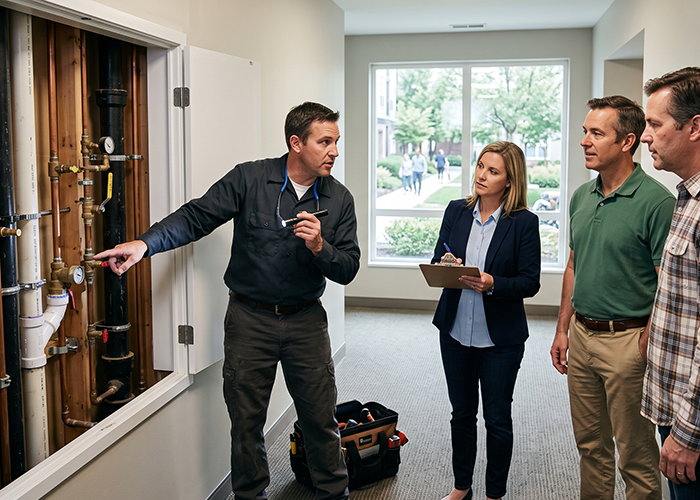
One of the first questions people ask after discovering a plumbing problem is, “Who pays for the repair?” The answer depends on where the issue is located and which parts of the plumbing system are considered common property.
Although every association has unique governing documents, responsibilities often follow similar patterns.
Plumbing Responsibilities That Often Belong to the HOA
Many associations are responsible for maintaining plumbing systems that serve the entire community or multiple units. These may include:
- Main water supply lines serving common areas
- Sewer mains
- Shared plumbing lines between condominium units
- Irrigation systems maintained by the association
- Plumbing located in clubhouses, pools, fitness centers, and other amenities
- Water features maintained by the community
When these systems develop problems, the HOA typically coordinates repairs, hires licensed contractors, and pays for the work using association funds.
Plumbing Responsibilities That Often Belong to Homeowners
Individual owners are commonly responsible for plumbing components located inside their homes. These often include:
- Faucets and sinks
- Toilets
- Bathtubs and showers
- Garbage disposals
- Water heaters
- Washing machine supply lines
- Interior drain lines that serve only one residence
- Plumbing fixtures and appliances
Homeowners are generally expected to maintain these items and repair damage caused by neglect or normal wear.
Shared Responsibility Can Complicate Repairs
Some plumbing issues are not easy to categorize. A pipe inside a wall may serve multiple units, or a leak may begin in one home before affecting neighboring properties.
In situations like these, determining responsibility often requires an inspection by a licensed plumber. The HOA management company, board, insurance carrier, and homeowner may all work together to determine who is responsible for repairs.
This is why documentation matters. Maintenance records, inspection reports, and governing documents all play a role in resolving disputes fairly.
Common HOA Plumbing Problems
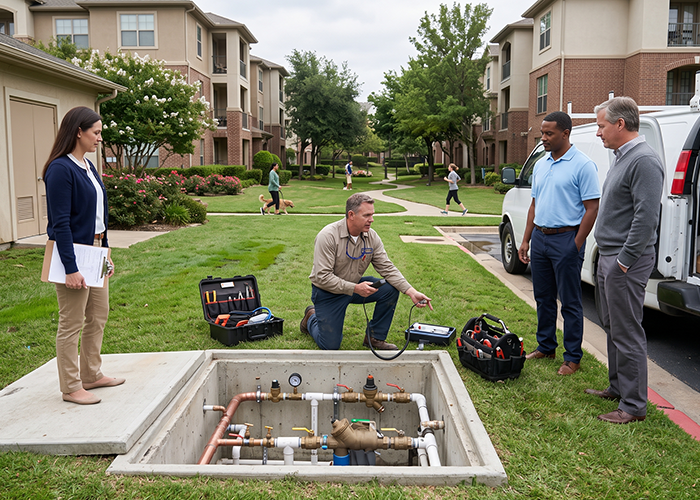
Plumbing systems experience wear over time. Even well-maintained communities eventually face repairs as pipes age, fixtures deteriorate, and environmental conditions change.
Understanding the most common issues allows associations to plan maintenance before problems become emergencies.
Pipe Leaks
Leaks are among the most frequent plumbing problems in HOA communities. They may develop because of aging pipes, corrosion, loose fittings, freezing temperatures, or shifting soil.
Some leaks are immediately noticeable, while others remain hidden inside walls, ceilings, or underground for weeks. By the time visible damage appears, repair costs may already be significant.
Routine inspections help identify leaks before they become major restoration projects.
Sewer Line Problems
Blocked or damaged sewer lines can affect several homes at once, especially in condominium and townhome communities.
Common causes include:
- Tree root intrusion
- Grease buildup
- Flushing inappropriate materials
- Aging sewer infrastructure
- Pipe collapse
Sewer backups create health hazards and require immediate attention. Delaying repairs often increases cleanup costs and property damage.
Water Pressure Issues
Residents occasionally report low or inconsistent water pressure throughout the community.
Several issues may contribute to this problem, including:
- Water main leaks
- Pressure regulator failures
- Mineral buildup inside pipes
- Municipal water supply issues
- Aging plumbing systems
Because multiple factors can cause pressure changes, professional diagnosis is often necessary before repairs begin.
Drain Clogs
Clogged drains happen in every community. While many occur inside individual homes, larger blockages can affect shared drain systems.
Common causes include:
- Hair accumulation
- Soap residue
- Cooking grease
- Food waste
- Foreign objects
- Tree roots entering underground pipes
Educating homeowners about proper drain care helps reduce service calls and expensive repairs.
Water Heater Failures
Although homeowners usually maintain their own water heaters, associations often receive reports when failures cause water damage to neighboring units.
Older water heaters may leak without warning. Routine replacement schedules and homeowner education can reduce the likelihood of widespread damage.
Irrigation System Leaks
Communities with landscaped common areas rely heavily on irrigation systems.
Underground irrigation leaks may go unnoticed for long periods. Signs often include:
- Unusually green patches of grass
- Standing water
- Higher water bills
- Reduced sprinkler pressure
Regular inspections help conserve water while preventing landscape damage.
Signs HOA Plumbing Problems Should Never Be Ignored
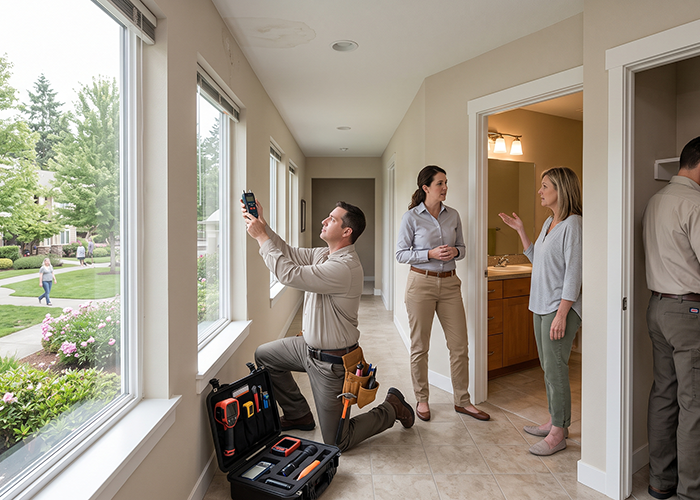
Some plumbing issues appear minor but can quickly become much larger problems.
Board members, community managers, and homeowners should watch for early warning signs such as:
- Unexplained increases in water bills
- Damp walls or ceilings
- Water stains
- Mold growth
- Musty odors
- Slow drains
- Bubbling paint
- Low water pressure
- Running toilets
- Foundation moisture
Even one of these symptoms may indicate a hidden plumbing leak.
Prompt investigation often prevents structural damage, mold remediation, and insurance claims that could have been avoided.
Community managers should also encourage residents to report unusual plumbing issues immediately. Waiting several days to report a leak may significantly increase repair costs and inconvenience other homeowners.
Likewise, boards should have a clear reporting process so residents know exactly whom to contact during both routine maintenance requests and plumbing emergencies. Faster communication leads to faster repairs and less damage throughout the community.
Preventive HOA Plumbing Maintenance
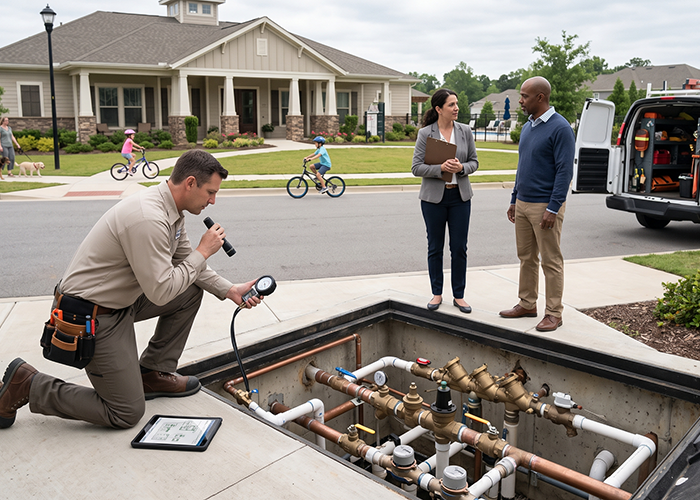
The best way to manage HOA plumbing is to prevent problems before they happen. Emergency repairs are often far more expensive than routine maintenance, and they can disrupt residents’ daily lives. A proactive approach helps protect community assets while reducing long-term costs.
Preventive maintenance also gives boards a better understanding of the condition of their plumbing systems. Instead of reacting to failures, they can schedule repairs and replacements based on inspections and expected service life.
Create a Preventive Maintenance Plan
Every association should have a plumbing maintenance plan that outlines routine inspections, service intervals, and repair priorities. The plan should reflect the age of the community, the types of plumbing systems in place, and any recurring issues from previous years.
A comprehensive maintenance plan often includes:
- Annual inspections of common area plumbing
- Routine sewer line evaluations
- Irrigation system checks
- Backflow prevention testing
- Water pressure testing
- Leak detection inspections
- Preventive drain cleaning
- Water meter monitoring
Keeping detailed maintenance records also makes it easier to identify recurring problems and budget for future repairs.
Schedule Regular Plumbing Inspections
Professional plumbing inspections can uncover hidden issues before they lead to major repairs. While visible fixtures are easy to monitor, many plumbing components remain concealed behind walls, beneath concrete slabs, or underground.
A licensed plumber may identify:
- Small leaks
- Corroded pipes
- Loose pipe connections
- Worn valves
- Drainage concerns
- Water pressure irregularities
- Early signs of pipe deterioration
Addressing these issues early often costs much less than repairing water damage later.
Monitor Water Usage
Unexpected increases in water consumption can indicate hidden leaks within common plumbing systems. Reviewing monthly water bills helps boards detect unusual patterns before they become costly.
Many newer communities also install smart water monitoring systems that alert managers when abnormal water usage occurs. These systems can significantly reduce water waste and limit damage from undetected leaks.
Budget for Plumbing Repairs and Replacements
No plumbing system lasts forever. Pipes, valves, pumps, and other components eventually reach the end of their useful life.
Reserve studies should account for major plumbing infrastructure whenever possible. Planning ahead allows associations to spread costs over time instead of relying on special assessments or emergency funding.
What Boards Should Do During a Plumbing Emergency
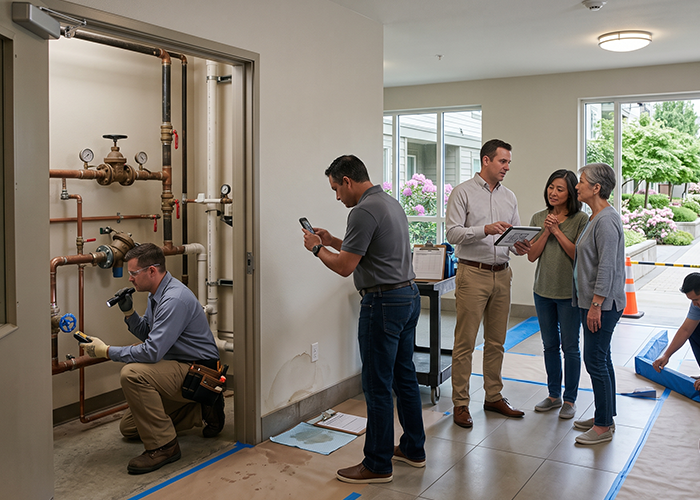
Even with preventive maintenance, plumbing emergencies can still happen. Burst pipes, sewer backups, and significant leaks require immediate action to minimize property damage and protect residents.
Having an emergency response plan allows the board and management company to respond quickly and efficiently.
Respond Immediately
Once a plumbing emergency is reported, the association should determine the severity of the issue and dispatch the appropriate contractor if the problem falls under the HOA’s responsibility.
Quick action may involve:
- Identifying the source of the leak.
- Shutting off the affected water supply if necessary.
- Contacting the community’s emergency plumbing contractor.
- Protecting nearby property from additional damage.
- Keeping affected residents informed throughout the repair process.
Fast communication helps reduce confusion and reassures homeowners that the situation is being addressed.
Document the Damage
Accurate documentation benefits both the HOA and homeowners.
Boards should record:
- Photos of the damage
- Time the issue was reported
- Inspection findings
- Repair estimates
- Contractor reports
- Completed repairs
This information can be valuable if insurance claims become necessary or if questions arise regarding responsibility.
Communicate With Residents
Residents appreciate timely updates during plumbing emergencies. Even when repairs take longer than expected, regular communication helps maintain trust.
Community managers should provide updates regarding:
- Areas affected
- Temporary water shutoffs
- Estimated repair timelines
- Safety precautions
- Restoration progress
Clear communication reduces frustration and keeps everyone informed.
Tips for Homeowners to Help Prevent Plumbing Problems
While the HOA maintains certain plumbing systems, homeowners also play an important role in protecting the community’s infrastructure. Simple habits can prevent unnecessary repairs and reduce service calls.
Residents can help by following these best practices:
- Avoid pouring grease or oil down kitchen drains.
- Flush only toilet paper unless plumbing guidelines state otherwise.
- Report leaks as soon as they are discovered.
- Replace worn washing machine hoses before they fail.
- Watch for changes in water pressure.
- Insulate exposed pipes in colder climates.
- Schedule regular maintenance for water heaters.
- Know where the home’s main water shutoff valve is located.
These small steps can prevent expensive damage that affects multiple homes.
Common HOA Plumbing Mistakes to Avoid
Even well-managed associations sometimes make decisions that increase plumbing costs over time. Recognizing these mistakes allows boards to improve maintenance strategies and reduce future expenses.
Waiting Too Long to Address Small Leaks
A slow drip may seem insignificant, but small leaks often become much larger problems. Water can damage drywall, flooring, insulation, and structural components before anyone realizes the extent of the issue.
Prompt repairs almost always cost less than extensive restoration work.
Ignoring Aging Infrastructure
Older communities often have plumbing systems that are decades old. Pipes made from outdated materials may become more susceptible to corrosion, leaks, and reduced water flow.
Rather than waiting for repeated failures, associations should evaluate whether replacing aging infrastructure is more cost-effective than ongoing repairs.
Failing to Educate Homeowners
Many plumbing issues result from simple misunderstandings. Residents may not know what can safely be flushed or poured down drains, or they may be unaware of their maintenance responsibilities.
Providing seasonal maintenance reminders, newsletters, or educational resources helps reduce preventable plumbing problems throughout the community.
Choosing Repairs Based Only on Cost
Selecting the lowest bid is not always the best decision. Poor workmanship or low-quality materials can lead to repeat repairs and higher costs in the future.
Boards should evaluate contractors based on experience, licensing, insurance, references, and overall value instead of price alone.
Overlooking Preventive Maintenance
Some associations postpone maintenance to reduce short-term expenses. Unfortunately, deferred maintenance often leads to larger repair bills later.
Routine inspections and scheduled servicing help extend the life of plumbing systems while protecting the association’s financial health.
Smarter HOA Plumbing Management Starts With Proactive Planning
HOA plumbing affects every homeowner, whether the issue involves a minor leak or a major infrastructure repair. Understanding maintenance responsibilities, responding quickly to problems, and investing in preventive care helps protect both property values and resident satisfaction.
When boards, community managers, and homeowners work together, plumbing systems remain more reliable, repair costs become easier to manage, and the community is better prepared for unexpected issues.
Strong community management includes more than enforcing rules. It also means protecting the systems that homeowners rely on every day. Personalized Property Management can help your board stay ahead. Call us at 760-325-9500 or email info@ppminternet.com to get started.
Related Articles