
Public bathrooms are an important part of many HOA amenities. Whether located near a clubhouse, pool, park, fitness center, or recreational facility, these spaces play a direct role in resident comfort and the overall impression of the community.
When public bathrooms are clean, safe, and properly maintained, they enhance the resident experience. On the other hand, neglected facilities can quickly become a source of complaints and health concerns.
Why Public Bathrooms Matter
Public bathrooms may not be the first amenity homeowners think about, but they often influence how residents view the community as a whole. People expect these facilities to be functional, clean, and easy to access.
A spotless clubhouse restroom sends a positive message about the HOA’s commitment to upkeep. Conversely, overflowing trash bins, unpleasant odors, or broken fixtures can create a negative impression that extends beyond the restroom itself.
Residents often associate the condition of shared spaces with the effectiveness of community management. For this reason, public bathrooms deserve the same attention as landscaping, pools, and other common areas.
Supporting Community Events and Gatherings
Many associations host social events, meetings, holiday celebrations, and recreational activities. Public bathrooms help support these gatherings by providing convenient facilities for attendees.
Without adequate restroom access, community events can become less comfortable and less enjoyable. This is especially true in larger communities where residents may spend extended periods at clubhouses, parks, or swimming pools.
Well-maintained facilities encourage greater participation in community activities and help create a welcoming atmosphere.
Common Challenges Associated With Public Bathrooms
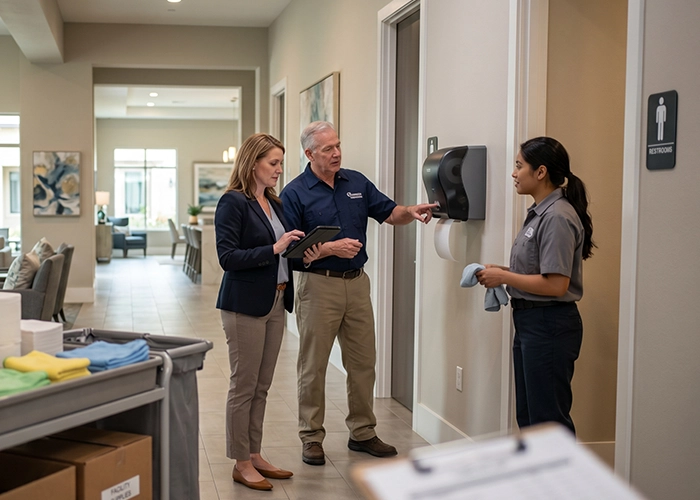
Managing public bathrooms comes with unique responsibilities. HOA boards and managers must balance cleanliness, maintenance costs, safety requirements, and resident expectations.
Some of the most common challenges include:
- Frequent cleaning needs
- Plumbing issues
- Vandalism and misuse
- Supply shortages
- Water consumption concerns
- Accessibility compliance requirements
- Unexpected repair costs
Addressing these challenges proactively helps reduce disruptions and maintain a positive resident experience.
Establishing a Consistent Cleaning Program
One of the most effective ways to maintain public bathrooms is through a structured cleaning schedule.
Daily Cleaning Responsibilities
High-traffic bathrooms often require daily attention. This includes sanitizing surfaces, cleaning toilets and sinks, emptying trash containers, and replenishing supplies.
Associations that operate pools or fitness centers may need multiple cleanings throughout the day during peak seasons. Summer months often bring increased usage, making frequent inspections essential.
A detailed cleaning checklist helps ensure that nothing gets overlooked.
Routine Inspections Improve Results
Even with regular cleaning, periodic inspections remain important. Maintenance staff or management personnel should periodically check facilities for cleanliness and functionality.
Routine inspections can identify small problems before they become larger issues. A leaking faucet, loose toilet seat, or broken lock may seem minor initially, but can quickly become a resident complaint if left unresolved.
Documenting inspections also helps create accountability and consistency.
Maintaining Plumbing Systems
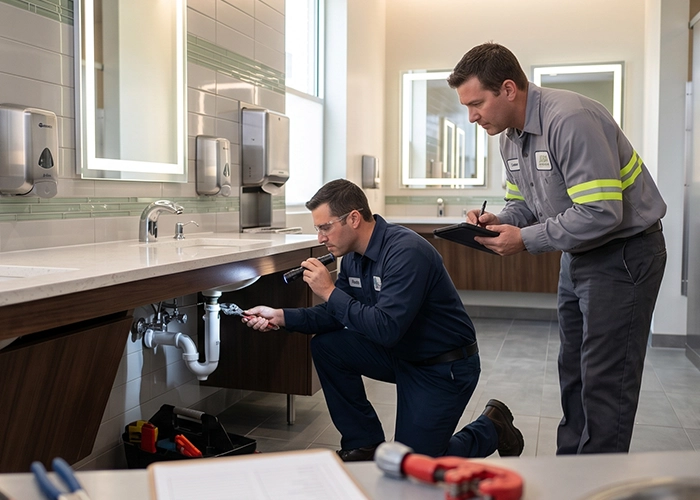
Plumbing issues are among the most common restroom-related problems in community facilities.
Preventing Costly Repairs
Preventive maintenance can significantly reduce repair expenses. Regular inspections of toilets, sinks, faucets, water lines, and drains help identify early signs of wear.
Small leaks often go unnoticed until they result in water damage or increased utility bills. Catching these issues early can save the association money over time.
Maintenance teams should also monitor water pressure and drainage performance to ensure systems continue operating properly.
Responding Quickly to Emergencies
Despite preventive efforts, plumbing emergencies can still occur. Clogged toilets, broken pipes, and overflowing fixtures require immediate attention.
A clear response plan allows management to address emergencies quickly. Having trusted vendors available for urgent repairs helps minimize disruption and protects community facilities from further damage.
Fast action also demonstrates responsiveness to residents.
Safety Considerations for Public Bathrooms
Safety should always be a priority when managing HOA amenities.
Reducing Slip-and-Fall Risks
Bathrooms naturally present slip hazards because of water exposure. Wet floors can create dangerous conditions for residents and guests.
To reduce risks, associations should:
- Use slip-resistant flooring materials
- Install adequate floor drainage
- Place warning signs during cleaning
- Repair uneven flooring promptly
- Address leaks immediately
These simple measures can significantly improve safety.
Maintaining Proper Lighting
Poor lighting can make public bathrooms feel unsafe and unwelcoming. Adequate illumination helps residents navigate the space comfortably and supports overall security.
LED lighting is often a practical option because it provides consistent brightness while reducing energy costs.
Regularly checking and replacing burned-out bulbs helps maintain a safe environment.
Accessibility Requirements and Compliance
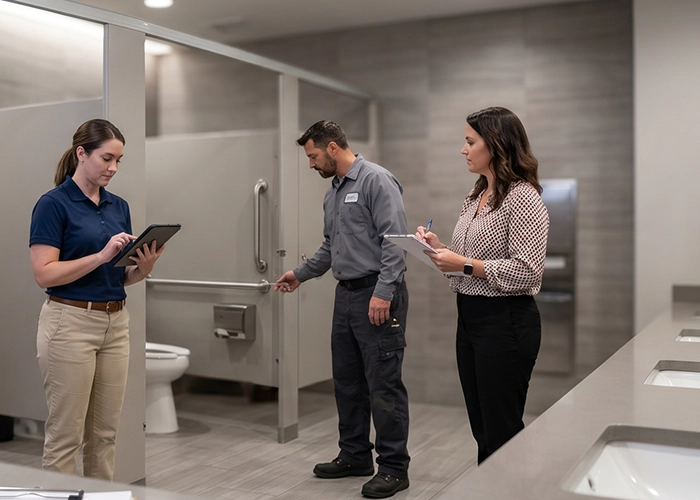
Many community facilities must accommodate residents and visitors with disabilities.
Understanding Accessibility Standards
Public bathrooms should be designed and maintained with accessibility in mind. Features such as grab bars, accessible sinks, wider doorways, and sufficient maneuvering space help ensure that facilities can be used comfortably by all individuals.
Accessibility is not simply a legal consideration. It also reflects the community’s commitment to inclusion and equal access.
HOA boards should periodically review facility conditions to ensure accessibility features remain functional.
Addressing Accessibility Concerns Promptly
If residents report accessibility issues, the association should investigate promptly. Broken grab bars, malfunctioning doors, or obstructed pathways can create significant challenges for individuals who rely on those features.
Addressing concerns quickly demonstrates responsible management and helps maintain a welcoming environment.
Managing Supplies Efficiently
A public bathroom cannot serve residents effectively without basic supplies.
Essential Inventory Items
Most facilities require a consistent supply of:
- Toilet paper
- Paper towels
- Hand soap
- Trash liners
- Air fresheners
- Cleaning products
- Hand sanitizer
Running out of supplies can lead to immediate complaints and inconvenience residents using the facility.
Maintaining inventory levels helps prevent shortages and emergency purchases.
Reducing Waste and Costs
Associations can manage expenses by monitoring usage patterns and selecting cost-effective products.
Touchless dispensers, controlled paper towel systems, and bulk purchasing programs often help reduce waste while maintaining service quality.
Tracking supply consumption also helps improve budget forecasting.
Preventing Vandalism and Misuse
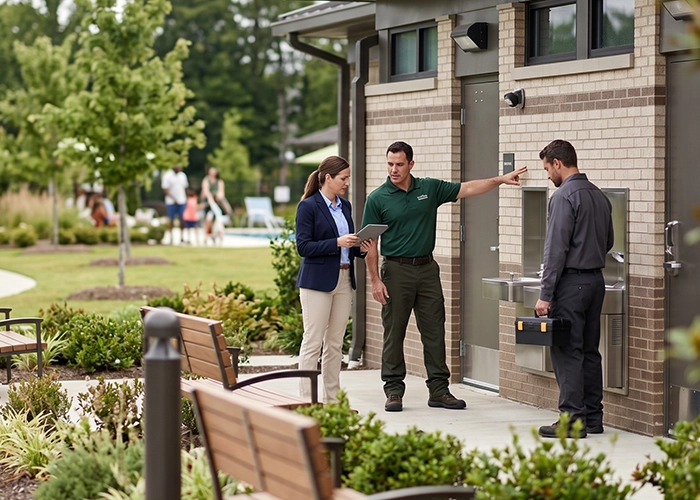
Unfortunately, public bathrooms occasionally become targets for vandalism or misuse.
Creating Accountability
Strategically located facilities tend to experience fewer issues than isolated areas. Bathrooms near staffed facilities or high-traffic common areas often benefit from increased visibility.
Clear rules regarding facility use can also help establish expectations for residents and guests.
When vandalism occurs, documenting damage promptly allows management to respond appropriately.
Using Durable Materials
Selecting durable fixtures and finishes can reduce long-term maintenance costs.
Materials commonly chosen for high-traffic restroom environments include:
- Commercial-grade partitions
- Stainless steel accessories
- Durable tile surfaces
- Tamper-resistant hardware
- Water-efficient fixtures
Investing in quality materials often results in fewer repairs and replacements over time.
Budgeting for Public Bathroom Maintenance
Public bathrooms require ongoing financial planning.
Planning for Routine Expenses
Annual budgets should account for:
- Cleaning services
- Maintenance labor
- Supply purchases
- Utility costs
- Minor repairs
- Equipment replacement
Including these expenses in reserve and operating budgets helps avoid unexpected financial strain.
Accurate budgeting also supports long-term facility upkeep.
Preparing for Major Renovations
Eventually, older restroom facilities may require significant upgrades. Flooring, plumbing systems, fixtures, and accessibility improvements can become necessary as buildings age.
Reserve studies often help associations identify future renovation needs and estimate associated costs.
Planning ahead allows communities to complete improvements without placing sudden financial burdens on homeowners.
Leveraging Technology for Better Maintenance
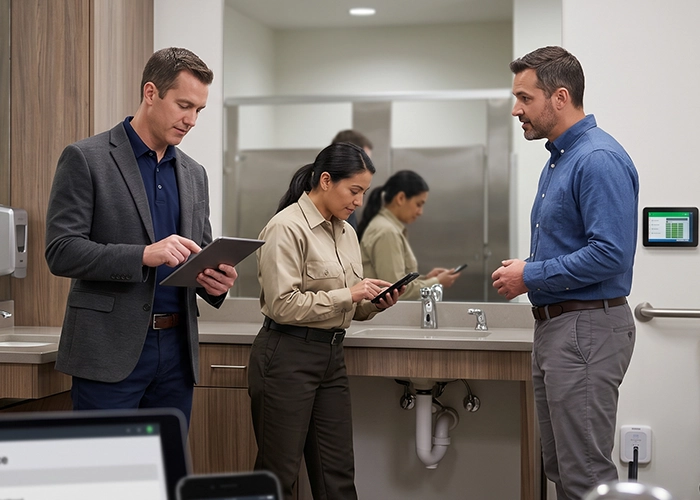
Technology can help streamline restroom management.
Digital Maintenance Tracking
Many management companies and maintenance teams now use work order software to track inspections, repairs, and cleaning schedules.
Digital systems create organized records and help ensure tasks are completed consistently.
These platforms can also improve communication between vendors, management, and board members.
Smart Water Monitoring
Water usage monitoring systems can help identify leaks and inefficiencies before they become expensive problems.
Early detection allows associations to address issues quickly and reduce unnecessary utility expenses.
Over time, these systems can contribute to substantial savings.
Communicating With Residents About Facility Expectations
Residents play an important role in maintaining community amenities.
Encouraging Respectful Use
Simple reminders about proper restroom etiquette can help reduce maintenance issues. Signage can encourage residents to dispose of waste properly, report problems, and help keep facilities clean.
When residents understand that shared amenities belong to the entire community, they are often more likely to treat them responsibly.
Making Reporting Easy
Residents should know how to report maintenance concerns quickly.
Providing multiple reporting options, such as management portals, email, or mobile applications, makes communication easier. Prompt reporting allows staff to address issues before they worsen.
Strong communication ultimately supports cleaner and more functional facilities.
Keeping Public Bathrooms a Valuable HOA Amenity
Public bathrooms may seem like a small part of a community’s operations, but they have a significant impact on resident satisfaction and facility usability.
By investing in routine maintenance, preventive care, safety measures, and thoughtful budgeting, HOA boards can ensure that these facilities continue serving residents effectively for years to come.
Our team can help streamline maintenance programs, coordinate vendors, and keep community facilities operating at their best. Call us at 760-325-9500 or contact us today to learn more.
Related Articles: