
An executive session is one of the most misunderstood parts of HOA governance. Homeowners often hear the term and assume decisions are being made behind closed doors without transparency. In reality, executive sessions serve a specific purpose and help boards address sensitive matters responsibly.
What Is an Executive Session?
An executive session is a private portion of an HOA board meeting where certain confidential topics are discussed away from homeowners and non-board members. Unlike regular board meetings, these sessions are not open to the community.
The purpose of an executive session is not secrecy for the sake of secrecy. Instead, it gives the board a safe space to discuss matters that could create legal, financial, or personal issues if shared publicly.
Most state laws and governing documents allow executive sessions for limited reasons. While the exact rules vary by location, the same general principles tend to apply across many associations.
Boards usually enter executive sessions during or after an open meeting. The board may announce the reason for the closed session before homeowners are asked to leave. Once the confidential discussion ends, the board may return to open session if additional business remains.
Why Executive Sessions Matter in HOA Communities

HOA boards deal with more than landscaping contracts and meeting agendas. They also handle disputes, legal matters, collections, and personnel concerns. Some conversations require discretion to protect both the association and the people involved.
Without executive sessions, boards would struggle to discuss sensitive issues openly. That could expose homeowners’ private information or weaken the association’s legal position.
For example, discussing a delinquent account in front of the entire community could embarrass a homeowner and create unnecessary conflict. Reviewing legal strategy publicly could also harm the association during litigation.
Executive sessions help boards balance transparency with responsibility. Homeowners still deserve accountability, but certain discussions must remain confidential to protect everyone involved.
Common Topics Discussed in an Executive Session
Most HOA laws clearly limit what boards can discuss in executive session. These meetings are not intended for routine business or general planning discussions.
Here are the most common topics that belong in executive session:
1. Legal Matters
Boards often meet privately with the association attorney to discuss ongoing or potential litigation. Legal strategy should remain confidential to avoid compromising the HOA’s position.
This can include:
- Pending lawsuits
- Threatened legal action
- Settlement discussions
- Attorney-client communications
- Contract disputes
Attorney-client privilege is one of the strongest reasons for holding an executive session.
2. Delinquent Accounts and Collections
Homeowner financial issues are considered sensitive matters. Associations commonly discuss overdue assessments, payment plans, and collection actions in private.
This protects the homeowner’s privacy while allowing the board to address financial obligations properly.
Topics may include:
- Past-due balances
- Foreclosure discussions
- Payment arrangements
- Collection agency updates
- Bankruptcy matters
3. Violations and Disciplinary Hearings
Some communities use executive sessions to review hearings related to rule violations. This is especially common when fines, suspensions, or enforcement actions are being considered.
Discussing violations privately can help reduce tension and avoid unnecessary public embarrassment.
Examples include:
- Noise complaints
- Parking violations
- Architectural violations
- Behavioral complaints
- Fine appeals
4. Personnel Matters
If the HOA has employees, personnel discussions typically occur in executive session. Boards may also discuss management company performance privately.
Personnel matters can include:
- Hiring decisions
- Employee discipline
- Salary discussions
- Contract evaluations
- Workplace complaints
Keeping these conversations confidential helps reduce legal and professional risks.
5. Sensitive Contract Negotiations
Some boards use executive sessions during early contract negotiations. Discussing negotiation strategy publicly could weaken the HOA’s bargaining position.
However, final decisions and approvals usually need to happen in open session depending on state law and governing documents.
What Cannot Be Discussed in an Executive Session
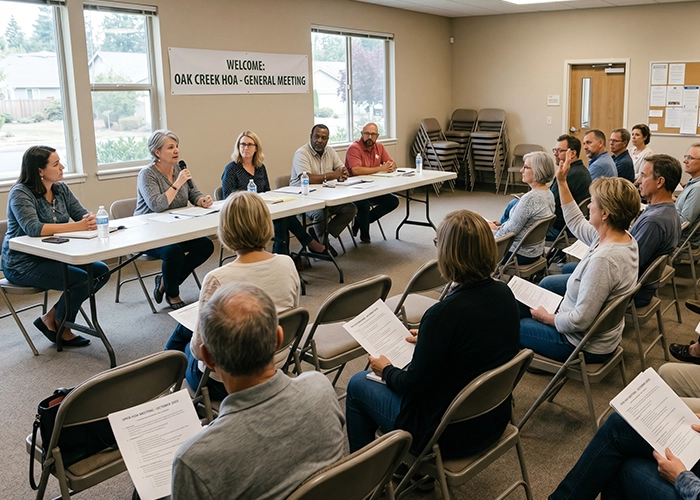
One of the biggest mistakes HOA boards make is overusing executive sessions. Some boards move ordinary discussions behind closed doors simply because conversations may be uncomfortable.
That approach can damage homeowner trust quickly.
Routine HOA business generally should not happen in executive session. Boards should avoid discussing the following privately unless state law specifically allows it:
- Budget planning
- Vendor selection discussions unrelated to legal strategy
- General maintenance projects
- Committee updates
- Election matters unrelated to confidential legal concerns
- Regular board decision-making
Homeowners expect openness when it comes to community operations. If boards rely too heavily on closed meetings, residents may begin to suspect misconduct even when none exists.
Transparency remains essential for healthy HOA governance.
HOA Executive Session Rules Vary by State
Executive session rules are not identical across the United States. Some states have detailed HOA statutes that outline exactly when boards may meet privately. Others leave more discretion to associations and their governing documents.
For example, states like California and Florida have specific requirements regarding notice, permitted topics, and meeting procedures. Other states provide broader guidance.
Boards should always review:
- State HOA statutes
- Governing documents
- Bylaws
- Open meeting laws
- Legal counsel recommendations
Ignoring state requirements can create compliance problems and expose the association to disputes.
Some states also require boards to disclose general executive session actions in the meeting minutes without revealing confidential details.
How Boards Should Properly Conduct an Executive Session

Executive sessions should follow a clear and professional process. Even though the meeting is private, it still needs structure and accountability.
A well-run executive session often includes the following steps:
Provide Proper Notice
In many states, homeowners must receive notice that an executive session will occur. The notice may include the date, time, and general reason for the closed session.
Boards should avoid vague or misleading notices. Clear communication helps maintain trust.
Limit Attendance
Executive sessions should only include people directly involved in the confidential matter.
This may include:
- Board members
- The community manager
- HOA attorney
- Homeowners involved in hearings
- Relevant consultants or experts
Allowing unnecessary attendees increases the risk of confidentiality breaches.
Stay Focused on Approved Topics
Boards should stick strictly to the topic that justified the executive session. Once discussions drift into regular HOA business, the board should return to open session.
This discipline helps prevent misuse of closed meetings.
Keep Appropriate Minutes
Executive session minutes are often shorter and less detailed than regular meeting minutes. Sensitive information should not be recorded excessively.
However, the association should still maintain basic records showing:
- Date and time
- Attendees
- General subject matter
- Actions taken
These records may become important later if disputes arise.
Report Actions When Required
Some states require boards to announce decisions made during executive session once the board returns to open meeting.
For example, the board may state that disciplinary action was approved or legal counsel was authorized without disclosing confidential details.
Maintaining Homeowner Trust During Executive Sessions
Even when executive sessions are completely legitimate, homeowners may still feel uneasy about them. That concern often comes from a lack of communication rather than actual misconduct.
Boards can reduce suspicion by remaining transparent about the process itself.
Here are several ways associations can maintain trust:
Explain Why Executive Sessions Exist
Many homeowners simply do not understand the purpose of executive sessions. Boards can educate residents through newsletters, orientation materials, or meeting explanations.
When people understand that privacy protections are involved, concerns often decrease.
Avoid Overusing Closed Meetings
If nearly every board discussion happens privately, homeowners may lose confidence in leadership.
Executive sessions should remain limited to genuinely confidential matters.
Follow Consistent Procedures
Consistency matters. Boards that follow the same process every time appear more organized and professional.
Clear procedures also reduce accusations of favoritism or secrecy.
Share Non-Confidential Outcomes
Whenever possible, boards should communicate general outcomes after executive sessions conclude.
For example, the board might announce that:
- A hearing was completed
- Legal counsel received authorization
- A collections matter was reviewed
- A personnel issue was addressed
Providing these updates reassures homeowners that the board is acting responsibly.
Mistakes Boards Often Make With Executive Sessions
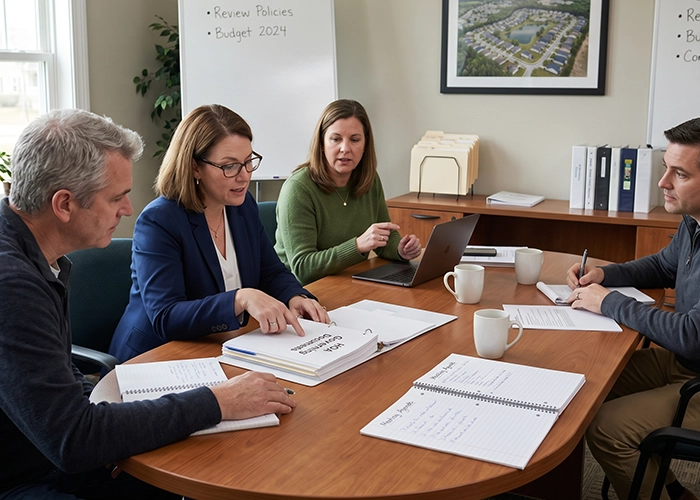
Executive sessions can become problematic when boards misunderstand their purpose or fail to follow proper procedures.
Several mistakes appear frequently in HOA communities.
Treating Executive Sessions as Informal Conversations
Some boards assume closed meetings are less formal than open meetings. That mindset can lead to careless discussions or poor documentation.
Executive sessions should still follow professional governance standards.
Making Major Decisions Secretly
Boards sometimes approve large contracts or major projects privately even when confidentiality does not apply.
This creates unnecessary distrust and may violate open meeting requirements.
Sharing Confidential Information Later
Confidential discussions should remain confidential after the meeting ends. Board members who share private details can create legal exposure and damage community confidence.
Confidentiality must continue beyond the meeting itself.
Failing to Consult Legal Counsel
State laws can be complex. Boards that guess their way through executive session rules may unintentionally violate legal requirements.
When uncertainty exists, consulting the HOA attorney is often the safest approach.
The Role of Community Managers During Executive Sessions
Community managers often play an important role during executive sessions. They help boards stay organized, compliant, and focused on the correct procedures.
Managers may assist with:
- Meeting notices
- Agenda preparation
- Documentation
- Violation tracking
- Collections coordination
- Communication guidance
Experienced managers also help boards avoid discussing improper topics during closed meetings.
In many associations, the manager serves as a stabilizing presence during difficult conversations. This becomes especially valuable during disputes, disciplinary hearings, or legal matters.
Still, the board remains responsible for final decisions. Managers provide support and guidance, but the authority stays with the elected board.
Executive Sessions and HOA Transparency Can Coexist

Some homeowners view executive sessions as the opposite of transparency. In reality, both can exist together when handled properly.
Transparency does not mean every discussion must happen publicly. Instead, it means boards communicate honestly, follow the rules, and avoid unnecessary secrecy.
An HOA board can protect confidential information while still maintaining homeowner confidence.
The healthiest associations understand this balance well. They keep most business open and visible while reserving executive sessions for matters that truly require privacy.
That approach protects the community without weakening trust.
Building Better HOA Governance Through Proper Executive Sessions
Managing executive sessions correctly can be challenging without the right guidance. A professional HOA management company can help your board stay compliant, organized, and transparent while handling confidential matters appropriately.
Need support with board meetings, governance, or community operations? Call us at 760-325-9500 or contact us online to learn how we can help your association run more smoothly.
Related Articles: