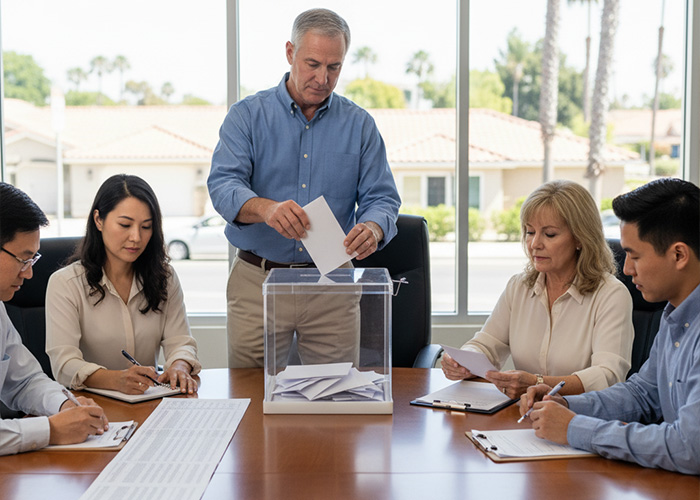
Electronic Voting For HOAs: Ensuring Compliance And Efficiency

HOA electronic voting is no longer a future idea. It is a practical way to run fair, secure elections while making life easier for homeowners and boards. The key is to pair good technology with strong rules.


HOA Electronic Voting Basics

HOA electronic voting uses a secure platform so members can cast secret ballots from a phone, tablet, or computer. The goal is to lower barriers to participation without weakening legal safeguards. When done well, it speeds up tabulation and creates a clear audit trail.

Electronic balloting is not a shortcut. It is a better tool for the same job. When your rules and technology work together, the election process stays compliant and engagement tends to rise.


Where California Law Stands

hoa online voting

California has detailed rules for HOA elections. Director elections and most secret-ballot matters must follow notice timelines, nomination steps, inspector requirements, and ballot handling procedures. The Davis-Stirling Act also outlines the procedures for associations to deliver notices and the process by which members consent to electronic delivery.

Many communities have adopted HOA online voting as an option other than paper ballots. This keeps member choice intact and preserves secret-ballot safeguards. The safest path is to write clear election rules, use an independent inspector, and select a platform that protects voter identity while producing verifiable results.


Rules That Keep Elections Legal

Strong election rules make electronic voting predictable and fair. Use plain language that matches the Davis-Stirling Act and your bylaws. Explain who may vote, how nominations open and close, and what proof is required to confirm membership in good standing.

Spell out timelines, notice methods, and how the inspector manages both paper and electronic ballots. Include steps for ties, recounts, and challenges. These details guide the vendor, help the inspector, and protect the board if questions come up later.


Consent and Access

homeowners association electronic voting

Members must receive required notices in a way the law allows. Many HOAs collect written consent from owners who prefer electronic delivery of notices. Keep records of each consent and respect any changes an owner makes later.

Identity checks are essential. Use unique voter credentials, such as one-time links or access codes tied to the owner of record. The system should prevent duplicate votes and block access after submission. Always provide a simple path to request a paper ballot.


Protecting Privacy and Building an Audit Trail

Privacy is critical in any secret-ballot process. Choose a platform that encrypts data in transit and at rest. Separate voter identity from ballot choices so no one can connect a name to a vote.

Ask vendors how their audit logs work. You should be able to see when ballots were issued, opened, and submitted. The inspector needs reports that confirm counts and participation, without exposing how any person voted.


The Inspector’s Role

hoa online voting

An independent inspector of elections oversees the entire process. That duty does not change with HOA electronic voting. The inspector verifies the eligibility of voters, receives and tabulates ballots, and certifies the results.

Give the inspector direct, independent access to the platform and its reports. The inspector should lock the ballot box at the close of voting, run the tally, and generate a certification. This independence builds trust and reduces disputes.


Designing Online Ballots

Ballot design affects clarity and turnout. Keep language neutral and short. For each item, link a choice to a single action so voters understand what a “yes” or “no” means.

For candidate elections, list names in a fair order and follow any rotation rules in your documents. Include nomination statements and required disclosures in the same package as the ballot. If you mail paper materials, add simple instructions on how to use the online option.


Making Hybrid Elections Easy

homeowners association electronic voting

Most communities see the best results with a hybrid approach. They mail paper ballots to meet secret-ballot requirements and open an electronic option with the same protections. The inspector receives both streams and keeps a master list of who voted.

A hybrid setup helps with quorum. Owners who misplace a paper ballot can vote online. Owners who prefer paper can mail their envelopes. Everyone has a usable path.


Budget, Vendors, and Contracts

Budget planning should cover platform fees, the inspector’s fee, and mailing costs. Over time, HOA electronic voting can reduce printing, postage, and staff hours spent on envelope handling and manual counts.

When you review vendors, ask about data security, uptime guarantees, and support hours. The contract should state who owns the data, how long records are retained, and how the vendor will assist the inspector during tabulation. Include a clear data-export clause so you can retrieve records in a standard format.


Accessibility and Language Support

hoa online voting

Every voter should be able to use the system. The interface needs readable text, clear buttons, and simple navigation. It should meet common accessibility standards so members who use screen readers can participate.

If your community speaks more than one language, provide translated instructions and candidate materials. Consistent translations help owners understand choices and reduce errors.


What Happens After the Count?

After the polls close, the inspector certifies the results and prepares a report. The board then issues a notice of results within the required timeline. Keep all records for the period your rules and state law require.

If a member challenges the election, documentation will matter. Preserve audit logs, certification, and copies of notices. Clear records shorten disputes and protect the association.


HOA Electronic Voting, Quorum and Engagement

homeowners association electronic voting

Turnout rises when voting is easy and secure. Owners who travel or live off-site can vote from anywhere with an internet connection. Reminders sent by email or text, when allowed by law and your rules, nudge participation without extra postage.

Higher participation produces results that feel legitimate to more owners. Better engagement also reduces the number of reconvened meetings. The board spends less time chasing quorum and more time on community priorities.


Security Basics Homeowners Should Know

Owners often ask how their vote stays secret. A sound platform separates identity from selections. It also locks each ballot after submission, so no one can change it.

Owners should expect to get unique credentials and clear instructions. If something looks off, they need a quick contact path to the inspector or management. Simple support lowers friction and protects confidence in the process.


Avoiding Mistakes: Practical Fixes That Hold Up

hoa online voting

Elections often stumble for simple reasons. The best way to prevent disputes is to shore up weak spots before the calendar starts. These practices keep HOA electronic voting smooth and defensible.


Keep Notices Complete and on Time

Missed or partial notices create avoidable challenges. Build a shared calendar that shows who sends what, by when, and how it goes out. Add a short pre-deadline check so one person confirms content, delivery method, and recipient list.


Publish Candidate Statements as Submitted

Editing for tone can look like bias. Publish statements exactly as received and add a neutral disclaimer if your rules allow. If a statement breaks a clear policy, the inspector should handle it and document the decision.


Use the Right Ballot Package Every Time

Confusion starts when materials do not match the rules. For paper voting, stick to the double-envelope method and clear instructions. For HOA online voting, mirror the same protections and verify that anonymity is preserved after submission.


Apply Disqualification Rules Correctly

Disqualifying the wrong way invites challenges. Use only the grounds allowed by your bylaws and state law, and record the reason. Offer internal dispute resolution when required so owners have a fair process.


Plan for Quorum Before You Miss It

Quorum shortfalls delay results and add cost. Send early reminders, make the online option easy to use, and keep a paper path for those who want it. If your rules allow a reconvened meeting with a lower quorum, include that date in the original notice so the process stays on track.


Communication That Builds Trust


Clear communication reduces confusion and support tickets. Use simple, short emails that explain the purpose of the vote, how to participate, and when the polls close. If you mail paper packets, include a one-page quick guide that shows how the online option works.

A short FAQ sheet can help, but keep it focused on process, not legal advice. Emphasize that the inspector is independent and that ballots are secret. Invite owners to ask for help early, not on the final day.


When to Update Governing Documents

homeowners association electronic voting

Some documents written years ago do not mention online voting. If your bylaws or election rules are out of date, plan an update before launch. Align the rules with current law and your actual practices.

A good update clarifies notice methods, electronic delivery consent, and inspector authority. It also states how paper and electronic ballots are handled in the same election. These changes reduce uncertainty and make each cycle smoother.


Embracing Modernity

Communities across Southern California are moving to a hybrid model that blends paper with technology. HOA electronic voting, when paired with clear rules and an independent inspector, keeps elections compliant and efficient. The result is a smoother process, fewer disputes, and a stronger sense of fairness.

Looking for professional support in setting up electronic ballots for your HOA elections? Personalized Property Management offers HOA management services around Southern California. Call us at 760-325-9500 or email us at info@ppminternet.com for more information!

Related Articles:


California HOA Election Rules: Regulations To Follow

Homeowners expect a fair and calm vote. California’s HOA election rules establish the ground rules, ensuring everyone knows what to do and when to do it. This guide explains the key steps in plain language for boards, managers, and members.


The Framework of HOA Election Rules in California

The Davis-Stirling Act sets the framework for member voting across common interest developments. Each association must adopt written HOA election rules that comply with the statute and include local details. These rules cover timelines, nominations, eligibility, balloting, and the certification of results.

The rules are not a formality. They are the playbook for a smooth election. Under the California HOA law on elections, they apply to condos, planned developments, stock co-ops, and large master-planned communities.


Adopting Clear Rules and Keeping Them Current

california hoa law on elections

Boards adopt and amend election rules in open meetings, providing proper notice to members. Good rules do three things: they follow statute, are aligned with the community’s size and needs, and are easy to follow.

Rules should be reviewed each year before the election season. If your association plans to implement electronic voting or modify nomination procedures, allow sufficient time for member notification and board approval. Clear rules reduce disputes and enable inspectors to perform their duties effectively.


Election Timeline and Notices

California requires a simple cadence. Members first receive a general notice that explains how to nominate candidates. That notice must then go out at least 30 days before nominations close.

Next comes a pre-ballot notice at least 30 days before ballots are sent. It lists the meeting date to open and count ballots, the candidate list, and how to return ballots. The ballot package is then sent to members at least 30 days before the voting deadline. If your governing documents require a quorum and you miss it, state law allows a later meeting with a lower quorum under set conditions, as long as new notice is given.


Inspectors of Election

california hoa law on elections

Associations must use one or three independent election inspectors. An inspector can be a qualified volunteer, a notary, a CPA, or a professional firm. Current directors, candidates, and their close relatives are not eligible to serve.

Inspectors receive and secure ballots, verify the voter list, run the count in an open meeting, and certify the results. Treat them as process owners. Provide them with timely access to the member list and any challenges so that they can act promptly and fairly.


Nominations for HOA Elections

Your HOA election rules must explain how owners place their names in nomination and who is eligible to serve. California allows a narrow set of disqualifiers. An association may require that a candidate and a sitting director be current on regular and special assessments. Protections apply when a member has a valid payment plan or has paid under protest.

Other permitted disqualifiers include a recent criminal conviction that would prevent the association from obtaining its fidelity bond, a prohibition on two co-owners serving simultaneously, and a minimum membership period, such as one year. Non-members must be disqualified. Term limits can be enforced if adopted in your governing documents.


The Double-Envelope Method

california hoa law on elections

California uses secret balloting for elections and for other member votes listed in the statute. The written ballot is placed in an inner envelope with no name. That inner envelope is then placed into a signed outer envelope addressed to the inspector.

The outer envelope lets the inspector confirm the voter without exposing the ballot. Members can mail or hand-deliver ballots as directed. Observers may watch the opening and tally at an open meeting. Privacy is protected while the process stays transparent.


Quorum and Reconvened Meetings

Some associations still require a quorum to open and count ballots. If the first meeting fails to reach a quorum, California law permits the association to reconvene later with a reduced quorum, provided certain conditions are met. The association must give fresh notice for the reconvened date and follow the lower-quorum rule exactly as the statute and your documents allow.

The aim is to keep elections moving without throwing out valid ballots. Plan ahead so members know their ballot still matters if the meeting date shifts.


Electronic Voting After 2025

california hoa law on elections

Electronic secret balloting is now allowed if your HOA election rules permit it and if the system meets the law’s safeguards. Authentication, voter privacy, and a verifiable record are required. Paper ballots remain available for members who prefer a written ballot.

Electronic voting can lift turnout and reduce mailing costs. Start early if you plan to add it. Rule changes have their own notice period, and your vendor needs time to set up voter access and testing.


Uncontested Races and Election by Acclamation

When the number of qualified nominees does not exceed the number of open seats, California permits election by acclamation if strict conditions are met. Advance notices, eligibility checks, and timing rules apply. The process saves money and time when a race is uncontested.

Before using acclamation, confirm each step with counsel or your inspector. A missed notice can force a rerun, which defeats the purpose and adds cost.


Campaign Access and Use of Association Media

california hoa law on elections

The HOA election rules must give candidates and members fair access to association media during the campaign season. If the newsletter or website carries one candidate’s statement, it must allow space for others. The association may add a standard disclaimer that candidates are responsible for their own statements.

Candidates and advocates also get reasonable access to common area meeting space at no cost for events tied to the election. Equal access rules apply even when the discussion is spirited. Neutral ground rules help the conversation stay civil.


Preparing the Voter List and Candidate Statements

Accurate records make for a smooth count. Work with management to confirm member names, mailing addresses, and emails for those who opt in to electronic delivery. Update the list when homes change hands or when owners submit new contact details.

Candidate statements should be collected in a uniform format with a firm word limit and a single due date. The association should not edit content for tone or grammar. A neutral disclaimer is the proper tool when views are strong or when claims are disputed.


Running the Count in an Open Meeting

california hoa law on elections

Inspectors open envelopes and tally votes in an open meeting that members may observe. Observers should keep a respectful distance so ballots are not exposed. Once the count is complete, the inspector certifies the results and provides a tally.

Results are announced promptly, then shared with the membership in writing. A clear report builds trust and reduces rumors about how the vote was handled.


Records, Custody, and Member Inspection

After the count, election materials remain in the inspector’s custody for the period set by law. That usually runs one year to match the time allowed for challenges. Materials include returned ballots, signed outer envelopes, voter lists, proxies when used, and the final tally.

Members have the right to inspect election records in accordance with the association’s record-keeping rules. Reasonable inspection and copying procedures apply. Handling these requests with care helps resolve concerns before they escalate.


Common Pitfalls And Simple Fixes

california hoa law on elections

Small missteps can snowball into disputes, delays, and do-overs. Here are some of the most common issues you will likely encounter.


Late or Incomplete Notices

Missed timelines are the fastest way to derail an election. To avoid this, map your dates backward from the count meeting and schedule the general notice, pre-ballot notice, and ballot mailing with clear owners for each step. Additionally, use templates, track delivery methods, and resend corrected notices if you discover an error, so every member has the same information.


Editing Candidate Statements

It is tempting to clean up tone or grammar, but editing candidate content violates equal-access rules. Publish statements as submitted and add a neutral disclaimer that candidates are responsible for their views. Set a uniform word limit, format, and deadline so the process is fair and easy to administer.


Using the Wrong Ballot Package

Written ballots must follow the double-envelope method to protect secrecy. The marked ballot is placed inside an unsigned inner envelope, which is then inserted into a signed outer envelope addressed to the inspector. If you also use electronic voting, require secure authentication and a verifiable audit trail, and include clear return instructions for both methods.


Disqualifying the Wrong Way

Only apply disqualifiers allowed by law and by your adopted rules. Verify assessment status carefully and honor protections for members on valid payment plans or who paid under protest. Document the reason, give prompt written notice, and offer internal dispute resolution so that you can resolve challenges quickly and fairly.


Missing Quorum

A failed first meeting does not mean starting over. When your documents require a quorum and your HOA fails to meet it, use the reconvened meeting option that allows a lower quorum when following statutory steps. Send a fresh notice, make the new date visible across all channels, and remind members that previously returned ballots still count.


Proper Process

California’s HOA election rules create a predictable, private, and fair process for member votes. With a clear calendar, independent inspectors, and steady communication, your community can run smooth elections year after year. Keep your rules current, and keep the focus on member trust.

Need professional help in making sure your HOA elections comply with California rules? Personalized Property Management offers HOA management services around Southern California. Call us at 760-325-9500 or email us at info@ppminternet.com for more information!


Related Articles