
A security door plays a quiet but important role in how HOA communities manage safety and access. It is often the first layer of protection residents and guests interact with, yet it is sometimes overlooked during planning and upgrades.
For boards and managers, understanding how a security door fits into the larger security picture can help prevent risks while improving daily convenience.
Why a Security Door Matters for HOA Communities
A security door is more than just an entry point. In shared communities, it becomes part of the overall experience residents have when entering or leaving their property.
When designed and maintained properly, a security door can help reduce unauthorized access. It creates a clear boundary between public and private space, which is especially important in condominiums, gated communities, and mixed-use properties.
At the same time, it supports a sense of order. Residents tend to feel more comfortable when they know access points are controlled and monitored.
There is also a liability factor to consider. When an HOA takes reasonable steps to secure entryways, it shows a level of responsibility that can matter if incidents occur. While no system is perfect, a well-managed security door system can reduce exposure to avoidable issues.
How Security Doors Fit Into a Larger Security Strategy
A security door should not be viewed as a standalone solution. Instead, it works best when integrated into a broader HOA security plan.
In many communities, this includes cameras, lighting, and access control systems. The security door becomes the physical barrier, while other tools support monitoring and management.
For example, a door with electronic access can be paired with key fobs or mobile credentials. This allows boards to manage who can enter and when. It also creates a record of activity, which can be helpful for both security and administrative purposes.
Consistency matters here. If one entry point is secure but another is not, the system becomes less effective. A complete approach ensures that all main access points follow similar standards.
Common Types of Security Doors Used in HOAs

Different communities have different needs, so there is no one-size-fits-all solution. Choosing the right type of security door depends on layout, traffic, and budget.
Here are some of the most common options:
1. Steel Security Doors
Steel doors are widely used because of their strength and durability. They are often installed in main entryways where higher resistance is needed.
They also tend to hold up well under frequent use, which makes them suitable for buildings with high foot traffic. Over time, they require minimal structural maintenance compared to lighter materials.
2. Glass Security Doors With Reinforcement
Many modern communities prefer a more open look. Reinforced glass doors provide visibility while still offering protection.
These doors are often paired with metal frames and locking systems. While they may not feel as heavy as steel, they can still meet security requirements when properly designed.
3. Aluminum Security Doors
Aluminum doors offer a balance between strength and weight. They are resistant to corrosion, which can be helpful in areas with varying weather conditions.
They are also easier to install and maintain. This makes them a practical option for secondary entry points or interior access areas.
4. Access-Controlled Doors
These doors rely on electronic systems such as keypads, card readers, or mobile apps. Instead of traditional keys, residents use assigned credentials.
This approach makes it easier for management to update access without replacing locks. It is especially useful when residents move in or out.
Key Features That Improve Security Door Performance
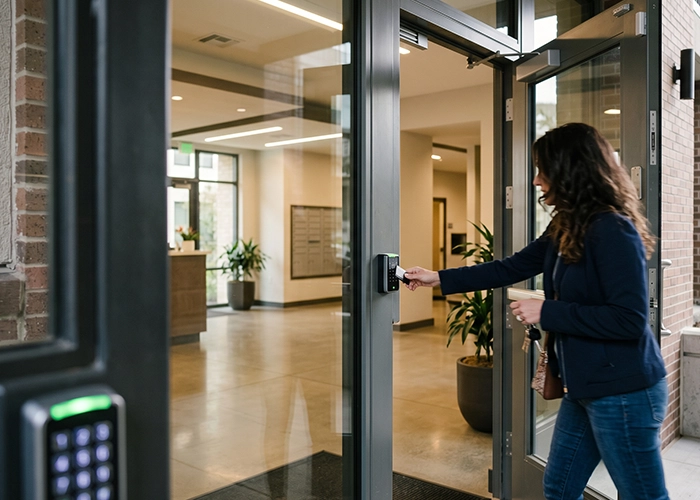
Not all security doors are created equal. The effectiveness of a door depends on several features working together.
1. Locking Mechanisms
A strong door needs a reliable lock. Multi-point locking systems provide better resistance compared to single locks.
These systems secure the door at multiple points along the frame, making forced entry more difficult.
2. Access Control Integration
Modern communities benefit from integrating doors with access systems. This can include key fobs, intercoms, or smartphone access.
When combined with proper management, it allows boards to control entry without constant manual oversight.
3. Durability and Materials
Material choice plays a big role in performance. Steel and reinforced glass tend to offer higher resistance, while aluminum provides flexibility.
Durability also affects long-term costs. A door that lasts longer reduces the need for frequent replacements.
4. Visibility and Lighting
Security is not only about strength. Visibility matters as well.
Doors placed in well-lit areas with clear sightlines can discourage unwanted activity. This simple factor often works alongside other measures to improve safety.
Balancing Security With Resident Convenience
Security measures should not make daily life harder for residents. A well-planned security door system finds a balance between protection and ease of use.
If access becomes too complicated, residents may look for workarounds. This can create new risks that undermine the original purpose of the system.
Ease of use can be achieved through simple tools like key fobs or mobile access. These options reduce friction while maintaining control.
Communication also plays a role. Residents should understand how to use the system and why it is in place. When people see the value, they are more likely to follow procedures.
Installation Considerations for HOA Boards
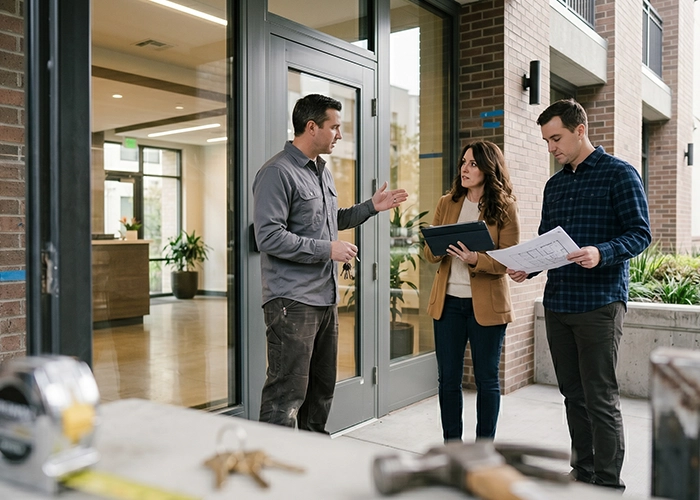
Installing a security door involves more than selecting a product. Planning is essential to ensure the system works as intended.
Boards should consider the layout of the property first. Entry points, traffic flow, and visibility all affect how the door will function.
It is also important to review governing documents. Some HOAs have design guidelines that influence materials or appearance.
Working with experienced vendors can help avoid common issues. Proper installation ensures that the door performs well from the start.
Maintenance and Long-Term Care
Even the best security door requires regular maintenance. Without it, performance can decline over time.
Here are a few key practices to keep in mind:
- Inspect locks and hinges regularly to ensure they are functioning properly
- Clean surfaces and remove debris that may affect operation
- Test access control systems to confirm they are working as expected
- Address minor issues early before they become larger problems
Maintenance does not need to be complicated. Consistency is what makes the biggest difference.
Cost Considerations and Budget Planning

Cost is often one of the first concerns for HOA boards. While security doors can require an upfront investment, they should be viewed as part of a long-term plan.
Lower-cost options may seem appealing at first, but they can lead to higher maintenance or replacement costs later. Investing in quality materials and systems can provide better value over time.
Boards may also consider phased upgrades. Instead of replacing all doors at once, improvements can be made over time based on priority.
It is also worth noting that improved security can enhance property value. Prospective buyers often view secure entry systems as a positive feature.
Common Mistakes to Avoid When Choosing a Security Door
Even with good intentions, mistakes can happen during the selection process. Being aware of these can help boards make better decisions.
- Choosing a door based only on appearance without considering function
- Overlooking compatibility with existing security systems
- Ignoring maintenance requirements
- Failing to involve residents in communication about changes
Each of these can lead to challenges down the line. Taking a thoughtful approach helps avoid unnecessary complications.
How Security Doors Support Property Value and Community Trust

Security features often influence how a community is perceived. A well-maintained security door can signal that the HOA takes safety seriously.
This perception can build trust among residents. It also plays a role in attracting new buyers or tenants.
Over time, these factors contribute to overall property value. While security may not always be visible in financial statements, its impact is felt across the community.
When It May Be Time to Upgrade Your Security Door System
Not every system needs to be replaced right away. However, there are signs that an upgrade may be worth considering.
If doors are showing visible wear, it may be time to evaluate replacement options. Frequent repairs can also indicate that a system is no longer efficient.
Outdated access methods can be another sign. As technology evolves, older systems may not meet current needs.
Boards should also pay attention to resident feedback. Concerns about access or safety can provide useful insight into whether improvements are needed.
A Smarter Approach to Community Safety
For HOA boards, taking the time to plan, install, and maintain the right system can lead to lasting benefits for residents and the property as a whole.
Are you looking to improve your community’s security without overcomplicating access?
Work with Personalized Property Management who understand what actually works in real communities. Start building a safer, more confident environment for your residents today.
Related Articles: