
Potholes, cracking asphalt, and failing drainage can turn into a neighborhood headache fast, and HOA road repairs often land on the board’s desk before anyone agrees on who should pay. Clarity usually exists, but it is buried in maps, records, and a few key lines in your governing documents. A little digging up front can prevent a costly surprise later.
The Basics of HOA Road Repairs
Most HOA road repairs fall into two buckets: routine fixes (patching, sealing, repainting striping) and bigger work (resurfacing, rebuilding sections, correcting drainage). The difference matters because smaller work may fit into the operating budget, while large projects tend to pull from reserves or trigger a special assessment.
A second point gets missed all the time: a “road” might include more than pavement. Curbs, gutters, storm drains, signage, speed humps, and even streetlights may be tied to the same responsibility question, even when different parties maintain different pieces.
Public Streets vs Private Streets
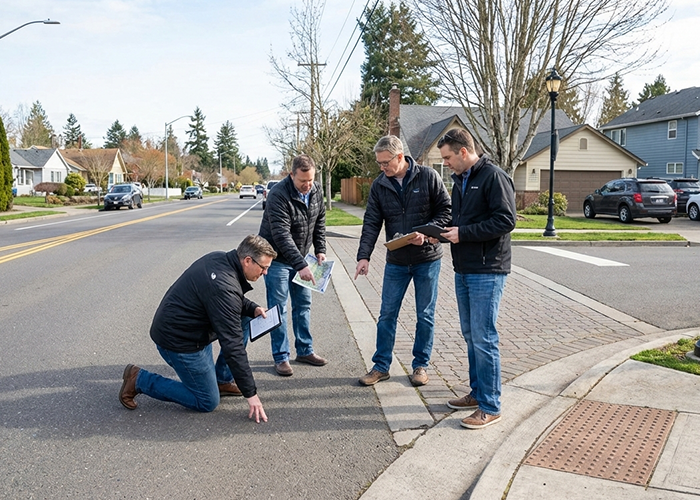
Responsibility usually starts with ownership. Public streets are typically maintained by a city, county, or another public agency, while private streets are maintained by whoever owns them, which is often the association.
Confusion shows up because a street can look public and still be private. Streetlights may be city-owned while the asphalt is association-owned. Snow removal might be handled by the city, yet the base pavement work is not.
A few practical clues can help narrow it down:
- Street signage and markings: Standard municipal street signs and painted markings can be a hint, but not proof.
- Who plows, sweeps, or patches: Service patterns can reveal who sees it as “theirs.”
- Recorded plats and surveys: The map controls more than the mailbox gossip.
- Maintenance invoices: Past vendor history often tells the real story.
Real certainty comes from recorded documents, not appearances. That is why HOA road repairs should never be budgeted on assumptions alone.
Where Responsibility Usually Lands
Planned communities and condos can land in different places. In many planned communities, the association may own the private streets as part of the common area. In other communities, the street may sit inside an easement or right-of-way, with maintenance obligations spelled out in the declaration.
Condos bring extra twists. Some associations maintain areas that individual owners technically “own,” and some owners maintain elements the association technically “owns.” That mismatch can feel backward, but it is common in community association structures.
Developer transitions create their own mess. Streets may be “intended” for dedication to a city but never formally accepted. A road can also be built to a standard that later fails inspection, which leaves the association holding the bag until it is resolved.
Paperwork That Sets the Line

The cleanest answer usually sits in your declaration (often the CC&Rs), the plat, and any recorded easements. A management team can help gather the documents, but an attorney is often needed when the language is vague or conflicts with local rules.
A simple internal reference document can also reduce repeat disputes. Many communities build a responsibility chart or matrix that translates legal language into day-to-day direction for owners and volunteers.
These records are often the most useful starting set:
- The declaration/CC&Rs, bylaws, and any published rules
- The recorded plat or condo plan, plus legal descriptions
- Easements, maintenance agreements, and any recorded “private road” language
- Prior paving contracts, warranties, and invoices
- Prior board minutes where the street work was approved
A clear summary can then be shared with homeowners in plain language. Fewer arguments tend to follow when the board’s reasoning is documented and consistent.
Funding the Street Work
Budget pressure can build quietly, especially when pavement deterioration is slow. HOA road maintenance that stays ahead of cracks and water intrusion often costs far less than waiting for widespread failure, but that only happens when the association plans years in advance.
Reserve planning matters because pavement work is rarely cheap. Reserve studies often include pavement components, expected remaining life, and a funding plan, which helps the board avoid last-minute financial decisions.
Phasing is another tool that keeps assessments steadier. A multi-year plan may be easier on owners than one large project, and the work can be scheduled around weather, school traffic, and local events.
Owners and Boundaries
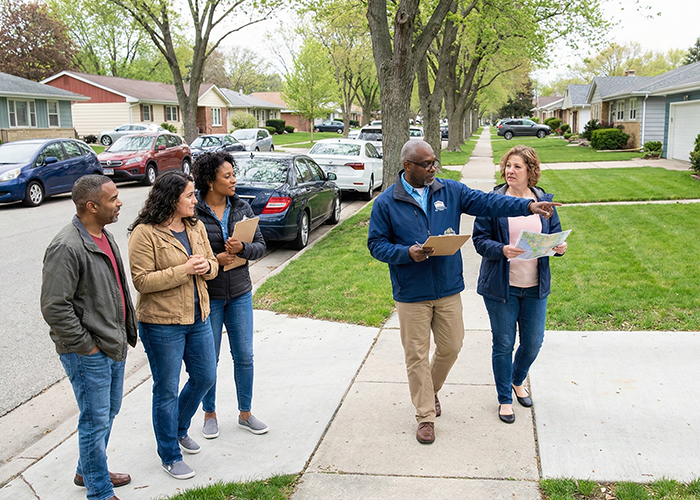
Homeowners may be surprised by what the association does not cover. Driveway slabs, private parking pads, and certain sidewalk segments can fall on the owner, even when they sit near the street. Clarity is essential, because residents usually notice the problem before they understand the boundary line.
A strong communication routine makes HOA road repairs less stressful. Notice can be provided early, access rules can be explained in normal language, and work updates can be shared without sounding like a legal memo.
Parking and access are worth extra attention. Towing threats tend to inflame situations, while clear timelines and temporary parking options usually reduce conflict.
Choosing a Paving Partner
Good paving work depends on planning, not luck. A tight scope helps contractors bid accurately, and it protects the association from change orders that appear halfway through the job.
Project details that are easy to miss during bidding include:
- Base failures and subgrade repairs (not just surface patching)
- Drainage corrections that keep water off the pavement
- Striping, signage, and traffic control requirements
- Curb and gutter repairs that affect water flow
- ADA-related transitions at ramps and crossings (when applicable)
Warranties and inspection expectations should be spelled out in writing. The best time for that clarity is before a contract is signed, not after a crew has already mobilized.
When Public Agencies Take Charge
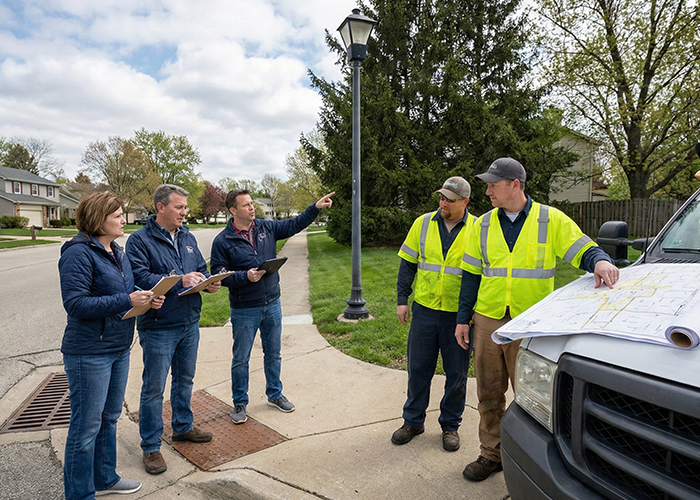
Public streets usually come with a different playbook. Service requests, public works tickets, and council outreach may be needed, and response times can vary widely.
Shared infrastructure can still blur the lines. Storm drainage, streetlights, and sidewalk sections may sit in a public right-of-way while being maintained by the association under an agreement. HOA road upkeep can also be affected by city work, especially when utility cuts are made and patches fail later.
Uncertainty should be treated as its own problem to solve. A recorded acceptance, a dedication record, or a formal maintenance agreement can often be located, and that paper trail is far more valuable than guessing.
Smooth Roads Ahead
Clear responsibility turns a stressful issue into a manageable project, even when the pavement is in rough shape. The right documents, a realistic funding plan, and steady communication can keep HOA road repairs from becoming a repeating crisis.
Related Articles: